


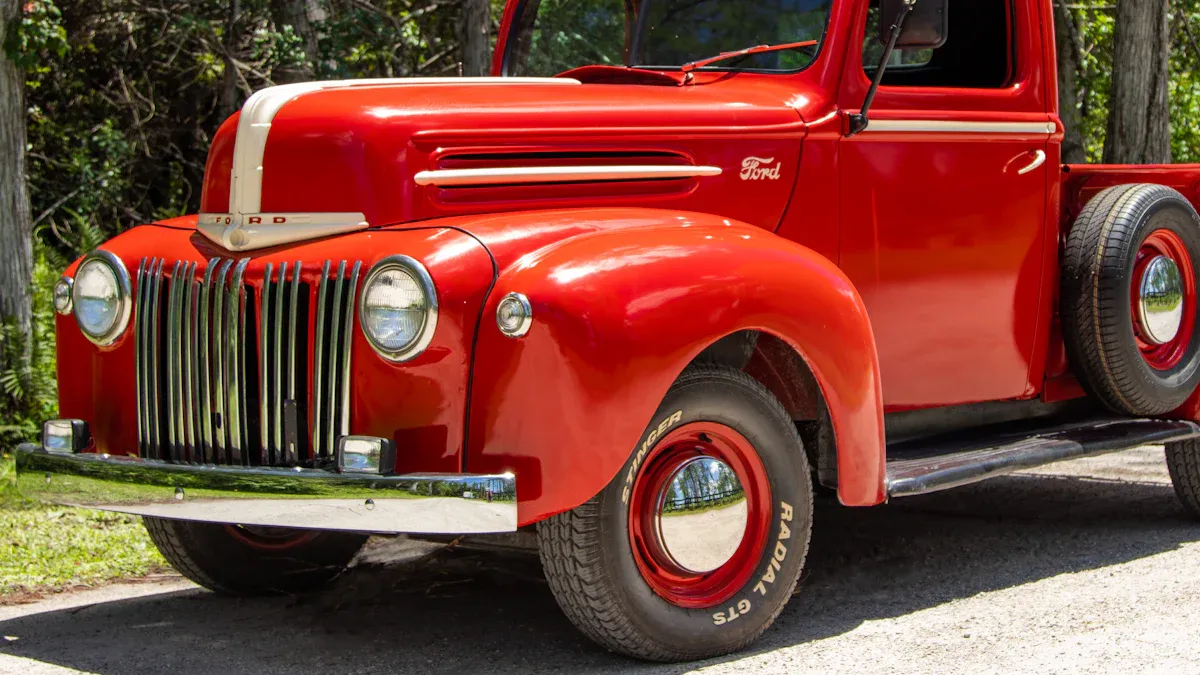
The 1940s marked a pivotal time. World War II profoundly reshaped automotive production. Manufacturers shifted from luxury to wartime utility during the 1940s.
America’s auto companies now turned exclusively to war production. This meant civilian car output dropped sharply.
Year | Civilian Automobiles Produced (U.S.) |
|---|---|
1941 | ~3,000,000 |
Entire WWII Period | 139 (additional) |
The 1940s then transitioned to post-war recovery. This era brought new civilian production. The 1940s presented unique challenges and creative solutions. We explore 20 iconic car models from the 1940s. These 1940s cars left a lasting mark. They defined the spirit of this classic era. Each model here shows the resilience of the 1940s.
Key Takeaways
World War II stopped regular car making. Car companies made vehicles for the war instead of for people.
Early 1940s cars were fancy. They were the last luxury cars before the war changed everything.
During the war, cars became strong and useful. They helped the military and were not about comfort.
After the war, car designs became new and hopeful. People wanted new cars, and companies made them look modern.
European cars after the war were simple and useful. They helped people get around when things were still hard.
Early 1940s Cars: Pre-War Resilience
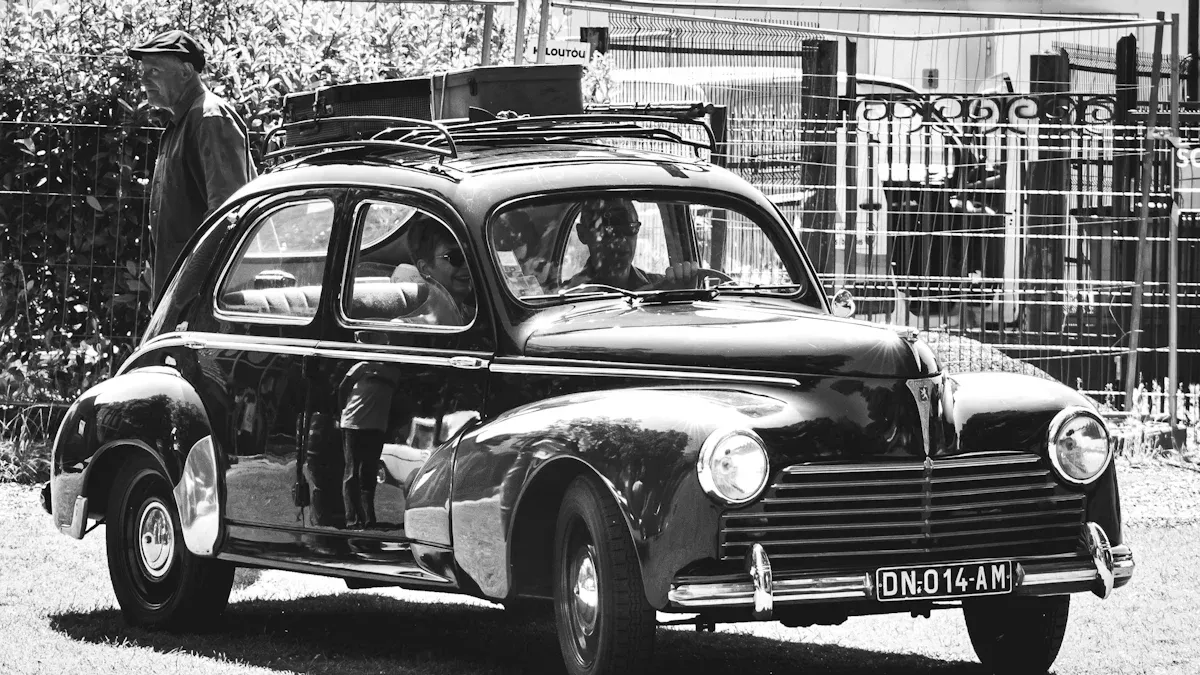
The early 1940s represented a fascinating crossroads for automotive design. Manufacturers still produced luxurious vehicles. These cars carried over many design cues from the late 1930s. However, the looming shadow of World War II began to shift priorities. The industry soon faced severe material shortages. This period showcased the resilience of American carmakers. They adapted quickly to changing demands. These 1940s cars represent the last gasp of pre-war opulence. They also hint at the functional designs to come. The automotive landscape of the early 1940s was truly unique. These vehicles from the 1940s stand as important historical markers.
1940 Ford Deluxe
The 1940 Ford Deluxe stood as a testament to evolving design. This model retained the highly rounded fastback styling. This styling was a hallmark of 1938-1940 Ford sedans. The 1940 Deluxe styling evolved directly from the 1939 Deluxe. The 1939 version featured a lower, Vee’d vertical-bar grille. It also had integral headlamps. The 1940 Standards, a variation of 1937 themes, resembled the ’38 DeLuxes. This showed clear design continuity. Sealed-beam headlamps became a new feature. They sat neatly in more upright fender nacelles. Beautifully curved fenders also evolved from earlier designs. This ford offered style and practicality before wartime restrictions fully took hold.
1941 Chevrolet Fleetline
The 1941 Chevrolet Fleetline emerged as war preparations intensified. This model faced significant production challenges. Material shortages became a major concern in the early 1940s. An aluminum shortage was severe. Carmakers reverted to using steel for components like pistons. This made vehicles heavier.
The scarcity was so pronounced it became a common joke. An official recognition of an 11,000,000-ton steel deficit further impacted automotive production. Rubber also became critically important for the war effort. Japan’s conquest of Malaya and the Dutch East Indies cut off the primary source of natural rubber for the US. This led to severe shortages. These constraints forced manufacturers to innovate. They had to find alternative materials and simpler designs. The challenges of the 1940s shaped these production decisions.
1941 Lincoln Continental: A Classic Design
The 1941 Lincoln Continental quickly became a design icon. It showcased a unique aesthetic. This car featured a long hood and a short trunk. It also had extended front fenders. The iconic ‘Continental kit’ spare tire mount integrated into the rear. Its interior boasted high-quality leather upholstery.
Wood-grain accents and an Art Deco-influenced dashboard completed the look. The ‘Continental look’ established characteristics for luxury personal coupes. These included a long hood, short deck, and a notchback roofline. The spare tire mounted outside the trunk became widely recognized. People called it the ‘Continental tire.’ The car also featured a distinctive waterfall grille design. The Continental’s design philosophy emphasized clean lines. It also featured restrained ornamentation.
This set a new standard for American luxury cars. It influenced future generations of vehicles. The Continental inspired the Ford Thunderbird and the Mustang. The ‘Continental tire’ design was adopted by other automakers in the 1950s. The Continental spare tire also influenced other luxury cars. They adopted a neo-classic look, such as the 1964 Imperial. The 1961-64 Continental’s swept-back look offered a modern interpretation of the original’s fascia. It influenced later designs.
1941 Buick Super Convertible
The 1941 Buick Super Convertible exemplified pre-war luxury. This vehicle offered many opulent features. It came with a standard power convertible top. The dashboard featured a complete set of gauges. They sat in an attractive Damascened chrome panel. A glovebox-mounted clock added to its sophistication. The car boasted an Art Deco ‘torpedo’ C-body design. It offered increased shoulder and hip room.
This was over 5 inches wider than the previous year’s version. Buick eliminated exterior running boards. This gave the car a streamlined and lower styling. It sat 2-3 inches lower. The Super Convertible provided true six-passenger comfort. It had a column-mounted shift lever. Standard Bedford cord upholstery came in contrasting two-tone tan. Plush seating and high-quality materials like wood and chrome accents further enhanced its luxurious feel. This car represented the pinnacle of comfort and style in the early 1940s. It truly captured the spirit of the early 1940s automotive industry.
1940 Chrysler New Yorker
The 1940 Chrysler New Yorker also stood out for its elegance. It represented American luxury in the early 1940s. This car featured a distinctive grille. It had flowing lines. The New Yorker offered a spacious and comfortable interior. High-quality materials were evident throughout. It provided a smooth and powerful ride.
This made it a favorite among discerning buyers. The New Yorker showcased the automotive industry’s capabilities. It highlighted its commitment to comfort and style. This was before the full impact of wartime production. The early 1940s saw these vehicles as symbols of prosperity. They were also symbols of engineering prowess.
Iconic Car Models: Wartime Utility
The 1940s brought a dramatic shift in automotive production. Manufacturers focused on wartime utility. Material shortages became common in the 1940s. Car companies adapted their designs.
They created rugged, functional vehicles for military and civilian support roles. These 1940s cars were not about luxury. They were about survival and winning the war. Their designs emphasized durability and practicality. This section explores some of these essential vehicles from the 1940s.
Willys MB Jeep
The Willys MB Jeep became an icon of the 1940s. It was a small, four-wheel-drive utility vehicle. The U.S. Army needed a light reconnaissance vehicle. Willys-Overland won the contract. The Jeep was simple, tough, and versatile.
Soldiers used it for many tasks. It could go almost anywhere. Its open-top design and sturdy frame made it perfect for rough terrain. The Jeep’s design influenced many future off-road vehicles. It symbolized American ingenuity during the 1940s.
Ford GPW Jeep
The ford GPW Jeep was a close relative of the Willys MB. Ford Motor Company also produced this model under license. The military needed many Jeeps. Ford helped meet this demand. The Ford GPW Jeep performed many critical military roles. It served in reconnaissance, gun towing, and cable laying. Soldiers also used it for saw milling and as firefighting pumpers. It even functioned as field ambulances and tractors. With suitable wheels, it could run on railway tracks. This versatile vehicle also served as a command vehicle and provided logistics support. It carried up to five soldiers. The Jeep offered mounting for an M1919 .30 caliber machine gun or an M2 .50 caliber machine gun. It also housed heavy radio sets for commanders or signals units. The Ford GPW Jeep proved its worth in every theater of the 1940s war.
Dodge WC Series
The Dodge WC Series trucks were known for their robust construction. These vehicles were a backbone of military transport in the 1940s. The WC series included many variants. These ranged from command cars to ambulances and weapon carriers. A cornerstone of the WC series’ design philosophy was an emphasis on standardization. It also featured extensive commonality of parts across its numerous variants.
This made maintenance easier in the field. The use of a straight-six Chrysler flathead gasoline engine was characteristic across the entire WC series. This reflected Chrysler’s standardized approach to military vehicle powerplants. These trucks were essential for moving troops and supplies throughout the 1940s.
Chevrolet G506 Truck
The Chevrolet G506 Truck provided essential logistical support. This 1½-ton, 4×4 truck was a workhorse for the U.S. military. It transported everything from ammunition to personnel. Its sturdy design allowed it to operate in harsh conditions. The G506 was a common sight on battlefields and supply routes during the 1940s.
During World War II, Chevrolet produced 154,204 G506 trucks. This figure represents a significant contribution to the war effort. This model played a vital role in keeping Allied forces supplied and mobile. These 1940s cars were crucial for victory.
Post-War Classic Cars: Design Evolution
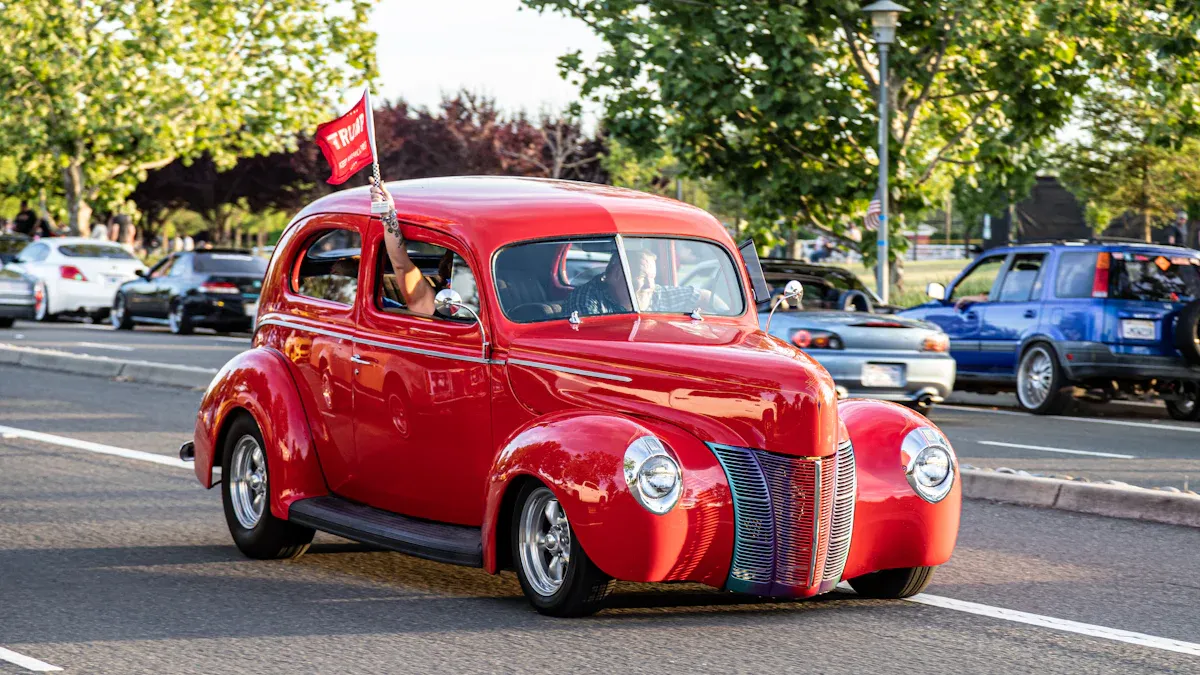
The end of World War II brought a new era for the automotive industry. Manufacturers quickly shifted back to civilian production. This period saw significant design innovations. Car companies faced initial challenges restarting their assembly lines. The public, however, showed immense eagerness for new vehicles.
People had gone without new cars for years. This created a massive demand. The 1940s saw a rapid evolution in car design. These post-war classic cars reflected a renewed sense of optimism and progress.
1946 Ford Super Deluxe
The 1946 ford Super Deluxe marked a significant return to civilian car manufacturing. This model showcased several design innovations. It offered factory-installed turn signals. A bold grille gave it a strong presence. The car featured rounded fenders and sleek chrome trim. Inside, it provided plush seating and wood-grain accents. Buyers could also choose optional features. These included a radio, a heater, and a defroster. The 1946 Super Deluxe came in various body styles. These included coupes, sedans, convertibles, and even ‘Woodies.’ This car helped define the immediate post-war automotive landscape. It represented a fresh start for the 1940s.
1947 Chevrolet Fleetmaster
The 1947 Chevrolet Fleetmaster continued the brand’s strong presence in the post-war market. Chevrolet quickly resumed civilian production after the war. The Fleetmaster largely carried over its pre-war design.
However, it offered subtle refinements. It featured a more modern grille and updated trim. This car provided reliable transportation for many American families. Its practical design and affordability made it a popular choice. The Fleetmaster helped meet the high demand for new vehicles in the late 1940s. It showed how manufacturers adapted existing designs for the new era.
1946 Cadillac Series 62
The 1946 cadillac Series 62 truly set a new standard for luxury. This cadillac introduced styling cues that influenced post-war automotive aesthetics. It featured a ‘symphony of smooth lines and elegant curves.’ This defined its exterior.
Key styling elements included a prominent chrome grille. A distinctive hood ornament added to its elegance. The car also boasted ‘broad shoulders.’ These features symbolized post-war American optimism. The 1946 cadillac profoundly impacted automotive design. Its sleek profile and sophisticated detailing influenced car aesthetics well into the 1950s. This cadillac became a symbol of success in the 1940s. The 1946 cadillac was a truly iconic vehicle. This cadillac showed the world what American luxury could be. Every cadillac from this period exuded class. The 1946 cadillac remains a highly sought-after classic today.
1947 Kaiser Special
The 1947 Kaiser Special entered a booming market. The public’s demand for new vehicles was exceptionally high. Americans had been denied new cars throughout the war. This created a seller’s market. Kaiser-Frazer, a new company, capitalized on this demand. They boasted over 100,000 advance orders for their cars. In 1947, Kaiser-Frazer produced over 70,000 Kaisers. They also made 68,000 Frazers.
The company reported a $20 million profit in their first year. Strong sales continued into 1948. The 1947 Kaiser Special represented a fresh approach to car design. It offered a modern, streamlined look. This car showed the eagerness of consumers for new designs in the 1940s.
1949 Mercury Eight
The 1949 Mercury Eight reflected emerging post-war automotive trends. Its design marked a significant departure from pre-war styles. It featured pontoon fenders. These gave the car a futuristic appeal. The curvaceous body contributed to its head-turning aesthetic. A daring grille and chrome accents enhanced its visual impact. The 1949 Mercury Eight’s design reflected the emerging trend of ‘ponton styling.’ This style became prevalent for the next two decades. It involved bodywork that enclosed the full width and uninterrupted length of the car. This eliminated older design elements like running boards. It also removed articulated fenders. This created a more economical and distinct aesthetic. This style was popular in both the U.S. and post-war Europe. The 1949 Mercury Eight combined a substantial presence with aesthetic appeal. It truly defined the late 1940s automotive look.
European 1940s Classic Cars: Innovation Amidst Recovery
Europe faced immense challenges after World War II. Its automotive industry needed to rebuild. Manufacturers often prioritized economy and practicality. They designed vehicles for a recovering continent. These 1940s cars met immediate needs. They also showed early signs of future design trends. European carmakers innovated under difficult conditions. They created vehicles that became iconic symbols of resilience.
1945 Jaguar Mark IV
The 1945 Jaguar Mark IV represented a return to luxury. It was essentially a pre-war design. Jaguar resumed production of this elegant saloon. The Mark IV featured classic styling. It had sweeping fenders and a prominent grille. Its interior offered fine leather and wood trim. This car helped re-establish Jaguar’s reputation. It showed the world that British luxury cars were back. The Mark IV offered a blend of performance and comfort. It became a symbol of post-war aspiration.
1946 Alfa Romeo 6C
The 1946 Alfa Romeo 6C showcased Italian automotive artistry. Alfa Romeo continued its tradition of sporting elegance. The 6C series featured advanced engineering. It had a powerful six-cylinder engine. Coachbuilders created beautiful bodies for the 6C chassis. These included sleek coupes and stylish convertibles. The 6C represented a blend of luxury and performance. It helped rebuild Italy’s automotive prestige. This model demonstrated resilience and innovation in the 1940s.
1947 Citroën 2CV
The 1947 Citroën 2CV became a symbol of practical design. Citroën engineered this car for the masses. It aimed to make car ownership affordable. This design improved the lives of people. It particularly helped those in rural France. The 2CV focused on low overall cost. It offered easy maintenance. Even less experienced customers could maintain it. Mechanics found it accessible.
The 2CV had specific design goals:
It carried two people.
It carried 50 kg of potatoes or a barrel of wine.
It had a maximum speed of 60 km/h.
It achieved fuel consumption of 3 liters per 100 km.
It offered low running costs.
This revolutionary model became a beloved vehicle. It showed how thoughtful design could meet essential needs.
1948 Land Rover Series I
The 1948 Land Rover Series I emerged from a need for utility. Maurice Wilks designed it for agricultural use. It quickly became a versatile off-road vehicle. The Series I featured a simple, rugged construction. Its aluminum body panels helped conserve steel. This was a scarce resource in the 1940s. The Land Rover proved incredibly durable. Farmers, explorers, and military forces adopted it. This model established a legacy of go-anywhere capability. It became a British icon.
1949 Volkswagen Beetle
The 1949 Volkswagen Beetle began its journey to global fame. This unique car had origins in the pre-war era. It saw a massive revival after the war. British Army officer Ivan Hirst played a key role in its post-war production. The Beetle offered simple, reliable transportation. Its air-cooled engine and distinctive shape made it recognizable.
Volkswagen’s exports reached 7,127 vehicles in 1949. This meant over 15 percent of its total production sold to European markets.
This positioned the company strongly in the export business. It gave Volkswagen a significant advantage over competitors. By October 1949, Volkswagen had a monthly production of 4,000 vehicles. Approximately 10,000 employees worked there. The company had about 30 million Deutschmarks in cash reserves. Volkswagen was in a robust position to compete internationally. It had built nearly half of all cars produced in West Germany in 1948/49.
Category | Detail |
|---|---|
1949 Convertible Production (Karmann) | 440 units built by year-end (initial contract for 1,000 units) |
1949 Convertible Production (Hebmüller & Karmann) | 723 units |
1949 Exports | 7,127 vehicles |
Percentage of Total Production Exported | Over 15% |
Monthly Production Output (October 1949) | 4,000 vehicles |
Employees (October 1949) | Approximately 10,000 |
Cash Reserves (October 1949) | About 30 million Deutschmarks |
The Beetle’s success showed the demand for affordable, dependable cars. It became one of the most influential 1940s cars.
Late 1940s Iconic Models: Luxury and Performance
The late 1940s brought a new sense of optimism and prosperity to America. Car manufacturers responded with vehicles that combined luxury and performance. These cars showed the country’s renewed confidence. They also set new standards for automotive design and engineering. This period saw the introduction of powerful engines and innovative styling. These features would define the automotive landscape for decades to come.
1948 Cadillac Series 62
The 1948 Cadillac Series 62 truly set a new benchmark for luxury and style. This cadillac featured revolutionary exterior styling. It had smooth, flowing lines and a low profile. A distinctive front grille and chrome accents gave it a bold look. The then-novel tail fins appeared on this cadillac. These fins later became an iconic design cue for the brand. Inside, the cadillac offered a luxurious interior. High-quality fabrics and leathers enveloped passengers in comfort. Elegant wood trim and spacious seating reflected Cadillac’s dedication to craftsmanship.
This cadillac also boasted advanced technology. It included innovations such as the Hydra-Matic automatic transmission. This was a significant rarity for its time. Optional power windows showcased its technological leadership. The cadillac delivered robust performance. It had a powerful V8 engine. This engine provided smooth acceleration. Its top speed was comparable to sports cars. The cadillac offered an unmatched ride quality. It absorbed bumps with poise. The 1948 Cadillac Series 62 became a symbol of post-war American luxury. This cadillac showed the world what a premium car could be.
1949 Oldsmobile Rocket 88
The 1949 Oldsmobile Rocket 88 made history with its performance innovations. This model introduced a revolutionary 303 cubic-inch V8 engine. This engine was a marvel of engineering for its time. It produced 135 horsepower at 3,600 RPM. This provided unprecedented horsepower and torque for its class. The engine featured a high-compression ratio and lightweight construction. These features contributed to better efficiency and power output. An innovative overhead valve design was a significant departure from common flathead engines. It improved airflow, combustion efficiency, and overall performance.
Oldsmobile paired the engine with either a three-speed manual or a Hydra-Matic automatic transmission. The automatic transmission offered smooth shifting and responsiveness. This groundbreaking 303-cid V-8 engine produced a remarkable 135 horsepower. It surpassed most contemporaries with larger engines. The car used a lightweight 2,880-lb chassis. This chassis came from the junior 76 platform. It contributed to impressive acceleration. The Rocket 88 achieved 0-60 mph in under 15 seconds. This model offered high-speed comfort and performance. It combined overhead-valve technology with a compact layout and a smooth automatic transmission. The 1949 Oldsmobile Rocket 88 truly brought sports car performance to the masses.
1949 Buick Roadmaster
The 1949 Buick Roadmaster exemplified luxury and sophisticated design. This classic car featured sweeping lines on its exterior. These lines radiated elegance. An iconic ‘waterfall’ grille was a Buick hallmark. The ‘Bombsight’ hood ornament served both decorative and functional purposes.
The Roadmaster also introduced Sweepspear side chrome moldings. This became a new Buick design element. Round VentiPorts appeared on the front fenders, four per side for Roadmasters. A ‘toothy’ grille, carried over from earlier models, gave it a distinctive face. Full wheel trim discs and fender skirts added an elegant touch.
Inside, the Roadmaster offered plush seating for passenger comfort. Rich materials like wool broadcloth or optional leather upholstery adorned the interior. Mahogany veneer panels and carpeted floors further enhanced the luxurious feel. The 1949 Roadmaster also featured a sleek C-body design. This was a modern and gracefully styled body. Buick introduced the pillarless Riviera ‘Hardtop Convertible’ coupe as a new body style for 1949. Taillights positioned atop the rear wings completed its distinctive look. The 1949 Buick Roadmaster combined power with unparalleled elegance. It offered a truly premium driving experience.
The 1940s cars showed remarkable resilience and innovation. These 20 models navigated immense challenges. The war effort spurred technological advancements. These later benefited civilian vehicles. For example, improved shock absorbers, enhanced springs, and better cooling systems made cars more comfortable and reliable. Revised transmission gear ratios and beefier clutches also improved performance. The post-war boom set the stage for future automotive trends. Each featured model holds unique character and historical significance. They continue to appeal to collectors and enthusiasts today. These cars are more than just machines; they are tangible pieces of history that truly defined an unforgettable classic era. This era shaped the automotive world.
FAQ
What major event shaped 1940s car production?
World War II profoundly impacted car production. Manufacturers shifted from civilian luxury cars to military utility vehicles. This caused a sharp drop in consumer car output. The war effort redirected resources and innovation.
What distinguished pre-war car designs?
Pre-war designs often featured rounded bodies and flowing lines. They carried over styles from the late 1930s. These cars represented luxury and comfort. They were the last models before wartime restrictions took full effect.
What was the primary purpose of wartime utility vehicles?
Wartime utility vehicles focused on ruggedness and function. They served essential military and civilian support roles. Manufacturers adapted designs to overcome material shortages. These cars prioritized durability and practicality over luxury.
What characterized post-war car design evolution?
Post-war designs showed renewed optimism. They featured sleeker lines and more integrated fenders. Manufacturers introduced new technologies and comfort features. The public eagerly bought these new vehicles.
What made European 1940s cars unique?
European cars often prioritized economy and practicality after the war. They met immediate needs for affordable transport. These designs showed resilience and innovation. They also hinted at future trends in compact and efficient vehicles.


