


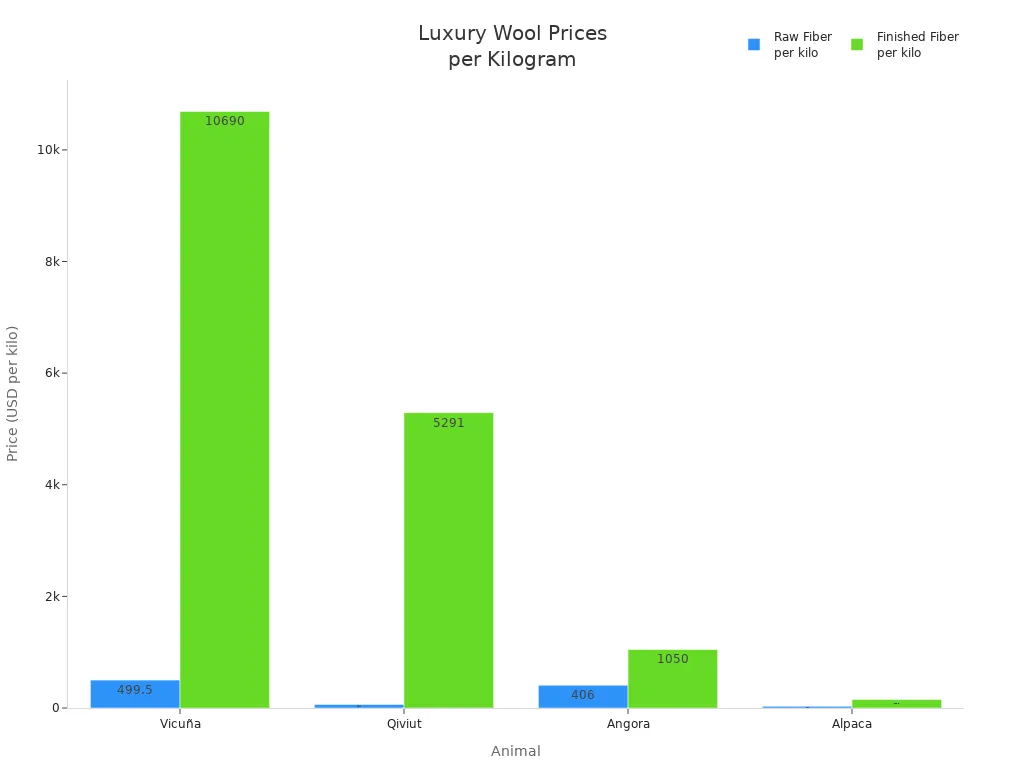
You touch vicuña wool and feel a softness that even surpasses cashmere. This rare and exclusive fabric comes from vicuñas, animals that live high in the Andes. Each year, they produce only about 0.5 kilograms of fleece, making vicuña wool extremely scarce. Strict laws protect these animals, adding to the exclusivity. The fibers measure just 12 microns, giving unmatched comfort. In the luxury market, vicuña wool stands as the most expensive wool, with finished fiber reaching $10,690 per kilo.
Animal | Raw Fiber (per kilo) | Finished Fiber (per kilo) |
|---|---|---|
Vicuña | $399 – $600 | $10,690 |
Qiviut | $64 | $5,291 |
Angora | $406 | $1,050 |
Alpaca | $2 – $59 | $83 – $218 |
You find vicuña wool in only a few fashion pieces each year, making it a true symbol of exclusivity.
Key Takeaways
Vicuña wool is the most expensive wool in the world, costing up to $10,690 per kilo due to its extreme rarity and unmatched softness.
Only about 0.5 kilograms of vicuña fleece is produced per animal each year, making it a highly exclusive fabric sought after by luxury brands.
The ethical and sustainable harvesting process involves shearing vicuñas only once every three years, ensuring their well-being and the wool’s limited supply.
Vicuña wool is significantly finer than cashmere, with fibers measuring just 12 microns, providing a unique silky texture and lightweight warmth.
Investing in vicuña wool garments not only offers luxury but also supports conservation efforts and local communities in the Andes.
Most Expensive Wool
What Is Vicuña Wool
You may wonder what makes vicuña wool stand out as the most expensive wool in the world. Vicuña wool comes from the fleece of the vicuña, a small camelid native to the Andes Mountains. This wool holds the title of the most expensive wool because of its incredible rarity and unmatched quality. Only about 12 tonnes of vicuña wool are produced each year, which is much less than the 25,000 tonnes of cashmere available worldwide. This limited supply makes vicuña wool highly sought after by luxury brands and collectors.
Vicuña wool feels softer and lighter than any other fiber. Each strand measures just 12 microns in diameter, making it even finer than cashmere. When you touch vicuña wool, you notice its silky texture and warmth. The natural color ranges from light cinnamon to pale white, giving it a unique and elegant look. The vicuña’s adaptation to the harsh, high-altitude climate of the Andes gives its wool these special qualities.
The process of collecting vicuña wool is both ethical and sustainable. People shear the animals only once every three years. They gather wild herds, shear them carefully, and release them back into the wild unharmed. This careful process ensures that the animals stay healthy and that the wool remains rare. Organizations like CONACS and INRENA control and supervise the shearing and collection. Only registered and legal wool enters the market, which helps protect the species and maintain the highest quality wool.
The price of vicuña wool reflects its rarity and luxury. Raw vicuña wool costs between $399 and $600 per kilo, while finished cloth can reach $2,500 per yard. A sports coat made from vicuña wool can cost over $20,000, and a custom suit starts at $40,000. These prices make vicuña wool one of the most expensive clothing materials and the finest material in the world. The high vicuña wool cost comes from the small supply, the careful harvesting process, and the special equipment needed to process the fiber.
Vicuña wool is often up to 10 times more expensive than the finest pashmina. Its status as the most expensive wool comes from its rarity, softness, and the strict rules that protect both the animal and the fiber.
Vicuña: The Animal
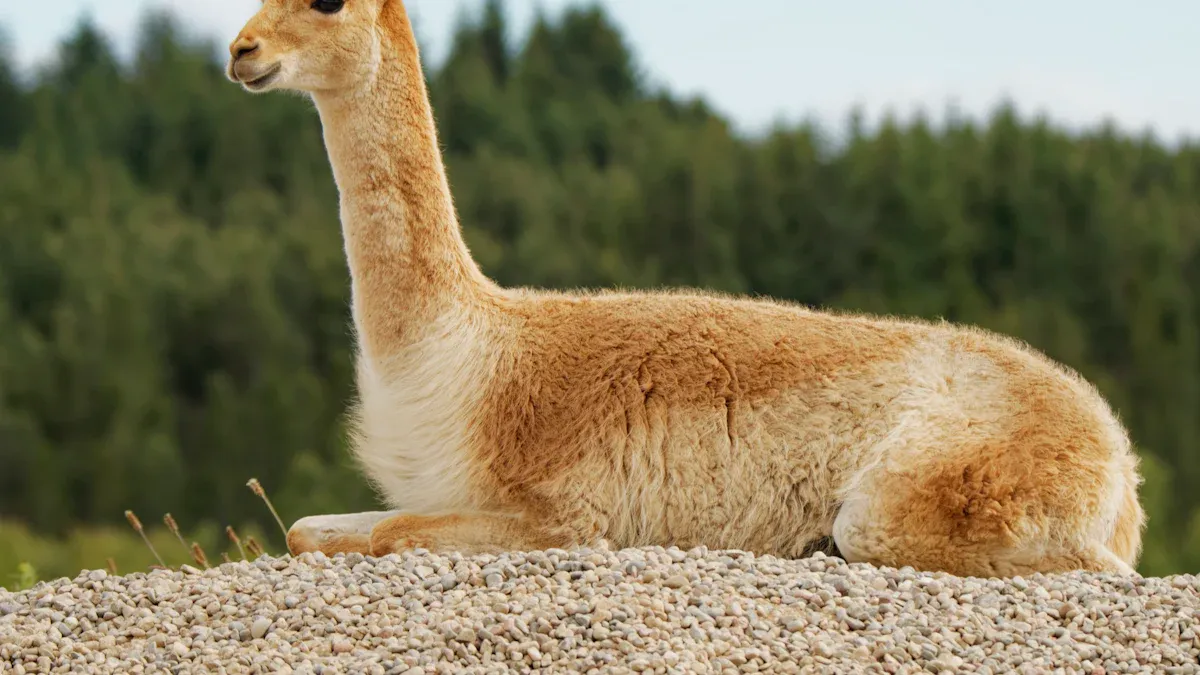
The vicuña is a graceful animal that lives in the high Andes Mountains of South America. You can find vicuñas at elevations where the air is thin and the weather is cold. Their bodies have adapted to survive in these tough conditions, which helps them grow the highest quality wool.
Here is a quick look at the vicuña and its environment:
Aspect | Details |
|---|---|
Natural Habitat | Inhabits the lofty elevations of the Andes Mountains, adapted to harsh, oxygen-thin altitudes. |
Population Status | Population has rebounded from around 6,000 in the 1960s to more than 350,000 today due to conservation efforts. |
Conservation Challenges | Faces threats from poaching, illegal trafficking of wool, habitat destruction, and fragmentation. |
Vicuñas once faced extinction because people hunted them for their valuable wool. Thanks to strong conservation efforts, their numbers have grown from about 6,000 in the 1960s to over 350,000 today. However, vicuñas still face dangers like poaching and habitat loss. Strict laws and careful management help protect these animals and ensure that only legal vicuña wool reaches the market.
You now know what makes vicuña wool the most expensive wool and why the vicuña is so important. The animal’s unique habitat and the careful way people collect its wool make vicuña wool the highest quality wool you can find. When you see the vicuna cost, you understand that you are paying for rarity, tradition, and the finest material in the world.
Vicuña Wool Value
Rarity & Conservation
You discover the true value of vicuña wool when you learn about its rarity and the conservation work that protects it. Vicuña wool comes from the vicuña, a wild animal that lives in the Andes. Only a small amount of wool is collected each year, which makes it one of the rare fibers in the world. The scarcity of vicuña wool drives its price higher than any other wool.
People once hunted vicuñas almost to extinction. Conservation programs changed this story. Today, you see vicuña populations grow because communities and governments work together. These efforts include:
Vicuña populations increased from just 3,000 in 1969 to over 163,000 in 2018.
Local communities manage vicuña herds and protect them from poaching.
Over 100 registered communities and 11 regional associations help with management.
The chaccus ceremony honors indigenous traditions and the environment. People shear vicuñas and release them back into the wild.
Earnings from vicuña wool sales support schools and health centers in local villages.
The Provincial Plan for Conservation and Sustainable Management of Wild Vicuña started in 2012. Indigenous communities help create local management plans.
Registered Vicuña Manager Communities regulate the trade and ensure sustainable practices.
You see the impact of these actions in the numbers. The table below shows how vicuña populations changed over time:
Year | Population Status | Population Size |
|---|---|---|
1969 | Endangered | 6,000 – 10,000 |
2006 | Least Concern | ~276,000 |
2017 | N/A | 460,000 – 520,000 |
Conservation programs and community involvement help vicuñas survive and thrive. These efforts make vicuña wool both rare and sustainable.
Strict rules control how people collect vicuña wool. Only government-authorized teams can harvest the wool. Each product has traceability, so you know where it comes from. Zero-stress shearing means the animals are never harmed. These rules protect the vicuña and keep the wool supply limited.
Unique Qualities
You feel the difference when you touch vicuña wool. It stands out as one of the softest fabrics in the world. The fiber diameter measures only about 12 microns, which is much finer than cashmere. This gives vicuña wool a silky texture and gentle warmth. You notice how lightweight it feels because the fibers are hollow.
The table below compares vicuña wool to cashmere:
Property | Vicuña Wool | Cashmere |
|---|---|---|
Fiber Diameter | Approximately 12 microns | About 19 microns |
Softness | Exceptionally soft | Soft |
Production | 0.5 kg per year | 3-4 kg per year |
You see that vicuña wool is finer and softer than cashmere. The warmth and lightness make it perfect for luxury clothing. Vicuña wool is also more expensive because of its rarity and limited production.
Vicuña wool has a micron count of 12-14, finer than cashmere and sheep’s wool.
The warmth and softness set it apart from other natural fibers.
Vicuña wool is lightweight, so garments feel comfortable and elegant.
The wool is similar to alpaca fiber but costs more due to its scarcity and special qualities.
You find strict sustainability standards in vicuña wool production. Each product can be traced back to its origin. Local Andean communities take part in every step, from management to shearing. Zero-stress shearing ensures the animals stay healthy. Limited harvesting keeps the population strong and the wool rare.
You pay a high price for vicuña wool because you get the finest, softest, and most sustainable fiber. The blend of rarity, conservation, and unique qualities makes vicuña wool the top choice for luxury.
Vicuna Wool vs Other Fabrics
Cashmere & Alpaca
When you look at luxury fabrics, you often hear about cashmere and alpaca. These fibers feel soft and warm, but vicuña wool stands above them all. Vicuña wool comes from the vicuña, a rare animal that lives in the Andes. You find that vicuña wool is much softer than cashmere or alpaca. The fibers of vicuña wool measure only about 12 microns in diameter. Cashmere fibers are thicker, at 15-19 microns, and alpaca fibers are even thicker, at 18-28 microns. This makes vicuña wool the softest and finest of these fabrics.
You also notice a big difference in price and exclusivity. Vicuña wool is the most expensive and rare. Cashmere is more common and costs less. Alpaca is the most affordable and easiest to find. People call vicuña wool the “Gold of the Andes” because it is so rare and valuable. You need to handle vicuña wool with care, but you get a fabric that feels like nothing else.
Wool Type | Price | Softness (Micron Diameter) | Exclusivity |
|---|---|---|---|
Vicuña | High | 12 microns | Very High |
Cashmere | Medium | 15-19 microns | Medium |
Alpaca | Low | 18-28 microns | Low |
Vicuña wool is extremely soft and rare.
Cashmere is soft but more common.
Alpaca is affordable and less exclusive.
Silk & Others
You may wonder how vicuña wool compares to silk and other luxury fabrics. Silk feels smooth and shiny, but it is thicker than vicuña wool. Vicuña wool has an average diameter of 12.5 microns, while silk is thicker and less rare. You find that silk is more widely available and costs less than vicuña wool. Vicuña wool can reach up to $3,000 per yard, while silk usually costs much less.
Fiber Type | Average Diameter (microns) | Market Value (per yard) | Rarity |
|---|---|---|---|
Vicuña | 12.5 | Up to $3,000 | Collected once every three years |
Silk | Thicker than vicuña | Generally lower | More widely available |
When you choose vicuña wool, you select the rarest and most exclusive of all fabrics. You get unmatched softness, warmth, and a true symbol of luxury.
Luxury Knitwear & Fashion

High-End Garments
You see vicuña wool used in some of the best luxury knitwear clothes in the world. This premium fabric creates garments that only a few people can afford. Vicuña wool garments include overcoats, scarves, shawls, and the rare vicuna sweater. Each piece uses the finest and most luxurious material. The price of these garments often surprises you.
A vicuña overcoat can cost over $20,000.
Loro Piana’s vicuña wool garments can exceed $35,000.
Some vicuña coats have a price tag above $35,000.
You find that these prices reflect the rarity and quality of vicuña wool. Only the most affluent buyers can own these luxurious fabrics. Each garment feels soft, warm, and light. You wear a piece of history and tradition when you choose vicuña wool garments.
Brands & Craftsmanship
You notice that only a few luxury brands work with vicuña wool. These brands include:
Loro Piana
Berluti
Ermenegildo Zegna
Brioni
Zilli
Holland & Sherry
You may see a double-breasted overcoat with peak lapels from Haider Ackermann’s collection for Berluti. This coat uses 100-percent vicuña sourced from Loro Piana. Each brand treats vicuña wool as a premium fabric and highlights its exclusivity.
The process of making vicuña wool garments requires special skills. Here is what happens:
Community gathering in the Andes where vicuñas live.
Careful herding of vicuñas into a safe area.
Gentle capture by trained professionals.
Precise shearing with special tools to collect the best wool.
Immediate release of each vicuña back into the wild.
You see that brands like Knitbrary protect hand knitting traditions. They produce only a few pieces in each collection. This approach makes every vicuña wool garment unique and valuable.
When you choose luxury knitwear made from vicuña wool, you select a garment that combines rare fibers, skilled craftsmanship, and a rich heritage. You own a piece that stands at the top of the fashion world.
You discover what makes vicuña the ultimate luxury fabric. The prestige of vicuña comes from its exceptional softness, lightweight feel, and timeless appeal.
Vicuña offers a timeless drape and comfort that no other fiber matches.
The rarity of vicuña, with only a small amount harvested every few years, creates timeless exclusivity.
Vicuña’s timeless beauty reflects the historical significance of vicuña wool, once reserved for royalty.
The timeless traditions of Andean communities, like the Chaccu, show deep respect for vicuña.
Vicuña stands as a timeless investment for collectors because of its scarcity.
Ethical and sustainable practices shape what you value in vicuña. While vicuña supports conservation, many communities still face challenges. You see that timeless luxury also means caring for people and nature.
Environmental Aspect | Vicuña Wool | Comparative Textile |
|---|---|---|
Carbon Emissions | Extremely Low | High (Synthetic Fabrics) |
Water Usage | Minimal | High (Cotton, Polyester) |
Animal Welfare | Ethical, Non-Invasive | Varies Widely |
Biodegradability | 100% Natural | Limited (Synthetic Textiles) |
You recognize what sets vicuña apart: timeless rarity, tradition, and craftsmanship. When you choose vicuña, you embrace a fabric with a timeless story and a future shaped by ethical care.
FAQ
What makes vicuña wool so expensive?
You pay a high price for vicuña wool because it is rare, soft, and hard to harvest. Strict rules protect the animals. Only a small amount of wool is collected each year.
What is the difference between vicuña wool and cashmere?
Vicuña wool feels softer and lighter than cashmere. The fibers measure only 12 microns. Cashmere fibers are thicker. Vicuña wool costs much more and is harder to find.
What products use vicuña wool?
You find vicuña wool in luxury garments like coats, scarves, shawls, and sweaters. Only a few brands use this wool. Each piece is unique and very expensive.
What is the process for harvesting vicuña wool?
People gather wild vicuñas, shear them gently, and release them back into the wild. This process happens every three years. It protects the animals and keeps the wool rare.
What are the benefits of choosing vicuña wool?
You get unmatched softness, warmth, and lightness. Vicuña wool is sustainable and ethical. You support conservation and local communities when you buy products made from this wool.