

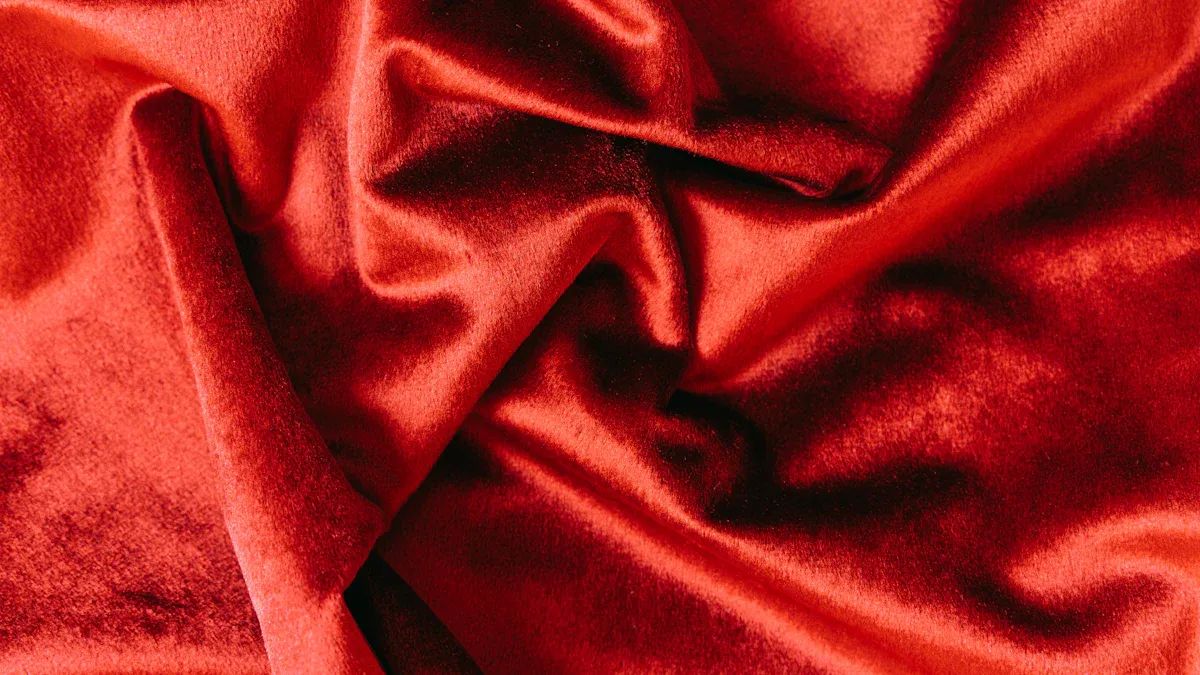
You might wonder what the most expensive fabric in the world is. Shahtoosh holds this title, with prices reaching up to $20,000 per shawl. Fabrics like Shahtoosh stand out because of their rarity, the skill needed for production, and their exclusivity. You will also find other luxury materials among the most expensive fabrics, such as Vicuña Wool, Leopard Fur, Baby Cashmere, and Mulberry Silk, each offering unique qualities and origins.
Key Takeaways
Shahtoosh is the most expensive fabric, costing up to $20,000 per shawl. Its rarity and softness make it highly sought after.
Vicuña wool, known as ‘the fiber of the gods,’ is extremely rare and can cost between $4,000 and $40,000. Each animal produces wool only every two to three years.
The production of luxury fabrics like Shahtoosh and Vicuña wool requires skilled artisans and labor-intensive processes, which significantly increases their value.
Cultural value plays a crucial role in the pricing of luxury fabrics. Supporting traditional craftsmanship and fair labor practices enhances their worth.
When buying expensive fabrics, consider their source, softness, and craftsmanship. Look for certifications to ensure quality and ethical production.
The Most Expensive Fabric: Shahtoosh
Origin
Shahtoosh comes from the hair of the endangered Tibetan antelope, also called the chiru. You find these animals in the Changtang region of China. Skilled artisans in the Kashmir valley of India have woven this fiber into shawls for centuries. The rarity of Shahtoosh makes it one of the most coveted textiles in the world. Many countries have made it illegal because the Tibetan antelope is protected. The table below shows why Shahtoosh is so rare and its legal status in different places:
Aspect | Details |
|---|---|
Rarity | Shahtoosh is rare due to its origin from the endangered Tibetan antelope (chiru). |
Legal Status in India | Processing or wearing shahtoosh is a punishable offense. |
Legal Status in Pakistan | Selling shahtoosh can lead to prison sentences of up to two years and fines of up to Rs1m (£5,805). |
International Status | International trade in Tibetan antelope is banned under CITES, which Pakistan is a signatory to. |
Qualities
You will notice that Shahtoosh stands out among the most expensive fabrics because of its unique qualities. Here are some features that make it the ultimate luxury fabric and one of the most coveted textiles:
Unmatched softness: Shahtoosh feels incredibly soft because the chiru’s underfur has a very low micron count, between 9 and 11 microns.
Delicacy: The fabric is very delicate, which adds to its appeal as an expensive textile.
Warmth: Even though it is lightweight, Shahtoosh keeps you warm in cold weather.
Shahtoosh is famous for being softer and warmer than other high-end fabrics. For example, cashmere is also soft and warm, but it has a higher micron count. Many people consider Shahtoosh superior in both softness and warmth.
Production
The process of making Shahtoosh is long and requires great skill. You can see the steps below:
Collection of Wool: People collect the wool from the undercoat of the Tibetan antelope. In the past, they gathered the wool after the animals shed it naturally. Today, this practice is banned to protect the species.
Cleaning and Spinning: Workers clean the raw wool carefully to remove dirt. Then, they spin it into fine yarn by hand.
Weaving: Artisans weave the yarn into shawls using traditional handlooms. This step takes months and needs a lot of precision.
Embellishment: Many Shahtoosh shawls have hand embroidery with floral or paisley designs, which are common in Kashmiri art.
Producing just one Shahtoosh shawl requires wool from three to five Tibetan antelopes. Because of this, the Tibetan antelope is now listed as ‘Near Threatened’ and protected by international laws.
Cost and Uses
Shahtoosh ranks at the top of the most expensive fabrics list. The price of a Shahtoosh shawl depends on its quality and design. You can see the typical price range in the table below:
Price Range | Description |
|---|---|
Up to US$ 299 | Entry-level luxury shawls |
US$ 300 to US$ 699 | Mid-range luxury shawls |
US$ 700 to US$ 1499 | High-end luxury shawls |
US$ 1500 & above | Premium luxury shawls |
People use Shahtoosh mainly for luxury shawls and scarves. These items are symbols of status and wealth. Because of its rarity and the strict laws protecting the Tibetan antelope, owning a Shahtoosh shawl is now very rare. Collectors and fashion lovers still seek it as one of the most coveted textiles in the world.
Top 5 Most Expensive Fabrics
Vicuña Wool
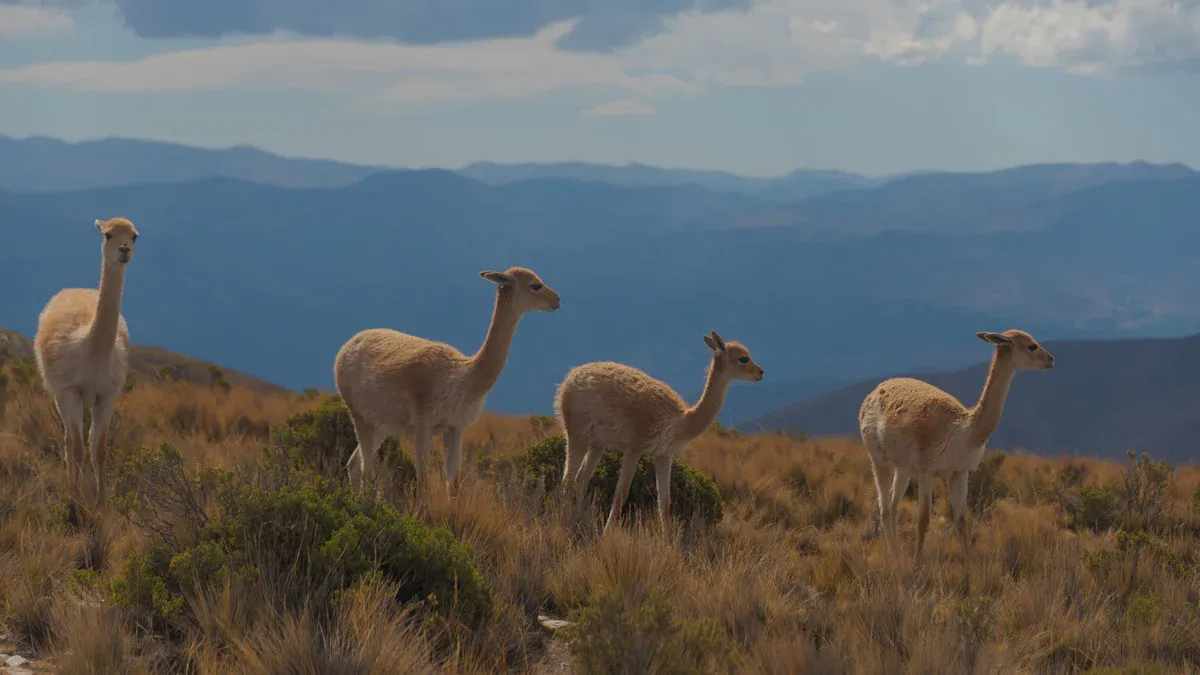
Vicuña wool comes from the vicuña, a small animal living in the Andes mountains. You will find that this fiber is one of the most expensive fabrics in the world. The Incas called it “the fiber of the gods” and reserved it for royalty. Vicuña wool is softer and warmer than cashmere. Each animal produces only a small amount of wool every two to three years. The shearing process is gentle and respects the animals.
Quality/Origin | Vicuña Wool | Other Luxury Fabrics |
|---|---|---|
Fineness | Average diameter of 12.5 microns | Varies, generally coarser |
Softness | Exceptionally soft, finer than cashmere | Cashmere, silk, merino wool |
Warmth | Incredibly warm with excellent insulation | Varies, often less warm |
Rarity | Extremely rare, sheared every 2-3 years | More widely available |
A vicuña wool sweater can cost between $4,000 and $40,000. Pure vicuña fabric can reach over $30,000, making it a symbol of true luxury.
Guanaco Wool
Guanaco wool comes from the guanaco, a wild animal related to the llama. You will notice its thick, reddish-brown coat. Guanaco fabric is soft, durable, and hypoallergenic. It is rare because each animal gives only 2 to 3 pounds of wool.
Guanaco fibre is mainly processed on the worsted system, with fine-count yarns supplied to exclusive tailoring businesses. Pure guanaco is more common in accessories.
Guanaco wool costs over $400 per kilogram. Its softness and rarity make it one of the most expensive fabrics.
Baby Cashmere
Baby cashmere is made from the undercoat of kid goats, mostly found in Mongolia and the Himalayas. You will feel the difference because the fibers are only about 13.5 microns wide. Baby cashmere is softer and warmer than regular cashmere. The harvesting process is careful and labor-intensive, which adds to its value. Prices range from $1,500 to $2,600 for high-quality items.
Qiviut
Qiviut comes from the undercoat of the muskox, an animal living in Arctic regions. This fiber is eight times warmer than sheep’s wool and softer than cashmere. Qiviut is hypoallergenic and rare because you can only collect it during the animal’s natural molting season.
Quality/Property | Qiviut | Wool |
|---|---|---|
Source | Undercoat of muskox | Fleece of sheep |
Warmth | Eight times warmer than wool | Warm, but less warm than qiviut |
Softness | Softer than cashmere | Varies, generally less soft |
A hand-knit qiviut scarf usually costs between $300 and $400.
French Leavers Lace
French Leavers lace is a delicate fabric made on special Leavers looms. You will see it in high-end bridal and couture fashion. The production process is slow and requires skilled artisans. Each piece has intricate patterns and a soft, luxurious feel. Prices for French Leavers lace can reach thousands of dollars per yard, making it a favorite among designers who want the most expensive fabrics.
Other Notable Luxury Fabrics
Icelandic Eiderdown
You may wonder what makes Icelandic Eiderdown so valuable. Eiderdown comes from the nests of wild eider ducks in Iceland. Only a few ounces are harvested from each nest, and the global supply reaches just a few thousand kilograms each year. The harvesting process requires careful, labor-intensive work. Eiderdown stands out for its exceptional warmth and lightness. Its rarity makes it more expensive by weight than gold or platinum. Strong market demand drives prices even higher. You will find that the limited number of eider ducks worldwide adds to its exclusivity.
Eiderdown is one of the rarest natural fillings. Its unique physical properties make it a top choice for luxury bedding and outerwear.
Mulberry Silk
Mulberry silk is the most prized type of silk in the world. You will see it produced mainly in China and India. Skilled artisans harvest cocoons from silkworms that feed only on mulberry leaves. The production process is labor-intensive and requires great care. Mulberry silk feels soft and smooth against your skin. Its natural sheen and durability make it popular for luxury clothing and bedding.
Factor | Description |
|---|---|
Labor-Intensive Production | Skilled artisans are required to harvest cocoons, increasing production costs. |
Limited Availability of Silkworms | Primarily found in China and India, leading to higher prices due to exclusivity. |
Economic Factors | Inflation and employment rates affect consumer purchasing power and demand. |
Consumer Trends | Growing interest in ethical fashion influences market dynamics. |
Environmental Factors | Climate change can impact silk farming conditions, affecting production volumes. |
You will notice that the price of mulberry silk changes with the availability of raw materials and market trends. Environmental factors and consumer interest in ethical fashion also influence its cost.
Leopard Furs
Leopard furs have symbolized wealth and exclusivity for centuries. Ancient Egyptian royalty and high priests wore leopard furs to show their status. Today, luxury brands like Louis Vuitton and Celine use leopard print in their collections. Designers such as Alaïa and Dolce & Gabbana made leopard print popular on runways in the 1990s. Leopard furs remain a staple in luxury fashion, and you can find them at various price points. Their historical significance and enduring appeal keep them in demand.
Leopard print is versatile and continues to attract attention in the luxury market.
You will see leopard furs used in coats, accessories, and even home décor.
Koigu Kersti Cashmere
Koigu Kersti Cashmere is a luxury yarn that you may find in high-end knitting and crochet projects. This yarn blends softness and warmth, making it ideal for scarves, sweaters, and accessories. Koigu Kersti Cashmere stands out for its vibrant colors and smooth texture. You will notice that it is spun in small batches, which adds to its exclusivity. The combination of cashmere fibers and expert craftsmanship makes this yarn a favorite among those who seek premium materials.
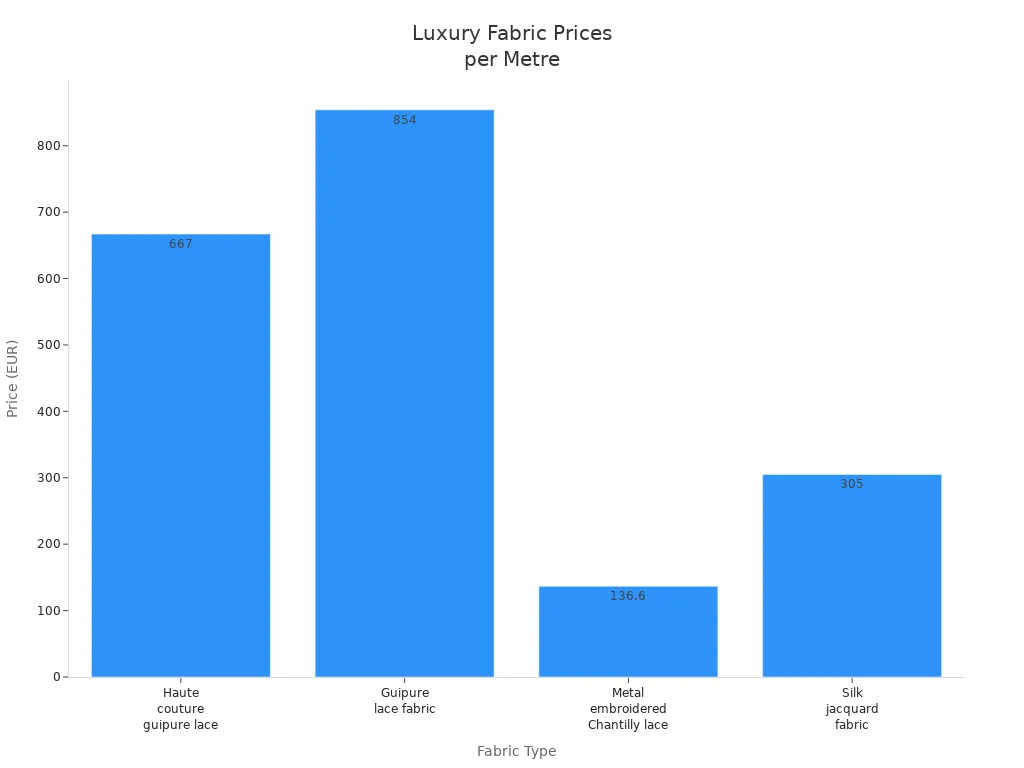
Fabric Type | Price (per running metre) |
|---|---|
Haute couture guipure lace fabric | 799 US$ |
Guipure lace fabric | 1,056 US$ |
Metal embroidered Chantilly lace | 169 US$ |
Silk jacquard fabric | 378 US$ |
What Makes Fabrics the Most Expensive
Rarity
You will notice that rarity plays a big role in the value of luxury fabrics. When a material comes from a rare animal or plant, or when only a small amount can be collected each year, the price goes up. For example, vicuña wool and Icelandic eiderdown are both hard to find. Only a few animals produce these fibers, and you can collect them only in small amounts. This limited supply makes these fabrics highly sought after by luxury fashion brands.
Production
The way you produce a fabric can make it much more expensive. Some fabrics require a lot of time and skill to create. You can see in the table below how labor-intensive some of these processes are:
Fabric | Price per Yard | Labor-Intensive Process Description |
|---|---|---|
Vicuña Wool | Up to $3,000 | Harvesting is meticulous; vicuñas can only be shorn every 2-3 years. |
Mulberry Silk | $100 – $500 | Produced from silkworms fed exclusively on mulberry leaves, requiring specialized cultivation. |
Cashmere | $100 – $600 | Collection and processing are done by hand, with limited wool obtained from each goat annually. |
Chantilly Lace | $500 – $1,000 | Handcrafted with intricate designs, requiring many hours of labor. |
Beaded Fabrics | $500 – several thousand | Custom-made with hand-sewn beads and intricate patterns, needing highly skilled artisans. |
You can see that the more work and skill needed, the higher the cost.
Qualities
Certain qualities make a fabric stand out. You might look for softness, warmth, or a special shine. These features make the fabric feel and look better. The table below shows how qualities affect pricing:
Fabric Type | Key Qualities | Impact on Pricing |
|---|---|---|
Silk | Softness, Durability, Elegance | High production costs contribute to premium pricing. |
Cashmere | Luxurious texture, Lightweight, Durability | Increasing demand drives higher prices. |
When you choose a fabric with these qualities, you pay more for the experience and comfort.
Cultural Value
Cultural value also adds to the cost of a fabric. You support traditional craftsmanship and skilled artisans when you buy these materials. Here are some reasons why cultural value matters:
Traditional skills and slow fashion increase the price.
Fair pay for artisans reflects the stories and heritage in each fabric.
A value-driven fashion economy respects culture and creativity.
Fair labor and ecological costs are included in the price.
Recognizing heritage, not just copying it, gives true worth to luxury items.
You help keep these traditions alive when you choose fabrics with strong cultural roots.
You see clear differences in price, origin, and qualities among luxury fabrics. Shahtoosh stands apart for its rarity and warmth. Many fabrics, like vicuña wool and mulberry silk, come from exclusive sources and require skilled craftsmanship. The table below shows what drives their allure:
Factor | Description |
|---|---|
Rarity | Rare fabrics are more exclusive. |
Craftsmanship | Skilled work increases value. |
Historical significance | Rich history adds prestige. |
You discover that these fabrics remain desirable because few people can own them.
FAQ
What makes Shahtoosh illegal in many countries?
You find Shahtoosh illegal because it comes from the endangered Tibetan antelope. Laws protect this animal. International trade bans help stop poaching and save the species.
What is the rarest fabric you can buy legally?
Vicuña wool is the rarest legal fabric. You can buy it because the animals are sheared without harm. Strict rules control its production and sale.
What qualities do luxury fabrics have?
Luxury fabrics feel soft, warm, and light. You see a natural shine or unique texture. These fabrics last long and often come from rare animals or plants.
What is the difference between cashmere and baby cashmere?
Baby cashmere comes from the undercoat of young goats. The fibers feel softer and finer than regular cashmere. You notice a smoother texture and higher price.
What should you look for when buying expensive fabric?
You should check the source, softness, and weave. Look for certifications or labels. Ask about how the fabric was made. High-quality fabrics show expert craftsmanship.