


You probably don’t realize how much a monopod can improve solo camera work until you need steady framing without the bulk of a tripod. If you shoot alone, the right model can keep your gear balanced, speed up setup, and help you move from one angle to the next with less hassle. The six options below each bring something useful, but one may suit your setup better than the rest.
| COMAN Camera Monopod with Fluid Head and Feet |

| Best Overall | Type: Monopod with feet | Material: Aluminum alloy | Max Height: 71.25 in | VIEW LATEST PRICE | Read Our Analysis |
| SmallRig Carbon Fiber Camera Monopod with Ball Head |

| Best for Portability | Type: Carbon fiber monopod | Material: Carbon fiber/aluminum | Max Height: 65.6 in | VIEW LATEST PRICE | Read Our Analysis |
| IFOOTAGE 71″ Aluminum Camera Monopod with Tripod Stand |

| Best for Versatility | Type: Aluminum monopod | Material: Aluminum | Max Height: 71 in | VIEW LATEST PRICE | Read Our Analysis |
| Acuvar 62-Inch Monopod with Safety Strap |

| Best Budget Pick | Type: Basic monopod | Material: Aluminum | Max Height: 62 in | VIEW LATEST PRICE | Read Our Analysis |
| Nicama NC-T1 DSLR Camera Monopod Tripod with Base |
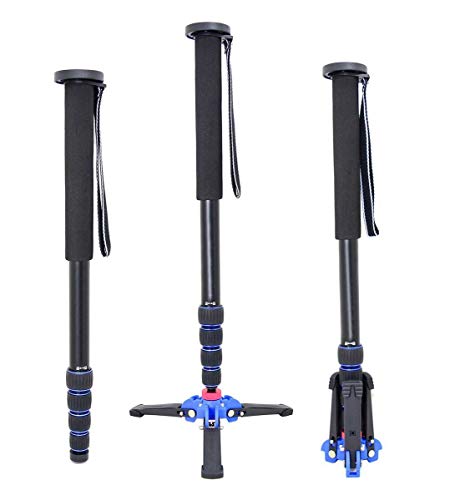
| Best for Stability | Type: Monopod tripod | Material: Aluminum alloy | Max Height: 66 in | VIEW LATEST PRICE | Read Our Analysis |
| Altura Photo 62-Inch Camera Monopod with Pouch |

| Best Lightweight Option | Type: Camera monopod | Material: Aluminum | Max Height: 62 in | VIEW LATEST PRICE | Read Our Analysis |
More Details on Our Top Picks
COMAN Camera Monopod with Fluid Head and Feet
If you want a camera monopod that’s easy to carry but still gives you smooth, controlled movement, the COMAN/Famall DK327Q6-US is a strong fit. You get a 5-section aluminum alloy design that folds to 25 inches, weighs 4.2 pounds, and extends to 71.25 inches. The Q6 hydraulic fluid head pans 360 degrees and tilts from +90 to -70 degrees, so you can follow action cleanly. Its 1/4 quick-release plate, Manfrotto compatibility, and quick-release feet help you set up fast. With a 22-pound load limit, it handles most cameras, DSLRs, and camcorders well.
- Type:Monopod with feet
- Material:Aluminum alloy
- Max Height:71.25 in
- Weight Capacity:22 lb
- Leg Sections:5 sections
- Mount Type:Quick release plate
- Additional Feature:360° panning
- Additional Feature:+90° / -70° tilt
- Additional Feature:1-second quick release
SmallRig Carbon Fiber Camera Monopod with Ball Head
The SmallRig 166.5cm Carbon Fiber Monopod for Camera is a smart pick if you want a lightweight, portable support that still feels stable for outdoor or confined-space shooting. You get a carbon fiber and aluminum alloy build, four sections, and a ball head that handles cameras up to 5 kg at the head, with 15 kg leg support. At 166.5 cm max and 68 cm folded, it’s easy to carry. One-touch height adjustment, one-handed locking, a bubble level, and included threads and spigot help you set up fast.
- Type:Carbon fiber monopod
- Material:Carbon fiber/aluminum
- Max Height:65.6 in
- Weight Capacity:33 lb leg / 11 lb head
- Leg Sections:4 sections
- Mount Type:1/4″-20 / 3/8″-16 threads
- Additional Feature:One-touch height adjustment
- Additional Feature:Built-in bubble level
- Additional Feature:Double-ended spigot
IFOOTAGE 71″ Aluminum Camera Monopod with Tripod Stand
Need a flexible, travel-friendly support for serious shooting? The IFOOTAGE Cobra 2 A180-II gives you a lightweight aluminum monopod that extends from 5.3 inches to 71 inches, so you can frame tight or shoot high with ease. You get a detachable tripod base with 360° swivel and 90° tilt, plus three modes: fixed video monopod, portable monopod, and low-angle pod. Its single-hand quick lock/unlock saves time, and the 8 kg capacity handles most camera setups. It also fits DSLRs, camcorders, and more with the right adapter.
- Type:Aluminum monopod
- Material:Aluminum
- Max Height:71 in
- Weight Capacity:8 kg
- Leg Sections:3 sections
- Mount Type:Quick release plate
- Additional Feature:3 usage modes
- Additional Feature:360° swiveling base
- Additional Feature:Single-hand quick lock
Acuvar 62-Inch Monopod with Safety Strap
With its integrated safety strap, padded grip, and lightweight 4-section aluminum build, the Acuvar 62-Inch Monopod suits shooters who want a simple, portable support option for cameras or phones while staying steady on the move. You can extend it to 62 inches, fold it down to 16.75 inches, and carry it easily at just 11.21 ounces. Its universal 1/4-inch mount works with DSLR, mirrorless, compact cameras, camcorders, and cell phones. The rubber foot and retractable spike help you stay stable indoors or on rough ground, and it supports up to 6.6 pounds.
- Type:Basic monopod
- Material:Aluminum
- Max Height:62 in
- Weight Capacity:6.6 lb
- Leg Sections:4 sections
- Mount Type:1/4″ screw mount
- Additional Feature:Safety wrist strap
- Additional Feature:Retractable metal spike
- Additional Feature:Non-slip rubber tip
Nicama NC-T1 DSLR Camera Monopod Tripod with Base
Nicama’s NC-T1 DSLR Camera Monopod Tripod with Base is a smart pick if you want one lightweight support that adapts to both steady handheld shooting and extra stability when you need it. You can extend it to 66 inches, then swap in the removable three-leg base for 360° rotation and 15° tilt control. Its aluminum build, foam grip, and 5-section design keep it portable at just 0.9 kg. You can mount Canon, Nikon, Sony, Sigma, or GoPro gear with the 1/4-inch plate, as long as you stay under 11 pounds.
- Type:Monopod tripod
- Material:Aluminum alloy
- Max Height:66 in
- Weight Capacity:11 lb
- Leg Sections:5 sections
- Mount Type:1/4″ screw plate
- Additional Feature:360° panoramic rotation
- Additional Feature:Removable tripod base
- Additional Feature:Foam hand grip
Altura Photo 62-Inch Camera Monopod with Pouch
The Altura Photo 62-Inch Camera Monopod with Pouch is a smart pick if you want a lightweight, travel-friendly support for DSLR, mirrorless, or video cameras. You can extend it to 62 inches, then fold it down to just 16.75 inches for easy packing. Its aluminum build weighs only 0.59 pounds, yet it still handles up to 5 pounds. The foam grip, wrist strap, rubber foot, and retractable spike help you stay steady indoors or outdoors. A 1/4-inch mount, 3/8-inch adapter, and carry pouch add convenience.
- Type:Camera monopod
- Material:Aluminum
- Max Height:62 in
- Weight Capacity:5 lb
- Leg Sections:4 sections
- Mount Type:1/4 inch thread mount
- Additional Feature:Safety wrist strap
- Additional Feature:Retractable leg spike
- Additional Feature:Includes carry pouch
Factors to Consider When Choosing Monopods for Camera
When you choose a monopod, check the height range so it fits your shooting style and gives you a comfortable reach. You’ll also want enough load capacity, the right number of leg sections, and a head type that matches your camera setup. Finally, consider weight and portability so you can carry it easily wherever you shoot.
Height Range
A good monopod height range helps you shoot comfortably without hunching or overreaching, so aim for a model whose maximum height matches your eye level or rises slightly above it-often around 62 to 71.25 inches. Check the minimum height too, because dropping to about 16.75 to 25.2 inches gives you more options for low-angle shots and tight spaces. If you travel often, a folded length of roughly 16.75 to 27.8 inches makes packing and storage easier. You’ll also want to think about section count: 3, 4, or 5 sections can change how smoothly you adjust height while keeping the design manageable. For the most flexibility, choose a monopod with a wide extension span, such as about 5.3 inches up to 71 inches, so you can frame quickly.
Load Capacity
Load capacity matters just as much as height, because your monopod needs to support the full weight of your camera, lens, and any accessories without flexing or failing. Choose a rating comfortably above your total setup weight, not just barely enough. If you shoot with a light mirrorless kit, 5 to 6.6 lb may work. Bigger rigs, long telephoto lenses, video heads, or heavy accessories usually call for 11 lb, 15 kg, or more. Check whether the number covers the monopod leg only or the head too, since manufacturers don’t always measure the same way. If you pan quickly or reposition often, add extra margin so you’ll get better stability and less strain.
Leg Sections
Leg sections shape how a monopod feels in use: fewer sections usually mean faster setup and better rigidity, while more sections improve compactness for travel and storage. When you compare models, remember that 3-section to 5-section designs are common. A 4-section monopod often gives you a smart middle ground, since it balances portability with stability nicely. If you travel often or stash your gear in a small bag, a 5-section model can save space because it collapses smaller than a similar-height 3-section version. Just keep in mind that extra sections can add weight, more locking points, and a little more setup time. Choose the section count that fits your maximum height needs, folded size, and shooting environment best.
Head Type
The right head type can make your monopod far more versatile, especially if you shoot both stills and video. If you film motion, choose a fluid head for smooth pans and controlled tilts; it usually gives you 360° panning and a wide tilt range, around +90° to -70°. If you need faster framing, a ball head lets you reposition with one hand and change angles quickly. A basic 1/4-inch screw mount works for direct attachment, but it offers less control. Some monopods let you swap heads, so you can match the setup to each shot. Also check load support: a head may hold about 5 kg/11 lb even if the monopod leg can take more.
Weight And Portability
When you carry your monopod for long shoots, weight and folded size matter just as much as stability. You’ll feel the difference between a 0.59 lb model and one that weighs over 4 lb when you’re walking all day. A lighter monopod reduces fatigue, and aluminum usually keeps things manageable, while carbon fiber can trim even more weight for outdoor trips. Check the folded length too: compact options can collapse to about 16.75 in, while bulkier ones may stay near 25 to 27.8 in. If you travel often, choose a 3-, 4-, or 5-section design, since it packs smaller than a single-piece version. Quick-adjust or one-touch height changes also help you move fast without adding hassle.
Mount Compatibility
Mount compatibility can make or break how smoothly your monopod works in the field. Check that the top mount matches your camera setup, whether you need a universal 1/4-inch screw, a 3/8-inch thread, or a quick-release plate. If you use a video head, ball head, or accessory arm, confirm the monopod supports the right connection points, such as 1/4″-20, 3/8″-16, or a dual-thread design. This helps you avoid adapters that slow you down. If you want faster setup and removal, choose a quick-release system that matches your plate standard instead of a fixed screw mount. For heavier rigs, verify the mount and overall load rating so your gear stays secure while you work.
Grip And Stability
A padded or foam grip can make a big difference if you’re holding the monopod for long stretches, since it improves comfort and helps prevent slipping. You’ll feel steadier during handheld shooting, especially when you’re moving quickly between angles. For better balance, look for a wider support base, like locking feet, a removable tripod base, or a swiveling base that resists tipping. Match the feet to your terrain: rubber feet and non-skid tips work well indoors, while retractable spikes bite into dirt, grass, or uneven ground. Also check load capacity, since higher ratings usually support your camera more securely. Finally, choose solid locking mechanisms and a safety strap so you can adjust height confidently without risking drops or wobble.
Frequently Asked Questions
How Much Weight Can a Camera Monopod Safely Support?
Most monopods safely hold about 6 to 20 pounds. Always verify the manufacturer’s rated load for your specific model and do not exceed that limit, especially when using heavy lenses, to prevent wobble, equipment damage, or collapse.
Are Monopods Allowed in Airports and on Airplanes?
You can normally bring a monopod through airport security, and many airlines permit it in carry-on or checked baggage. Check the airline size and weight limits, and be aware that individual security officers may ask to inspect it or refuse it if they deem it potentially hazardous.
Can Monopods Work Well With Smartphones and Action Cameras?
Yes. Monopods pair well with smartphones and action cameras because they are light and provide stable support. With the appropriate phone holder or camera adapter, you can record smoother video, take clearer selfies, and capture steadier travel footage.
Do Monopods Help Reduce Blur in Low-Light Photography?
Yes. A monopod reduces blur in low light by stabilizing the camera so you can use slower shutter speeds with less motion blur. It does not provide the complete stability of a tripod, so maintain proper stance, use your body to brace the monopod, and consider using mirror lockup or electronic shutter and a small aperture or higher ISO as needed.
How Do I Clean and Maintain a Camera Monopod?
Treat your monopod like precision gear. After every shoot wipe the legs and head with a soft cloth to remove dust and sand. Rinse off stubborn grit with a damp cloth and let the parts dry completely before collapsing the legs. Inspect each locking mechanism for wear and tighten any loose screws. Apply a small amount of silicone lubricant to moving joints only where metal rubs on metal and wipe away excess. Store the monopod upright in a dry, ventilated case to prevent corrosion and keep shots steady over time.
