


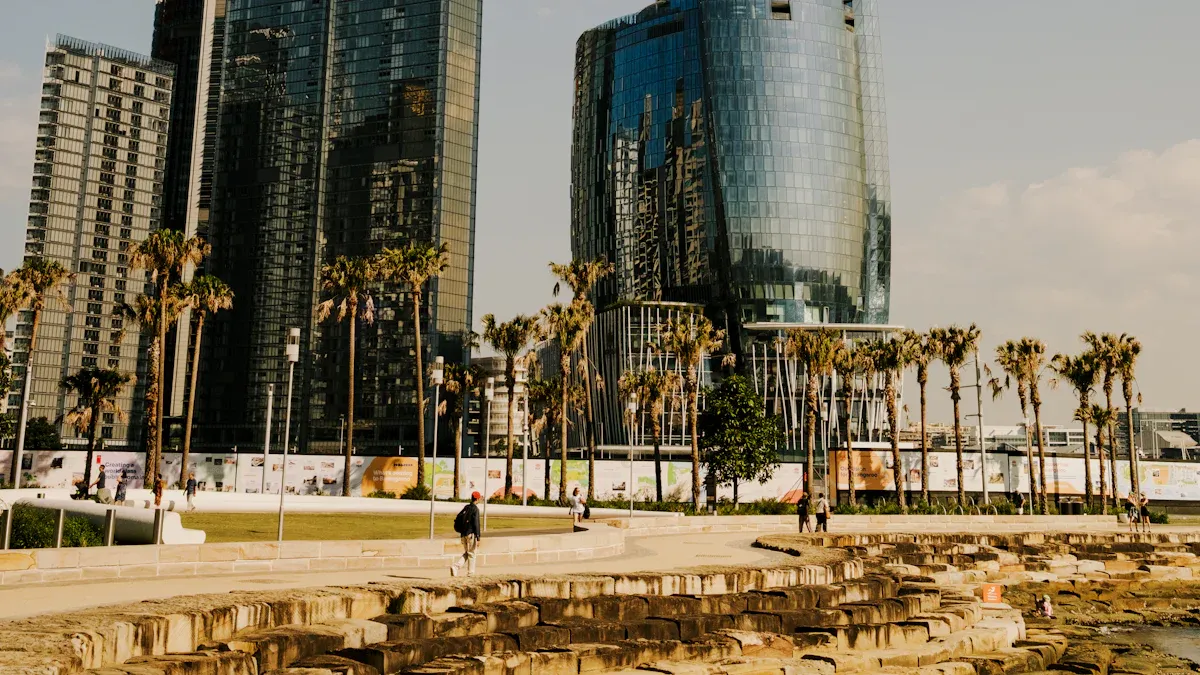
Imagine towering structures that pierce the sky. These modern architectural marvels stand as symbols of human ingenuity and progress. Each skyscraper represents an architectural masterpiece. This blog showcases 15 amazing skyscrapers. They define the cutting edge of modern design, engineering, and sustainability in the world of 2025. These modern architectural wonders are global landmarks. They demonstrate future-forward thinking and innovation in architecture, shaping our world.
Key Takeaways
Modern skyscrapers are tall buildings. They show new ideas in design and building.
These buildings are chosen for their height, new designs, and care for the environment.
Skyscrapers use smart ways to save energy and water. They also use new building materials.
Each skyscraper helps its city grow. It also shows what people can build.
Future skyscrapers will have plants on them. They will also use more new technology.
Defining Modern Architectural Wonders
Criteria for Selection
The selection of these 15 amazing skyscrapers follows specific, rigorous criteria. First, sheer height is a primary factor. These structures rank among the tallest in the world, pushing the boundaries of vertical construction. Second, innovative architecture plays a crucial role. This includes groundbreaking design elements, unique aesthetic forms, and advanced engineering solutions.
Third, sustainable practices are absolutely essential. Modern architecture embraces environmental responsibility at every stage. Buildings now feature radical reuse of materials, incorporating upcycled components to conserve resources and reduce waste. Healthier building codes also guide construction, prioritizing low-carbon materials and requiring embodied carbon calculations.
This commitment ensures a reduced environmental footprint. Fourth, global impact is carefully considered. Each selected building significantly influences its city’s skyline, economy, and cultural identity. It also leaves a lasting mark on the world stage. These structures are true architectural wonders, showcasing human ingenuity and progress.
Why 2025 Matters
The year 2025 highlights current and near-future architectural pinnacles. It reflects the rapid evolution of building technology and design. By 2025, many new trends become standard practice in the industry. For example, designers increasingly merge traditional craftsmanship with modern technology.
This creates advanced bio-based and biodegradable materials. Mycelium insulation and bio-based composites are prime examples of such innovations. Buildings also prioritize resource efficiency and adaptability. This leads to smaller, multifunctional designs that use fewer resources. Furthermore, community-led localized design gains significant importance. It emphasizes locally sourced materials and integrates community input. This creates spaces supporting local ecosystems and social equity. These modern wonders showcase the future of urban development. They represent the cutting edge of architecture.
Burj Khalifa: Dubai’s Iconic Marvel
Location and Stature
The Burj Khalifa stands prominently in Dubai, United Arab Emirates. It is the world’s tallest building. The Burj Khalifa stands at 828 meters (2,717 feet) tall. This makes it a dominant feature of the Dubai skyline. Its immense height captures global attention.
Architectural Design & Features
The architecture of the Burj Khalifa draws inspiration from the Hymenocallis flower. Its design features a triple-lobed footprint. This shape maximizes views of the Arabian Gulf. The tower rises from a flat base. It then tapers in a spiraling pattern. This design reduces the building’s wind resistance. The exterior features a glass and steel facade. This reflects the desert sun. The building includes residential units, corporate suites, and a hotel.
Engineering & Sustainability
The Burj Khalifa incorporates several sustainable technologies. A high-performance glazing system covers its 103,000 square meter façade. This system minimizes solar heat gain. It also maximizes natural light. This significantly reduces energy consumption for cooling. The building collects condensation from its cooling systems. It reuses this water for irrigating the surrounding landscape.
This practice conserves freshwater resources. The Burj Khalifa also uses efficient plumbing fixtures. A sophisticated Building Management System continuously monitors and optimizes energy use. It manages lighting and HVAC systems. The building connects to a district cooling system. This provides energy-efficient cooling. Landscaping features drought-resistant plants. An advanced drip irrigation system minimizes water waste. Many construction materials were sourced locally. This reduced the carbon footprint.
Global Significance
The Burj Khalifa is more than just a tall building. It symbolizes Dubai’s ambition and rapid growth. It attracts tourists from all over the world. The tower has significantly boosted Dubai’s international profile. It showcases human engineering and design capabilities. The Burj Khalifa remains a global icon of modern architectural achievement.
Shanghai Tower: China’s Twisting Giant
Location and Stature
The Shanghai Tower stands in Shanghai, China. It is a prominent feature of the city’s Pudong district. This skyscraper is 632 meters tall. This is equivalent to 2,073 feet. It ranks among the world’s tallest buildings. Its immense height makes it a recognizable landmark.
Architectural Design & Features
The Shanghai Tower features a unique twisting design. Its glass facade rotates 120 degrees as it rises. This creates a distinctive spiral shape. The tower has nine cylindrical buildings stacked on top of each other. A glass facade encloses these sections. This creates nine indoor zones for public use. These zones include gardens, cafes, and shops. The building’s transparent ‘double skin’ glass exterior is a key architectural element.
Engineering & Sustainability
The Shanghai Tower’s twisting glass facade is a major engineering innovation. This design specifically combats strong wind forces. Extensive wind tunnel tests confirmed its effectiveness. These tests simulated typhoon-strength winds. The precision engineering of the twist reduces wind forces by 24%.
This leads to substantial cost savings. This design also uses 25% less structural steel compared to similar skyscrapers. This reduces the building’s overall mass. The double-skin facade also helps with insulation. It reduces the need for heating and cooling. This contributes to the building’s energy efficiency.
Global Significance
The Shanghai Tower represents China’s economic growth and technological advancement. It stands as a symbol of modern urban development. The tower attracts visitors from around the world. It showcases innovative design and sustainable practices. This skyscraper has significantly impacted Shanghai’s skyline. It also contributes to the city’s global image.
Abraj Al-Bait Clock Tower: Mecca’s Grand Landmark
Location and Stature
The Abraj Al-Bait Clock Tower stands in Mecca, Saudi Arabia. It forms a central part of the King Abdulaziz Endowment Project. This complex overlooks the Grand Mosque, Islam’s holiest site. The Clock Tower is the tallest structure within the complex. Its architectural height reaches 607 meters (1,991 feet). The tallest tower in the complex measures 601 meters (1,972 feet). This makes it one of the tallest buildings in the world.
Architectural Design & Features
The Abraj Al-Bait Clock Tower features a distinctive design. It integrates traditional Islamic motifs with contemporary engineering. Four massive clock faces adorn the tower. Each clock face measures 43 meters wide. People can see these clocks from up to 25 kilometers away. Over 2 million LED lights illuminate the clock faces.
The tower is the world’s tallest clock tower. It also features the largest clock face globally. The clock’s hour hand is 18 meters long. Its minute hand measures 23 meters. A spire tops the central tower. An Islamic crescent moon caps this spire. The interior boasts opulent marble and gold-trimmed finishes. Expansive lobbies feature intricate Islamic art.
Engineering & Sustainability
Building the Abraj Al-Bait Clock Tower required significant engineering prowess. Its immense size and complex design presented many challenges. Engineers ensured the structure’s stability against strong winds and seismic activity.
The tower’s construction involved advanced techniques. These techniques supported its massive weight and height. The complex functions as a “vertical city.” It houses hotels, shopping centers, and prayer areas. This design minimizes the need for external travel.
Global Significance
The Abraj Al-Bait Clock Tower holds immense global significance. It serves millions of pilgrims visiting Mecca annually.
The tower provides accommodations and services for these visitors. It stands as a symbol of Islamic faith and Saudi Arabia’s commitment to pilgrims. Its prominent location and grand architecture make it an unmistakable landmark. The tower enhances the spiritual experience for many people around the world.
Ping An Finance Center: Shenzhen’s Sleek Peak
Location and Stature
The Ping An Finance Center stands prominently in Shenzhen, China. This impressive structure dominates the city’s skyline. It reaches an architectural height of 599.1 meters (1,965 feet). This measurement includes the architectural top of the building. Its “To Tip” height also measures 599.1 meters (1,965 feet). This makes it one of the world’s tallest buildings.
Architectural Design & Features
The Ping An Finance Center features a sleek, tapered design. Its facade consists of stainless steel and glass. This material choice gives the tower a modern, shimmering appearance. The building’s design minimizes wind loads. It also maximizes natural light penetration. The tower houses offices, retail spaces, and a conference center. An observation deck offers panoramic views of Shenzhen.
Engineering & Sustainability
Engineers designed the Ping An Finance Center for exceptional stability. Its robust structure withstands strong winds and seismic activity. The building incorporates advanced energy-saving technologies. Its facade system reduces solar heat gain. This lowers cooling demands. The tower also uses efficient lighting and HVAC systems. These features contribute to its sustainable operation.
Global Significance
The Ping An Finance Center symbolizes Shenzhen’s rapid economic growth. It represents the city’s emergence as a global financial hub. The tower showcases cutting-edge architecture and engineering. It attracts businesses and tourists alike. This landmark solidifies Shenzhen’s position on the international stage.
Lotte World Tower: Seoul’s Sky-High Statement
Location and Stature
The Lotte World Tower stands in Seoul, South Korea. It is a prominent landmark in the city. The Lotte World Tower has an architectural height of 555 meters (1,821 feet). This makes it one of the tallest buildings in the world. Its immense presence reshapes the Seoul skyline.
Architectural Design & Features
The tower’s design draws inspiration from traditional Korean art forms. It features a sleek, tapered form. The Lotte World Tower features a unique pinnacle design that resembles two spires. This spire design complicated the installation of four 100-ton traction machines. It required special rigging and a complex, rehearsed procedure. Workers maneuvered the machines without damaging the spires. The building’s exterior is glass and steel. It houses offices, a luxury hotel, and observation decks. The observation deck offers stunning views of Seoul.
Engineering & Sustainability
Engineers designed the Lotte World Tower for high seismic resistance. It can withstand strong earthquakes. The building incorporates advanced energy-saving technologies. Its facade system helps regulate indoor temperatures. This reduces energy consumption for heating and cooling. The tower uses renewable energy sources. It also has water recycling systems. This commitment to sustainability is part of its modern architecture.
Global Significance
The Lotte World Tower symbolizes South Korea’s economic strength. It represents its technological prowess. The tower has become a major tourist attraction. It draws visitors from across the globe. This landmark enhances Seoul’s international image. It showcases the nation’s modern urban development.
One World Trade Center: New York’s Resilient Icon
Location and Stature
The One World Trade Center stands in Lower Manhattan, New York City. It anchors the rebuilt World Trade Center complex. This iconic skyscraper reaches a height of 1,776 feet (541 meters). This specific height commemorates the year the United States declared its independence. The One World Trade Center dominates the New York City skyline. It is the tallest building in the Western Hemisphere.
Architectural Design & Features
David Childs of Skidmore, Owings & Merrill designed the One World Trade Center. Its design features a strong, simple form. The tower’s base is a perfect square. It then tapers into eight isosceles triangles. This creates a perfect octagon at its middle. The building culminates in a glass parapet. A spire extends from this parapet. This spire serves as a broadcast antenna. The tower’s reflective glass facade mirrors the sky. This gives it a dynamic appearance. The building’s architecture symbolizes hope and resilience.
Engineering & Sustainability
Engineers designed the One World Trade Center with exceptional resilience. Its structure withstands various threats.
Foundation Design: Massive concrete footings extend 60 feet down to bedrock. These footings provide stability against high winds and seismic activity. They also support the building’s immense weight.
Wind and Sway Mitigation: Damping systems absorb wind-induced energy. This minimizes structural sway. A 400-ton tuned mass damper (TMD) at the top actively counteracts wind movement. This ensures occupant comfort and structural equilibrium.
Spire Engineering: The 408-foot tall spire functions as a communication tower. Engineers designed it to withstand high-altitude wind pressures and extreme weather. This ensures its stability. The building also incorporates sustainable features. It uses recycled materials. It also collects rainwater for reuse.
Global Significance
The One World Trade Center holds profound global significance. It stands as a powerful symbol of resilience. It represents the enduring spirit of New York City and the United States. The tower attracts millions of visitors each year. They come to remember, reflect, and witness its grandeur. This landmark reinforces New York City’s status as a global hub. It showcases modern engineering and architecture.
Taipei 101: Taiwan’s Bamboo-Inspired Tower
Location and Stature
Taipei 101 stands proudly in Taipei, Taiwan. This skyscraper once held the title of the world’s tallest building. The Taipei 101 has an architectural height of 508 meters (1,667 feet). This measurement includes its spires. It remains a dominant feature of the Taipei skyline.
Architectural Design & Features
The design of Taipei 101 draws inspiration from traditional Chinese architecture. It mimics the shape of a bamboo stalk. The building features eight distinct sections. Each section has eight floors. The number eight symbolizes prosperity in Chinese culture. The exterior uses blue-green glass. This glass reflects the sky. Traditional Chinese Ruyi symbols also adorn the building. These symbols represent good fortune. This unique architecture makes Taipei 101 instantly recognizable.
Engineering & Sustainability
Taipei 101 incorporates advanced engineering to withstand Taiwan’s typhoons and earthquakes. A massive tuned mass damper sits near the top. This 660-ton steel sphere sways to counteract strong winds. It stabilizes the building. Taipei 101 also leads in sustainability.
It earned LEED Platinum certification in 2011. This made it the world’s tallest and largest green building at the time.
Double-paned, glazed blue-green glass curtain walls block 50% of external heat and UV radiation.
A roof and facade recycled water system fulfills 20–30% of the building’s water needs.
The building reduced power usage by 8.82 million kilowatt-hours. This resulted in an 18% drop in cumulative power usage from 2007 to 2010.
It achieved 30% lower energy and water consumption compared to similar properties.
Taipei 101 cut annual carbon emissions by 2,995 million metric tons. This equals removing 239 cars from the road.
Global Significance
Taipei 101 serves as a powerful symbol for Taiwan. It showcases the nation’s technological prowess and economic strength. The building attracts millions of tourists each year. It offers stunning views from its observation decks. Taipei 101 remains a global icon of modern engineering and sustainable design.
Petronas Towers: Kuala Lumpur’s Twin Gems
Location and Stature
The Petronas Towers stand majestically in Kuala Lumpur, Malaysia. These iconic twin skyscrapers dominate the city’s skyline. The Petronas Towers reach an impressive height of 451.9 meters (1,483 feet). This measurement includes their distinctive pinnacles and spires. They once held the title of the tallest buildings in the world.
Architectural Design & Features
The design of the Petronas Towers draws inspiration from Islamic architecture and culture. Their overall form represents an eight-pointed star. This symbolizes harmony and unity. The exterior features a steel and glass façade. This façade incorporates motifs found in Islamic art. Each tower also has two smaller, 40-story circular bustles. These provide extra office space. A unique Sky Bridge connects the two towers. It sits at the 41st and 42nd floors. This bridge offers panoramic views of the city. It also serves as a safety evacuation route between the buildings.
Engineering & Sustainability
Engineers designed the Petronas Towers with a robust structural system. They used a tube-in-tube design, common for very tall buildings. Reinforced concrete forms the central structure of the towers. The façade uses double-glazed curtain walls. These enhance aesthetics and provide energy efficiency. They also allow natural lighting. The building’s orientation minimizes direct sunlight. This reduces heat gain. Sky gardens improve air quality. They also reduce the urban heat island effect. Rainwater harvesting systems are also in place.
Global Significance
The Petronas Towers symbolize Malaysia’s rapid economic growth and modernization. They have become a global landmark. The towers attract millions of tourists each year. They showcase Malaysia’s ambition and engineering capabilities. These twin gems significantly contribute to Kuala Lumpur’s international identity.
The Shard: London’s Glass Pyramid
Location and Stature
The Shard stands prominently in London, United Kingdom. It dominates the city’s skyline. The Shard’s highest point is 309.6 meters (1,016 feet). Its architectural height is also cited as 309.6 meters (1,016 feet). This makes it the tallest building in the UK and Western Europe. It offers unparalleled views across the city.
Architectural Design & Features
Renzo Piano designed The Shard. Its design resembles a glass pyramid. The building features 11,000 glass panels. These panels reflect the changing sky. This gives the tower a dynamic appearance. The Shard’s unique shape tapers towards the top. This allows natural light to flood the interior spaces. The building houses offices, restaurants, a hotel, and residential apartments. Public observation decks offer panoramic views of London. This distinctive architecture makes it a global landmark.
Engineering & Sustainability
Engineers designed The Shard for efficiency and stability. The structure’s core was constructed using a slip-form method with reinforced concrete. This progressed at a rate of three meters per day. Basement levels were built simultaneously using a top-down approach. Master Builders Solutions supplied concrete admixtures, including MasterGlenium SKY 569 and MasterSet RT 100. These ensured consistent strength, quality, and accelerated cure speed for the concrete. MasterGlenium SKY 569, a new product, uses Rheodynamic concrete technology for exceptional placing characteristics. Secant piles formed a retaining wall and supported the vertical load. Firm and structural piles, up to 1.8m in diameter, were installed at depths ranging from 25 to 50 meters. A unique hydraulic frame installed plunge columns, improving vertical tolerance and reducing the project timeline. The building also uses a combined heat and power plant. This reduces carbon emissions.
Global Significance
The Shard has become an iconic symbol of modern London. It attracts millions of visitors each year. They come to experience its height and views. The tower represents London’s ambition and its place as a leading world city. It showcases innovative design and engineering.
Central Park Tower: NYC’s Residential Pinnacle
Location and Stature
The Central Park Tower stands in Midtown Manhattan, New York City. It rises above Billionaires’ Row. This skyscraper reaches an impressive height of 1,550 feet. This is equivalent to 472 meters. This makes it one of the tallest buildings in the world. It dominates the New York City skyline.
Architectural Design & Features
Adrian Smith + Gordon Gill Architecture designed the Central Park Tower. This firm is known for “Supertall” designs. The tower’s shimmering facade captures light and movement throughout the day. This represents a significant achievement in modern engineering and design. The facade combines glass, satin-finished stainless steel, and vertical and horizontal details. This creates an interplay of texture and light. A notable design element is the tower’s cantilever.
It extends to the east at 300 feet from the street. This provides Central Park views for all north-facing residences. The 131st-floor penthouse incorporates Sentech’s VetraFin-G Series System. This system uses structural glass balustrades. These balustrades offer unobstructed views. They withstand high wind loads. The system uses laminated, tempered, heat-soaked glass. It also features custom machined fittings, heavy-duty base brackets, and mirror-polished stainless steel railings. Integrated stainless steel lightning protection is also included. This protects the tower due to its extreme height.
Engineering & Sustainability
Engineers designed the Central Park Tower for structural integrity. Its construction involved advanced techniques. These techniques ensured stability at extreme heights. The building’s core provides robust support. Its design minimizes sway from wind forces. The tower incorporates modern building systems. These systems manage energy use efficiently.
Global Significance
The Central Park Tower symbolizes luxury living. It represents architectural ambition in New York City. It attracts global attention. The tower showcases cutting-edge design and construction. It reinforces New York City’s status as a global hub.
Lakhta Center: St. Petersburg’s Spiraling Tower
Location and Stature
The Lakhta Center stands in St. Petersburg, Russia. It reaches 462 meters (1,516 feet) tall. This makes it the tallest building in Russia and Europe. It also ranks among the tallest buildings in the world. The tower dominates the city’s skyline.
Architectural Design & Features
The Lakhta Center features a unique spiraling design. Its five wings twist 90 degrees from the base to the top. This creates a dynamic, flame-like appearance. The building’s exterior uses a double-skin facade. This facade changes its look with the light. The tower houses offices, a children’s science and education center, and a panoramic restaurant. An observation deck offers stunning views of the Gulf of Finland. This distinctive architecture makes it a modern landmark.
Engineering & Sustainability
Engineers designed the Lakhta Center for extreme conditions. Its structure withstands strong winds and heavy snow loads. The building achieved LEED Platinum certification on December 24, 2018. This signifies its high ecological efficiency. It uses several sustainable technologies:
Cavity blinds prevent solar heat gain during warmer months. This reduces the need for active cooling systems.
A Building Management System (BMS) monitors and controls environmental performance. It tracks cavity pressure, glazing temperature, and blind positions. This system significantly reduces energy consumption by up to 40% compared to Russian baseline standards.
The Lakhta Center uses a closed-cavity facade system. This advanced system integrates aesthetic design with environmental intelligence. Few towers apply such a system at its height and latitude.
Global Significance
The Lakhta Center symbolizes Russia’s modern technological capabilities. It represents St. Petersburg’s ambition as a global city. The tower attracts businesses and visitors. It showcases innovative design and sustainable practices. This landmark contributes to the city’s international identity.
Merdeka 118: Kuala Lumpur’s Future Giant
Location and Stature
Merdeka 118 stands tall in Kuala Lumpur, Malaysia. This impressive skyscraper dominates the city’s skyline. Its architectural height measures 678.9 meters (2,227 feet). This measurement includes its spire. The spire itself contributes 158 meters to this total height. This makes it one of the tallest buildings in the world.
Architectural Design & Features
The Merdeka 118 features a unique and striking design. The building has a diamond plan. It sits on an axis with Stadium Negara and a new lineal park. Its crystalline form comes from articulating structural pathways. Differentiated glazing and internal illumination achieve this effect. The building appears as a unified composition of facets, patterns, and textures. This design language extends to the podium exterior and dual lobby levels.
The lobbies feature immense volumes. They appear carved from solid travertine. Dramatic skylighting enhances these spaces. A notable feature is the soaring, 35-storey atrium in the larger, more formal southern lobby. The faceted design, with its pattern of triangular shapes, is reminiscent of traditional Malaysian arts and crafts. This design also serves as a metaphor for Malaysia’s diverse states, territories, ethnicities, and cultures.
Engineering & Sustainability
Engineers designed Merdeka 118 for structural integrity and efficiency. Its construction involved advanced techniques to support its immense height. The building’s core provides robust support. Its design minimizes sway from wind forces. The tower incorporates modern building systems. These systems manage energy use efficiently. Specific sustainable features include high-performance glazing. This helps regulate indoor temperatures.
Global Significance
Merdeka 118 symbolizes Malaysia’s ambition and progress. It represents a significant achievement in modern architecture. The tower will attract businesses and visitors. It will showcase cutting-edge design and construction. This landmark reinforces Kuala Lumpur’s status as a major global city.
Jeddah Tower: Saudi Arabia’s Sky-Piercing Vision
Location and Stature
The Jeddah Tower is currently under construction in Jeddah, Saudi Arabia. It aims to become the world’s tallest building. Developers plan for the tower to reach over 1,000 meters (3,281 feet) in height. This immense stature will make it a dominant feature of the Jeddah skyline. It will stand as a symbol of Saudi Arabia’s future aspirations.
Architectural Design & Features
Adrian Smith + Gordon Gill Architecture designed the Jeddah Tower. Its design features a sleek, three-petal footprint. This shape helps the tower withstand wind loads. The tower tapers as it rises, creating a slender profile. Its exterior will feature a high-performance glass facade. This facade will reflect the desert sun. The building will house luxury apartments, office spaces, and a Four Seasons hotel. It will also include the world’s highest observation deck.
Engineering & Sustainability
Engineers face significant challenges building a structure of this unprecedented height. They designed the tower with a robust concrete core. This core provides exceptional stability against strong winds and seismic activity. The building will use advanced elevator systems. These systems will transport people quickly and efficiently. Sustainable features include a high-performance facade. This facade minimizes solar heat gain. It reduces the need for excessive air conditioning. The tower will also incorporate water conservation strategies.
Global Significance
The Jeddah Tower represents Saudi Arabia’s vision for economic diversification. It aims to attract global investment and tourism. This monumental piece of architecture will showcase human engineering capabilities. It will solidify Saudi Arabia’s position on the global stage. The tower will become a new landmark, drawing visitors from around the world.
Burj Azizi: Dubai’s Upcoming Luxury Tower
Location and Stature
The Burj Azizi will rise in Dubai, United Arab Emirates. This upcoming luxury tower will stand in a prominent location. Developers plan for it to reach a height of 700 meters (2,297 feet). This makes it one of the tallest buildings in the world. It will significantly reshape the Dubai skyline.
Architectural Design & Features
The Burj Azizi will feature a sleek, modern design. Its architecture will emphasize luxury and sophistication. The tower will have a distinctive facade. This facade will incorporate advanced materials. It will reflect the surrounding environment. The building will house high-end residential units. It will also include luxury retail spaces and a seven-star hotel. Observation decks will offer panoramic views of the city and the Arabian Gulf.
Engineering & Sustainability
Engineers are designing the Burj Azizi for exceptional performance. Its structure will withstand strong winds and seismic activity. The construction will use advanced engineering techniques. These techniques ensure stability for its immense height. The tower will incorporate sustainable technologies. These technologies will include energy-efficient systems. They will also manage water consumption. This commitment aims to reduce the building’s environmental footprint.
Global Significance
The Burj Azizi represents Dubai’s continuous ambition. It showcases the city’s commitment to luxury development. This tower will attract global attention. It will draw residents and tourists seeking premium experiences. The building will reinforce Dubai’s status as a leading global hub. It will stand as a new landmark for the city.
The Future of Modern Skyscrapers
Emerging Trends in Design
The design of future skyscrapers shows exciting new directions. A major trend is the vertical forest. This innovative approach turns buildings into living ecosystems. It reshapes city looks and helps people connect with nature. These giant living structures have plants covering many floors. They provide homes for wildlife. They also make air cleaner, reduce noise, and control building temperatures. Designers use lots of glass and open terraces. This allows people to enjoy views and sunlight. Builders often use natural materials like wood and stone. This gives buildings a warm, real feel. Vertical forests help city nature by creating habitats. They also clean the air and manage rainwater. These features make environmentally friendly skyscrapers a key part of a sustainable future. They reduce stress and improve health for people living and working in them.
Technology’s Role in Construction
Technology continues to drive innovation in skyscraper construction. Digital tools like Building Information Modeling (BIM), Augmented Reality (AR), and Virtual Reality (VR) create a “digital twin” of the building. This helps with planning and decision-making. New eco-friendly materials like cross-laminated timber (CLT) and recycled steel make structures strong and reduce harm to the environment.
Advanced 3D printing builds complex designs quickly and reduces waste. Smart glass technology changes how much light and heat enter a building. This saves energy. Drones help with site surveys and monitor progress. Artificial intelligence (AI) and machine learning optimize construction processes. They predict problems and manage projects better. Robots perform tasks like bricklaying. Modular construction uses pre-built sections. This speeds up building time. Seismic dampers protect buildings in earthquake areas. Energy-generating technologies, like photovoltaic glass, turn modern skyscrapers into powerhouses.
These 15 amazing skyscrapers truly stand as modern architectural wonders. They represent incredible architectural marvels across the world. These structures push the boundaries of human achievement in architecture, engineering, and sustainability. Skyscrapers continue to evolve. They shape urban landscapes and inspire future generations to innovate and dream bigger. These modern wonders show humanity’s endless pursuit of progress.
FAQ
What makes these buildings modern architectural wonders?
These 15 amazing skyscrapers represent the pinnacle of design and engineering. They showcase innovative solutions and sustainable practices. Their unique forms and immense scale make them true architectural wonders. They stand as symbols of human progress.
How do these compare to the new seven wonders of the world?
The new seven wonders of the world often include historical sites. This list focuses on modern architectural wonders. These skyscrapers push current boundaries. They represent future-forward thinking. They are different from ancient architectural wonders.
Are there other famous architectural wonders not on this list?
Many other structures are also architectural wonders. For example, the Sydney Opera House is a famous landmark. It is also a UNESCO World Heritage Site. The Sydney Opera House is a true architectural wonder. This blog highlights 15 amazing skyscrapers.
What is the significance of these skyscrapers?
These skyscrapers are more than just tall buildings. They are global landmarks. Each skyscraper reflects its city’s ambition. They inspire future generations. These modern wonders demonstrate human ingenuity. The Sydney Opera House also inspires many. It is a UNESCO World Heritage Site. These are all true wonders.