


Anker’s best power banks for 2026 come down to reliability, size, and how much power you need.
The PowerCore 10K and MagGo 10,000mAh are great for everyday carry.
The 20,000mAh Essential and 25,000mAh Laptop Power Bank suit longer days and bigger devices.
For heavy use, the 737 140W stands out with serious charging power.
| Anker PowerCore 10K Portable Power Bank |

| Best Compact | Capacity: 10,000mAh | Charging Output: Up to 10V/3A | Ports: USB-C + USB-A | VIEW LATEST PRICE | Read Our Analysis |
| Anker USB-C PowerCore Essential 20000 PD Power Bank |
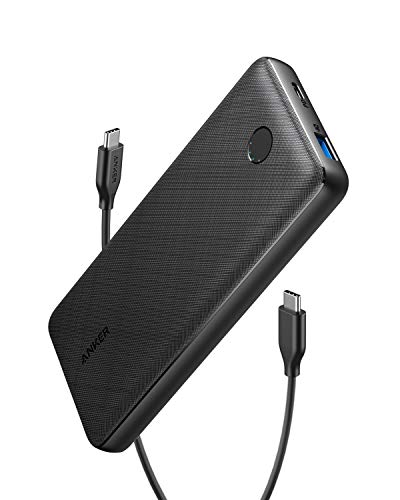
| Best High Capacity | Capacity: 20,000mAh | Charging Output: 18W | Ports: USB-C + USB-A | VIEW LATEST PRICE | Read Our Analysis |
| Anker 737 140W Power Bank 24,000mAh Portable Charger |

| Best Power User | Capacity: 24,000mAh | Charging Output: 140W max | Ports: 3 ports | VIEW LATEST PRICE | Read Our Analysis |
| Anker MagGo 10,000mAh Magnetic Power Bank for iPhone |

| Best for iPhone | Capacity: 10,000mAh | Charging Output: Up to 30W | Ports: 1 USB-C port | VIEW LATEST PRICE | Read Our Analysis |
| Anker 25,000mAh Laptop Power Bank with 100W USB-C |
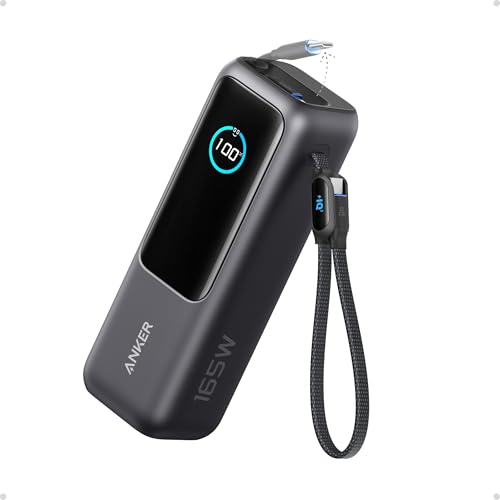
| Best for Laptops | Capacity: 25,000mAh | Charging Output: 100W | Ports: 5 total ports | VIEW LATEST PRICE | Read Our Analysis |
More Details on Our Top Picks
Anker PowerCore 10K Portable Power Bank
Should you want a compact, travel-ready charger that still delivers real everyday power, the Anker PowerCore 10K is a strong pick. You get a 10,000mAh lithium polymer battery, USB-C input and output, plus a USB-A port for flexible charging. It can give your iPhone 15 about two full charges, and it’s quick enough for Galaxy S23 and iPad mini 6 users too. At just 8.48 ounces, it slips into a bag easily. Its scratch-resistant shell, 3.2-foot drop test, and 18-month warranty help you trust it on the go.
- Capacity:10,000mAh
- Charging Output:Up to 10V/3A
- Ports:USB-C + USB-A
- Charging Type:Wired charging
- Color:Black
- Warranty:18 months
- Additional Feature:PowerIQ charging technology
- Additional Feature:3.2 ft drop-tested
- Additional Feature:Scratch-resistant design
Anker USB-C PowerCore Essential 20000 PD Power Bank
Should you want a dependable high-capacity charger that can keep your phone, tablet, and other USB-C devices going for days, the Anker USB-C PowerCore Essential 20000 PD is a strong pick. You get a 20,000mAh battery that delivers over 5.5 iPhone XS charges, more than 4 Galaxy S10 charges, or 2.5 iPad mini 5 charges. Its 18W USB-C Power Delivery port and Quick Charge USB-A port keep devices moving fast. With an 18W charger, you’ll refill it in under 7 hours; otherwise, expect about 20. It includes a cable, pouch, guide, and 18-month warranty.
- Capacity:20,000mAh
- Charging Output:18W
- Ports:USB-C + USB-A
- Charging Type:Wired charging
- Color:Not specified
- Warranty:18 months
- Additional Feature:Power Delivery charging
- Additional Feature:Quick Charge support
- Additional Feature:Travel pouch included
Anker 737 140W Power Bank 24,000mAh Portable Charger
The Anker 737 140W Power Bank, with its 24,000mAh battery and 140W Power Delivery 3.1 output, is the best pick in case you want a portable charger that can handle power-hungry gear like a MacBook, iPad Pro, or Samsung phone without slowing you down. You get three ports, a smart digital display, and real-time power data, so you always know what’s happening. It charges in about 52 minutes with the right 140W charger and 5A cable. At roughly 1.4 pounds, it’s TSA-friendly, travel-ready, and backed with a 24-month warranty.
- Capacity:24,000mAh
- Charging Output:140W max
- Ports:3 ports
- Charging Type:Wired charging
- Color:Black
- Warranty:24 months
- Additional Feature:Smart digital display
- Additional Feature:52-minute recharge time
- Additional Feature:TSA carry-on compliant
Anker MagGo 10,000mAh Magnetic Power Bank for iPhone
When you want a slim, grab-and-go MagSafe-style battery for your iPhone, Anker’s MagGo 10,000mAh power bank is a strong fit thanks to its Qi2-certified 15W wireless charging and compact 10,000mAh capacity. You get an ultra-slim 198.99g build, a matte finish, and a sturdy metal frame that feels secure in hand. The USB-C port pushes up to 30W, so you can also top up wired devices fast. It’s optimized for iPhone 12 through 17, charges in about 2.5 hours, and includes a USB-C cable, warranty, and support.
- Capacity:10,000mAh
- Charging Output:Up to 30W
- Ports:1 USB-C port
- Charging Type:Wireless + wired
- Color:Black
- Warranty:24 months
- Additional Feature:Qi2 certified
- Additional Feature:MagSafe compatible
- Additional Feature:15W wireless charging
Anker 25,000mAh Laptop Power Bank with 100W USB-C
Need serious laptop power on the go? You’ll like Anker’s 25,000mAh laptop power bank with 100W USB-C. It packs five ports, including three USB-C and one USB-A, so you can charge your laptop, phone, tablet, camera, and gaming console at once. It reaches 30% in 22 minutes and fully recharges in about 2 hours. Two built-in USB-C cables add convenience, and one doubles as a strap. At 1.31 pounds, it’s travel-friendly, flight-approved, and backed for 18 months.
- Capacity:25,000mAh
- Charging Output:100W
- Ports:5 total ports
- Charging Type:Wired charging
- Color:Black
- Warranty:18 months
- Additional Feature:Built-in retractable cables
- Additional Feature:Charges four devices
- Additional Feature:Airline restriction compliant
Factors to Consider When Choosing Anker Power Banks
As choosing an Anker power bank, capacity and total charges should be weighed against the number of devices it needs to support. Charging speed, port selection, portability, and weight also matter, since these affect how practical the unit is for daily use or travel. Device compatibility should be checked as well to guarantee the power bank can deliver the right output for each gadget.
Capacity And Charges
Capacity is one of the most significant factors to weigh, since higher-capacity Anker power banks store more energy and can deliver more total recharges before they need to be plugged in again. Models typically range from 10,000mAh to 25,000mAh, and the difference is substantial in practice. A 10,000mAh unit can provide about two phone charges, while a 20,000mAh model can deliver more than 5.5 charges for a smaller smartphone and over four full charges for a mid-sized phone. A 24,000mAh option is better suited to repeated use across larger devices, and 25,000mAh versions are built for heavier workloads and multiple devices. Real-world charge counts should always be checked for the specific device, since the same rating can produce different results.
Charging Speed
Charging speed is the next major factor, because an Anker power bank’s usefulness depends not only on how much power it stores but also on how quickly it can deliver and regain that power. Maximum output varies widely, from 15W wireless models to 30W, 100W, and even 140W USB-C units. Higher-wattage options are better for laptops and tablets, while lower-wattage banks suit smartphones. USB-C Power Delivery and similar standards improve efficiency and shorten device charging times. The bank’s own recharge speed also matters, since some models refill in about 2.5, 5, or 7 hours, while others might need around 20 hours. Full performance often depends on using a compatible high-wattage cable and wall charger.
Port Selection
Port selection determines how versatile an Anker power bank will be in daily use. Buyers should first match the number of ports to their routine, since Anker models might offer anywhere from two to five outputs. Those who charge several devices at once should favor units with three or more ports, making it possible to power a phone, tablet, and laptop together. A balanced mix of USB-C and USB-A is useful for supporting newer cables and older accessories. USB-C deserves special attention because it can handle both fast input and output, with some models providing 30W, 100W, or even 140W from one connection. Built-in or retractable cables can also add convenience without limiting connection choices.
Portability And Weight
Portability and weight often determine whether an Anker power bank feels practical or burdensome in daily use. Smaller, slimmer models are usually the easiest to carry, especially while they measure about 0.6 inches thick and weigh under 9 oz. Ultra-slim designs roughly 4 to 6 inches long and under 3 inches wide suit commuting best because they slip into pockets, sling bags, or small organizers without added strain. A 10,000mAh class unit often strikes the best balance, offering useful backup power while staying lighter than larger options. Mid-sized 20,000mAh models provide more runtime, but their added bulk makes them better for backpacks than pockets. The largest 24,000mAh to 25,000mAh banks, at around 1.3 to 1.4 lb, are mainly travel or work bag companions.
Device Compatibility
Device compatibility is the filter that decides whether an Anker power bank will be genuinely useful or merely convenient in theory. It should support the device’s charging standard and connector type, including USB-C input/output or USB-C Power Delivery, so phones, tablets, and laptops can charge correctly. Output matters as well: some models deliver 15W wireless charging, 30W USB-C output, 100W USB-C output, or 140W maximum output, and the chosen unit must match the device’s requirements. Broad compatibility is another key check, since some banks are limited to smartphones while others work with phones, tablets, laptops, cameras, gaming consoles, and more. iPhone users should confirm support for newer models, while Android users should verify magnetic alignment and expected wireless performance.
Wireless Versus Wired
After compatibility is confirmed, the next choice is whether wireless or wired charging better fits the user’s routine. Wireless charging suits those who value convenience and a cable-free setup, especially for quick phone top-ups. Magnetic attachment can help keep a device aligned, but wireless output usually tops out around 15W and might waste more power as heat. Wired USB-C power banks are generally more efficient and far faster, with outputs that can reach 30W, 100W, or even 140W. That makes them the better option for tablets and laptops, where sustained high-power charging matters. For everyday use, wireless is simpler; for speed and versatility, wired is stronger. A model offering both gives the most flexibility, letting the user switch between comfort and higher performance as needed.
Battery Recharging Time
Battery recharging time can vary greatly from one Anker power bank to another, so it is worth checking both capacity and input speed before buying. Smaller models often refill in about 2.5 to 5.2 hours, while 10,000mAh packs usually recharge much faster than 20,000mAh or 24,000mAh versions because they store less energy. Large 20,000mAh to 25,000mAh units could finish in under 7 hours with fast input, yet some can take around 20 hours with a basic charger. High-speed input ratings such as 18W, 30W, or more can shorten that wait substantially. A higher-wattage charger and a proper USB-C cable also help. For buyers, the most useful comparison is recharge estimate alongside capacity, since larger batteries generally require longer charging time even if the hardware is efficient.
Warranty And Durability
While comparing Anker power banks, warranty length and build quality are significant signs of long-term value, with coverage typically ranging from 18 months to 24 months. A warranty that matches the intended lifespan can provide better peace of mind, especially for frequent travelers or daily users. Durability also matters: scratch-resistant surfaces and sturdy metal frames can better withstand constant handling, while drop-test certification, such as survival after a 3.2 ft drop, offers measurable reassurance. Heat management is another factor, and features like aerogel thermal insulation might help limit internal stress over time. Included accessories, such as a travel pouch or protective pouch, can further reduce wear during storage and transit, helping preserve performance and appearance.
Frequently Asked Questions
Which Anker Power Bank Is Best for International Travel?
For international travel, the Anker 737 Power Bank is a strong choice because it combines 24,000 mAh capacity, 140W charging, and a size that is still manageable in a carry on. It can charge phones, tablets, and many laptops, making it useful for long trips where access to outlets is limited.
Do Anker Power Banks Support Pass-Through Charging Safely?
Yes, many Anker power banks support pass through charging, but safety depends on the model. Anker says more than 80 percent of recent units include protection circuitry. Using approved cables and keeping the device well ventilated helps limit heat and reduce risk.
How Long Do Anker Power Banks Usually Retain Battery Health?
Anker power banks often keep strong battery performance for 2 to 4 years, or about 300 to 500 charge cycles, though actual lifespan depends on how often they are used, how they are stored, heat exposure, and charging practices.
Are Anker Power Banks Allowed in Airplane Carry-On Luggage?
Yes, Anker power banks are generally allowed in airplane carry-on luggage. Most airlines permit lithium ion batteries under 100 watt hours, and most power banks fit that limit, though checked baggage is usually prohibited.
Can Anker Power Banks Charge Multiple Devices at Full Speed?
Anker power banks can charge several devices at the same time, but each port may not deliver maximum speed. The available power is divided among the connected devices, so charging often slows when more than one device is plugged in.
Conclusion
In the end, Anker’s strongest power banks are those that quietly fit the way people actually move. The PowerCore 10K and MagGo 10,000mAh keep daily carry light and tidy, while the 20,000mAh, 25,000mAh, and 737 models offer a more generous reserve for longer days and heavier loads. With durable builds, faster charging, and dependable warranties, they remain a sensible companion for 2026, carrying power with little fuss and plenty of poise.
