


A reverse camera system makes parking easier, safer, and far less stressful. The best ones give you a clear view, a wide angle, and solid night visibility.
Some are great for sharp video, while others keep setup quick with wireless features or bigger screens. Here’s a look at the top picks and what sets each one apart.
| PixelMan AHD 1080P Backup Camera (PMD2A-S) |
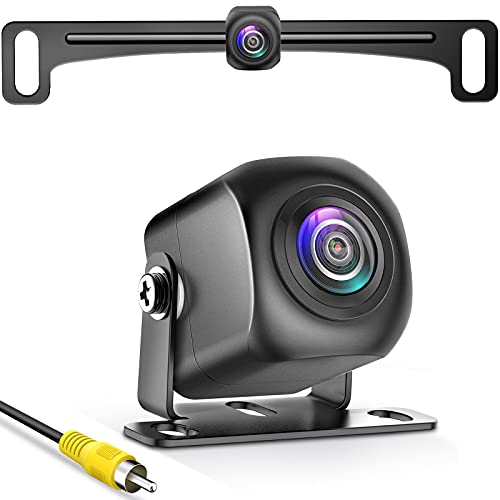
| Best Camera Only | Installation: Bracket mount, no-drill license plate option | Display: RCA-compatible external screen required | Video Quality: 1080P AHD | VIEW LATEST PRICE | Read Our Analysis |
| Yakry RV Backup Camera 7-Inch HD 1080P Y14 |

| Best for RVs | Installation: Plug-and-play wired install, about 8 minutes | Display: 7-inch IPS HD monitor | Video Quality: HD 1080P | VIEW LATEST PRICE | Read Our Analysis |
| Magnetic Solar Wireless Backup Camera System AP7-2 |

| Easiest Installation | Installation: Magnetic wireless install, about 3 minutes | Display: 7-inch FULL HD IPS monitor | Video Quality: 1080P CMOS | VIEW LATEST PRICE | Read Our Analysis |
| YIMU Backup Camera System (K4302) |

| Best Compact System | Installation: Wired two-step install, about 10 minutes | Display: 4.3-inch HD color monitor | Video Quality: HD color image | VIEW LATEST PRICE | Read Our Analysis |
| LK3 HD 1080P Backup Camera with Monitor |

| Best Night Vision | Installation: Plug-and-play wired install, about 15 minutes | Display: 4.3-inch LCD display | Video Quality: HD 1080P | VIEW LATEST PRICE | Read Our Analysis |
| 7″ Wireless CarPlay Screen for Cars |

| Best Smart Display | Installation: Plug-and-play via cigarette lighter | Display: 7-inch HD touchscreen | Video Quality: HD display/mirror link video | VIEW LATEST PRICE | Read Our Analysis |
More Details on Our Top Picks
PixelMan AHD 1080P Backup Camera (PMD2A-S)
Should you want a reverse camera that prioritizes sharp image quality and strong low-light performance, the PixelMan AHD 1080P Backup Camera (PMD2A-S) stands out right away. You get upgraded 1080P AHD imaging, HD/AHD switching, and a larger 1/2.7-inch chip that enhances brightness, color, clarity, and night vision. Its 170° optical glass lens and F1.4 aperture widen your view without demanding extra lighting.
You can count on its alloy housing, IP69 waterproof sealing, and thick copper cable for durability. Installation stays flexible with two brackets, including a no-drill license plate option. It works with RCA screens, suits cars, SUVs, and RVs, and includes a one-year warranty.
- Installation:Bracket mount, no-drill license plate option
- Display:RCA-compatible external screen required
- Video Quality:1080P AHD
- Viewing Angle:170°
- Connectivity:Wired RCA
- Night Vision:Enhanced night vision lens/chip
- Additional Feature:Alloy housing
- Additional Feature:IP69 waterproof
- Additional Feature:No-drill bracket
Yakry RV Backup Camera 7-Inch HD 1080P Y14
Should you want a dependable reverse camera for larger vehicles, the Yakry RV Backup Camera 7-Inch HD 1080P Y14 stands out for its stable wired connection and broad compatibility with RVs, trailers, trucks, buses, vans, and SUVs.
You can install it in about eight minutes using one power supply for both camera and monitor. The 66-foot cable delivers interruption-free video, while the 7-inch IPS HD screen, anti-glare sunshade, and 150-degree non-fisheye lens give you clear views day or night. You’ll also get parking guidelines, image flip, mirror view, and two video inputs for expansion. Durable PVC-shielded wiring and Yakry’s strong support add confidence.
- Installation:Plug-and-play wired install, about 8 minutes
- Display:7-inch IPS HD monitor
- Video Quality:HD 1080P
- Viewing Angle:150°
- Connectivity:Wired 66-foot cable
- Night Vision:True IR night vision
- Additional Feature:Dual video inputs
- Additional Feature:Parking guidelines
- Additional Feature:66-foot cable
Magnetic Solar Wireless Backup Camera System AP7-2
For drivers who want a truly hassle-free backup camera, the Magnetic Solar Wireless Backup Camera System AP7-2 stands out as a grab-and-go solution. You can install it in three minutes with no drilling or wiring, and its super magnetic base sticks securely to metal surfaces while remaining easy to remove anytime.
You get a 7-inch FULL HD IPS monitor, a 1080P CMOS sensor, and nine infrared LEDs for sharp daytime and nighttime visibility. The rechargeable 9600 mAh camera uses solar or Type-C charging, while IP69 waterproofing enhances durability. A signal booster, long antenna, and 328-foot range keep footage smooth. DVR recording, a 32GB card, warranty, and support add confidence.
- Installation:Magnetic wireless install, about 3 minutes
- Display:7-inch FULL HD IPS monitor
- Video Quality:1080P CMOS
- Viewing Angle:Wide rear view
- Connectivity:Wireless digital signal
- Night Vision:9 IR LEDs night vision
- Additional Feature:Magnetic mount
- Additional Feature:Solar charging
- Additional Feature:Built-in DVR
YIMU Backup Camera System (K4302)
YIMU’s K4302 makes the most sense for drivers who want a simple, reliable wired backup camera without a complicated install. You can set it up in about 10 minutes using a straightforward two-step connection. Power it through a cigarette lighter or USB source for immediate use, or wire it to your reverse lights for automatic activation.
You get strong signal stability, a 4.3-inch monitor, HD color video, and a 150° wide-angle lens. Two brackets let you mount it at the license plate, front, or side. You can also adjust grid lines, flip the image, fine-tune display settings, and count on solid support.
- Installation:Wired two-step install, about 10 minutes
- Display:4.3-inch HD color monitor
- Video Quality:HD color image
- Viewing Angle:150°
- Connectivity:Wired 4-pin cable
- Night Vision:HD sensor for clear visibility
- Additional Feature:Adjustable parking grid
- Additional Feature:Dual mounting brackets
- Additional Feature:Lifetime tech support
LK3 HD 1080P Backup Camera with Monitor
Drivers who want a quick, low-hassle upgrade will appreciate the LK3 HD 1080P Backup Camera with Monitor most, since it installs in about 15 minutes with a simple plug-and-play setup. You connect the camera and 4.3-inch monitor with the included pure copper cable, then power it through your vehicle.
You’ll get sharp 1080P color video, strong signal stability, and automatic night vision from six LEDs. Should you wire it to your reverse lights, the image appears instantly once you back up. The IP69 waterproof camera handles rain, dust, and harsh temperatures, while adjustable grid lines, image flip, and rotating mounting help you park with more confidence.
- Installation:Plug-and-play wired install, about 15 minutes
- Display:4.3-inch LCD display
- Video Quality:HD 1080P
- Viewing Angle:Not specified
- Connectivity:Wired 4-pin video power cable
- Night Vision:6 LEDs auto night mode
- Additional Feature:Anti-shaking technology
- Additional Feature:IP69 waterproof
- Additional Feature:360° suction mount
7″ Wireless CarPlay Screen for Cars
A 7-inch wireless CarPlay screen is the best choice should you want modern smartphone features in an older vehicle without replacing the factory stereo. You get wireless Apple CarPlay and Android Auto through Bluetooth and WiFi, with automatic reconnection after setup and no app download. Siri and Google Assistant let you control calls, music, and routing hands-free.
The HD touchscreen supports mirror link for iPhone and Android, so you can view maps, videos, and apps clearly. You install it via the cigarette lighter, keep your factory radio, and connect audio through Bluetooth, FM, AUX, or built-in speakers in nearly any vehicle.
- Installation:Plug-and-play via cigarette lighter
- Display:7-inch HD touchscreen
- Video Quality:HD display/mirror link video
- Viewing Angle:Widescreen map/view display
- Connectivity:Bluetooth, WiFi, FM, AUX
- Night Vision:Not specified
- Additional Feature:Voice assistant support
- Additional Feature:Mirror link support
- Additional Feature:Multiple audio outputs
Factors to Consider When Choosing a Car Reverse Camera System
Several factors determine how effective a car reverse camera system will be in daily use. Key considerations include image resolution quality, signal type stability, night vision performance, viewing angle coverage, and installation ease. Evaluating these points helps identify a system that supports clear visibility, reliable operation, and practical setup.
Image Resolution Quality
During the evaluation of image resolution quality, a reverse camera system should deliver a sharp, detailed view that supports safer and more accurate reversing. Higher resolutions, such as 1080P Full HD, generally produce clearer visuals, making obstacles, curbs, and parking lines easier to identify during maneuvers.
Sensor size also influences image quality. A larger sensor, such as 1/2.7 inch rather than 1/4 inch, typically improves brightness, color saturation, and overall clarity. Lens design matters as well; wide-angle optics, high-transmittance glass, and a suitable aperture like F1.4 can expand visibility while supporting better low-light performance. Night vision features, including infrared LEDs or sensitive CMOS sensors, help preserve clarity in dark conditions. A real-time HD feed with minimal delay further improves judgment and driver response.
Signal Type Stability
Because dependable video transmission directly affects reversing safety, signal type stability should be assessed with close attention to consistency, delay, and resistance to interference. Wired systems generally provide the most reliable performance, providing steadier video quality with minimal lag, interference, or signal loss compared with wireless alternatives. This stability is especially crucial whenever real-time HD images are needed during precise reversing maneuvers.
Reliability also depends on installation components and operating conditions. Electromagnetic interference, physical obstructions, and longer transmission distances can weaken the signal, making cable quality and shielding key considerations. High-quality cables with pure copper cores, dual-layer shielding, and sturdy connectors help preserve uninterrupted transmission. In wireless or extended-range setups, digital signal amplifiers and longer antennas can enhance strength and reduce freezing, dropouts, and other disruptions during camera operation.
Night Vision Performance
During the evaluation of night vision performance, sensor size and lens aperture deserve close attention, since larger sensors and fast apertures such as F1.4 gather more light and produce clearer images in dim conditions. Advanced image chips further improve brightness, color saturation, and noise control, helping the display remain usable at night without depending on extra lighting.
Infrared LEDs or true infrared night vision also matter, because they allow the camera to record detailed surroundings in complete darkness using invisible illumination rather than harsh visible glare. A strong system should limit distortion and preserve either accurate color or clean monochrome output, making obstacles easier to identify after dark. Lens construction, including high-transmittance glass and carefully engineered optics, also supports better low-light visibility and more dependable nighttime parking performance overall.
Viewing Angle Coverage
During the evaluation of viewing angle coverage, a reverse camera with a wide field of view-generally around 150° to 170°-offers better visibility of blind spots and improves safety while reversing. This range helps reveal objects, curbs, and pedestrians near the rear corners that narrower lenses might miss. In contrast, viewing angles below 150° can restrict coverage and reduce awareness in tighter parking situations.
Fish-eye and other wide-angle lenses further expand peripheral visibility, though they can introduce some distortion along the image edges. The ideal balance depends on the driver’s preference for breadth versus image realism. Cameras with adjustable or multi-angle views also provide flexibility for different vehicle sizes and parking environments. When combined with strong night vision, a wide viewing angle delivers more complete low-light coverage and confidence.
Installation Ease
Along with image quality and coverage, installation ease can strongly influence which reverse camera system is the better fit. Models with plug-and-play designs generally reduce setup time and lower the chance of installation errors, making them appealing for many vehicle owners.
Flexible mounting options also matter. Systems that include multiple brackets or license plate frames can simplify placement and often avoid drilling. Wireless units or magnetic mounts further streamline the process, especially *at the time of* running wires through the vehicle is inconvenient or undesirable. Power delivery should be considered as well, since cigarette lighter adapters or simple fuse connections are easier to manage than full hardwiring. It is also useful to check whether the package includes clear instructions and all necessary accessories, as complete kits typically support a faster, smoother installation experience *in general*.
Weatherproof Build Quality
Because a reverse camera remains exposed to rain, road spray, dust, and temperature swings, weatherproof build quality is a key factor in long-term reliability. A strong waterproof rating, such as IP69, indicates better protection against water ingress during heavy rain or repeated car washes. This level of sealing helps preserve consistent operation in demanding conditions.
Durability also depends on housing materials and construction. Alloy or ABS casings with nano-coating sealing offer added resistance to moisture, dust, impact, and temperature extremes. Reliable waterproof glue sealing and sturdy cable insulation reduce the risk of corrosion, signal disruption, and internal damage. Cameras built for wide operating ranges, such as -22°F to 176°F, are better suited to harsh climates. Commercial-grade waterproofing further supports stable performance through frequent environmental exposure over time.
Screen Size Compatibility
While monitor size often seems like a matter of preference, screen size compatibility directly affects both visibility and safe dashboard placement in a car reverse camera system. Most drivers benefit from monitors between 4.3 and 7 inches, a range that balances clear rear viewing with practical cabin integration. A properly sized display should remain easy to read without blocking sightlines or adding distraction during parking maneuvers.
Larger 7-inch screens generally deliver sharper detail, wider viewing angles, and better performance in bright light, especially whenever anti-glare features are included. Smaller 4.3-inch models suit compact interiors and mount more discreetly on dashboards or windshields. Equally crucial, the monitor must match the camera’s input connections and resolution. Brightness, contrast, and image-flip adjustments further improve clarity and orientation across different screen sizes and driving conditions.
Frequently Asked Questions
Can Reverse Cameras Record Footage While Driving?
Yes-like vigilant eyes, some reverse cameras can record while driving provided connected to continuous power and a DVR or dash-cam function. Others activate only in reverse. Recording capability depends on system design, wiring, and storage support.
Are Backup Camera Systems Legal in Every State?
No, backup camera systems are not uniformly regulated in every state; legality generally depends on installation, screen placement, and driver visibility laws. One should review state vehicle codes, though factory-installed systems are widely permitted nationwide.
How Often Should a Reverse Camera Lens Be Cleaned?
Curiously, a reverse camera lens should be cleaned weekly, and coincidentally more often during rain, snow, or dusty driving. It is also advisable to wipe it each time image clarity drops or visible grime appears.
Can a Reverse Camera Drain My Car Battery?
Yes, a reverse camera can drain a car battery, but only in case improperly wired or left powered continuously. A correctly installed system draws minimal power and typically activates only in reverse, posing negligible battery risk.
Do Reverse Cameras Work Well in Extreme Cold?
Yes, reverse cameras generally work well in extreme cold, though image clarity, startup speed, and wiring reliability might decline in severe temperatures. Performance depends on build quality, proper installation, weatherproofing, and choosing systems rated for low-temperature operation.


