


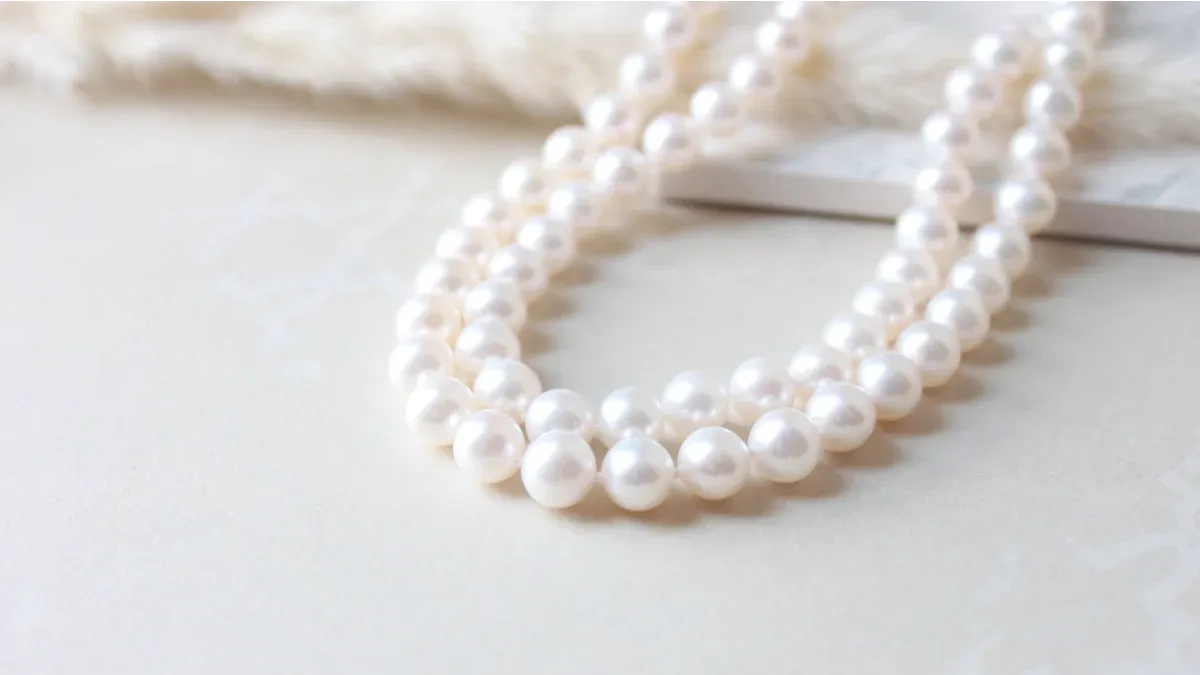
When you compare natural vs cultured pearls, you see a big difference in rarity and value. Natural pearls come from oysters without help from people. These pearls are very rare.
Only about 1 in 10,000 oysters makes a pearl naturally.
Fine quality natural pearls are even harder to find.
Cultured pearls grow in farms and appear more often.
Knowing how to spot each type helps you choose jewelry with confidence.
Key Takeaways
Natural pearls are extremely rare, formed without human intervention, making them highly valuable.
Cultured pearls are more common and produced with human assistance, allowing for a wider variety of shapes and colors.
When buying pearls, consider factors like size, shape, color, luster, and surface quality to determine their value.
Always purchase pearls from reputable sellers who provide certification to ensure authenticity and quality.
Inspect pearls closely for imperfections and check their luster in different lighting to make an informed choice.
Natural vs Cultured Pearls
What Are Natural Pearls
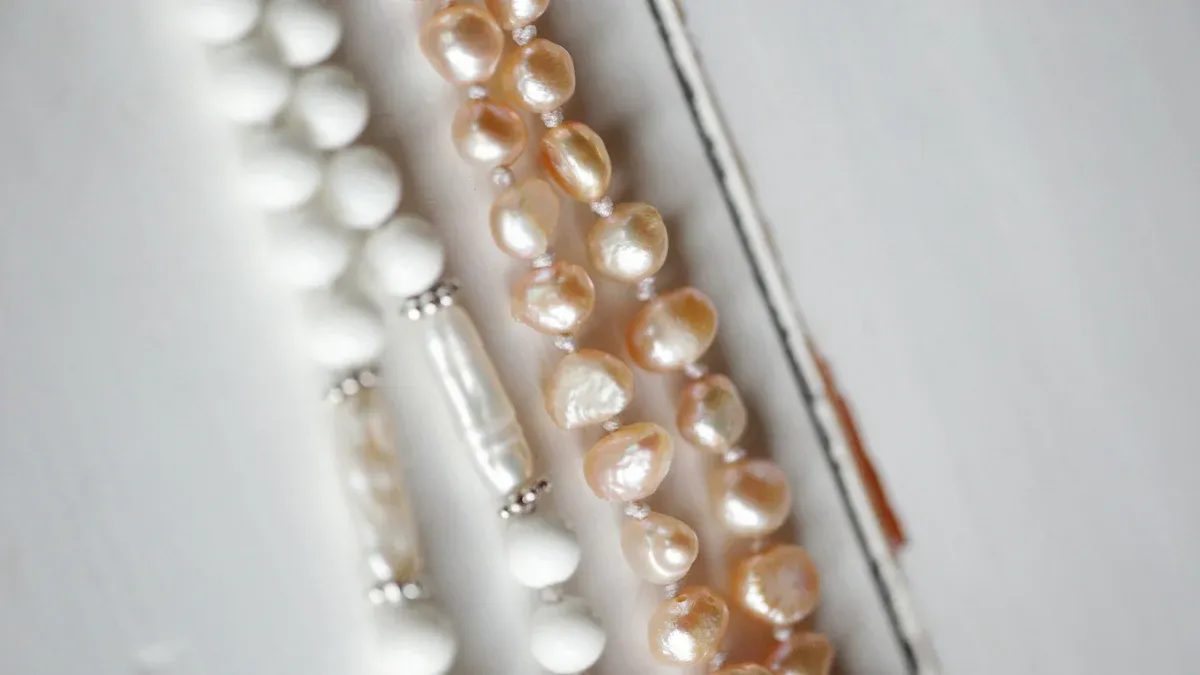
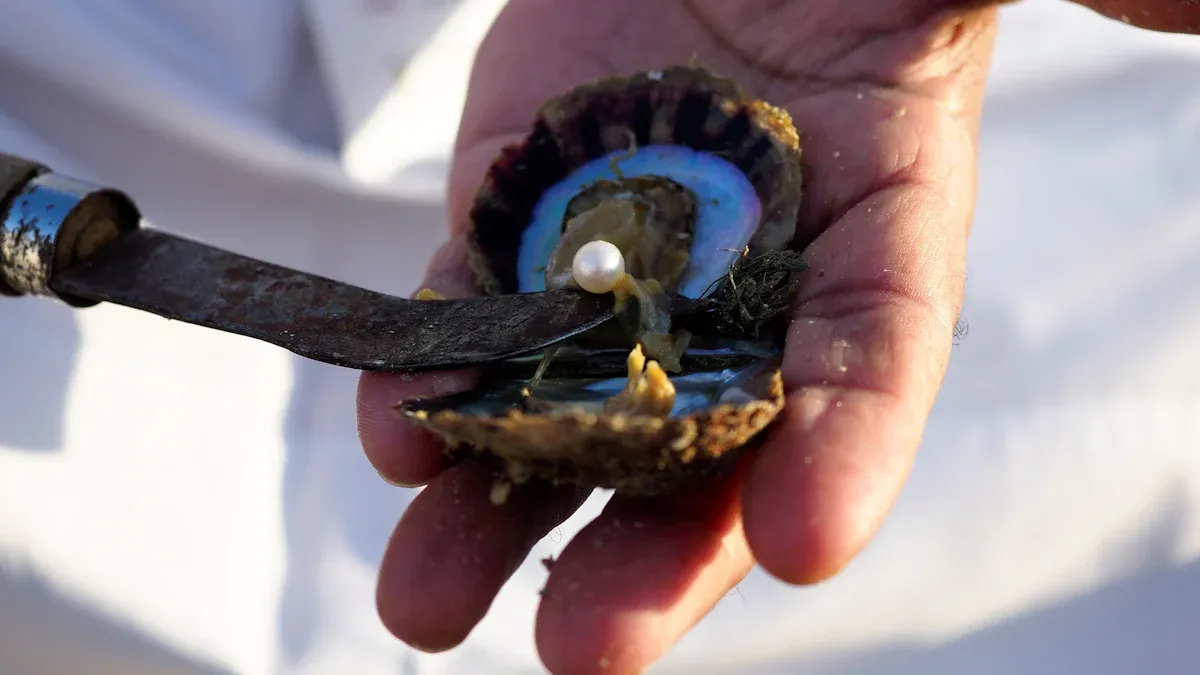
You may wonder what makes a natural pearl special. Natural pearls form inside mollusks like oysters and mussels. These pearls appear without any help from people. When an irritant, such as a grain of sand or a parasite, enters the shell, the mollusk covers it with layers of nacre. Over time, this process creates a pearl. Natural pearls are rare and often have unique shapes. You will find them mostly in the wild, and their size usually stays small. Experts say that 8mm is considered large for a natural pearl.
Note: Water temperature, water quality, and the mollusk’s diet all affect how natural pearls form and where are they found.
Here is a table that shows the main types of mollusks that produce pearls:
Class | Description |
|---|---|
Bivalvia | The primary class of mollusks responsible for pearl formation. |
Gastropoda | A notable class that can also produce pearls. |
Cephalopoda | Another class that has the capability to produce pearls. |
What Are Cultured Pearls
Cultured pearls are different because people help create them. Pearl farmers select healthy mollusks and insert a small bead or tissue inside. This bead acts as the irritant, and the mollusk starts to cover it with nacre. The process happens in a controlled environment, which allows farmers to produce pearls in larger quantities. Cultured pearls often have round shapes and come in many colors. You will see them more often in jewelry stores because they are easier to produce.
Tip: Cultured pearls can be harvested in one to six years, while natural pearls may take much longer to form.
Formation Process
You might ask, how are they formed? The process for natural vs cultured pearls looks similar at first, but key differences exist.
Natural pearls form by chance in the ocean. An irritant enters the mollusk, and nacre builds up over several years.
Cultured pearls start when a technician places a bead and tissue inside the mollusk. The mollusk then deposits nacre around the bead in a farm setting.
Here is a quick comparison:
Type of Pearl | Definition | Formation Process |
|---|---|---|
Natural Pearls | Formed in the wild without human intervention. | Created when an irritant enters a mollusk, which then secretes nacre to form a pearl. |
Cultured Pearls | Formed with human assistance on a pearl farm. | Created by implanting a seed into a mollusk to induce nacre growth around the implant. |
You will notice that cultured vs natural pearls differ in rarity, size, and appearance. Natural pearls are rare and often more expensive. Cultured pearls are more abundant and can be made in larger sizes and more symmetrical shapes. The quality of both types depends on the thickness of nacre, surface smoothness, and luster.
Differences
Rarity
You may notice a big difference in rarity when you compare natural vs cultured pearls. Natural pearls form without human help, which makes them extremely rare. Only a small number of wild mollusks produce pearls, and most do not have the right conditions. You can see how rare natural pearls are in the table below:
Type of Pearl | Rarity | Formation Process | Price Range |
|---|---|---|---|
Natural Pearls | Extremely rare | Formed without human intervention in wild mollusks | Several thousand to hundreds of thousands of dollars per strand |
Cultured Pearls | More widely available | Formed under controlled conditions with human intervention | A few hundred to several thousand dollars per strand |
Natural pearls often become prized collector’s items. Their scarcity increases their value. You may find that prices for natural pearls can reach hundreds of thousands or even millions of dollars, depending on their origin and unique qualities.
Natural pearls are exceedingly rare, formed without human intervention.
Their scarcity elevates them to prized collector’s items.
Prices can range from hundreds of thousands to millions based on provenance and unique qualities.
Cultured pearls are more common because pearl farmers control how are they formed. You will see cultured pearls in many jewelry stores, and their price is usually lower than natural pearls.
Appearance
You can spot differences in appearance between cultured vs natural pearls. Natural pearls often show cream, yellow, or champagne tones. These colors come from the wild environment and the mollusk’s diet. Cultured pearls offer a wider color range, including white, black, lavender, and peach. The table below shows typical color variations:
Type of Pearl | Color Variations |
|---|---|
Natural Pearls | Darker cream, yellow, champagne undertones |
Cultured Pearls | White, black, multi-color, lavender, peach |
When you look at pearls, you should check their luster and surface quality. High-quality pearls shine with strong iridescence. Pearls with uniform luster and smooth surfaces are considered superior. Cracks or peeling can lower the value and beauty of a pearl.
High luster and iridescence are signs of high-quality nacre.
Pearls with uniform iridescence and intensity of luster are considered superior.
Cracks and peeling can diminish the pearl’s beauty and value.
Natural pearls typically have a thicker nacre than cultured pearls.
The nacre quality in natural pearls is often visible through growth lines or layers when viewed under concentrated light.
Cultured pearls may show more blemishes on their surface, which can lower their value.
Types of Cultured Pearls
You will find four main types of cultured pearls in jewelry: Akoya, South Sea, Tahitian, and Freshwater. Each type has its own features, colors, and price range. The table below helps you compare them:
Pearl Type | Colors | Shapes | Sizes | Luster |
|---|---|---|---|---|
Freshwater | Wide range including white, pink, peach | Round, oval, baroque | 5mm to 10mm | Soft to moderate |
Akoya | Typically white or cream with overtones | Almost perfectly round | 6mm to 8mm | High to very high |
Tahitian | Silvery gray to deep black with overtones | Round, semi-round, baroque | 8mm to 14mm | Soft to high |
South Sea | Cream, silver, yellow, golden | Generally round, baroque | 8mm to 20mm | Softer, satiny |
Freshwater pearls come in many shapes and colors. Akoya pearls are known for their round shape and high luster. Tahitian pearls stand out with their dark colors. South Sea pearls are the largest and have a soft, satiny glow.
You may want to know about their price and availability. The table below shows how the price changes for each type:
Type of Pearl | Low Price | Average Price | Fine Quality Price |
|---|---|---|---|
Tahitian Pearls | below US$300 | US$300 – US$650 | US$2,000 – US$36,000 or more |
Akoya Pearls | below US$100 | US$150 – US$450 | US$1,500 – US$6,000 or more |
Freshwater Pearls | below US$30 | US$30 – US$50 | US$75 – US$5,000 or more |
South Sea Pearls | below US$200 | US$250 – US$900 | US$2,000 – US$135,000 or more |
You can choose the type of cultured pearl that fits your style and budget. Each type offers different colors, shapes, and levels of quality. When you ask where are they found, you will see that Akoya pearls come from Japan and China, South Sea pearls from Australia and Indonesia, Tahitian pearls from French Polynesia, and Freshwater pearls from rivers and lakes in China.
Value Comparison
Pricing of Natural Pearls
When you look at the value of pearls, you will see that natural pearls stand out for their rarity and unique qualities. Jewelers price natural pearls by carat weight, much like diamonds or other precious gems. This method reflects how rare and precious each natural pearl is.
Over the past decade, the price of natural pearls has increased sharply. Here are some important trends:
Prices have risen by up to 100% in the last three years.
Reduced production in Japan has made natural pearls even harder to find.
Demand from China has grown, pushing prices higher.
The market now favors sustainable and ethically sourced pearls, which also affects price.
You will notice that natural pearls often cost several thousand to hundreds of thousands of dollars per strand. Collectors and luxury buyers seek these pearls for their history and beauty. When you compare natural vs cultured pearls, you will find that natural pearls are more expensive because of their rarity and the time it takes for them to form.
Pricing of Cultured Pearls
Cultured pearls are more common and easier to produce. Jewelers price cultured pearls by their size, measured in millimeters (mm). The larger the pearl, the higher the price. You will see a wide range of prices for cultured pearls, depending on type and origin.
Pearl Type | Price Range |
|---|---|
Cultured Pearls | $50 – $100,000 |
Black Pearls | $250 – $30,000 |
Oyster Pearls | $20 – $5,000 |
Freshwater Pearls | $20 – $5,000 |
Blue Pearls | $300 – $3,000 |
Purple Pearls | $600 – $1,600 |
Majorica Pearls | $150 – $200 |
You can find Akoya pearls from Japan, known for their round shape and high luster. Tahitian pearls from French Polynesia are prized for their dark colors. South Sea pearls from Australia and Southeast Asia are valued for their large size and satiny luster. Each type has its own price range, but all are more affordable than natural pearls of similar size and quality.
Factors Affecting Value
The value of pearls depends on several important factors. You should know what makes one pearl more valuable than another. Here are the main value factors:
Size: Larger pearls are rarer and more valuable.
Shape: Round pearls are the most prized, but unique shapes can also attract collectors.
Color: Some colors are more desirable, depending on trends and rarity.
Luster: Pearls with strong, sharp reflections are worth more.
Surface Quality: Fewer blemishes mean higher value.
Nacre Quality: Thicker nacre layers make pearls more durable and beautiful.
Matching: Pearls that match in color, size, and shape in a strand or set are more valuable.
Attribute | Description |
|---|---|
Luster | The quality and intensity of light reflecting off the surface; higher luster indicates greater value. |
Size | Larger pearls are rarer and more valuable when all other factors are equal. |
Shape | Round pearls are the most prized due to their symmetry; unique shapes can also be desirable. |
Nacre quality plays a big role in the value of pearls. Pearls with thick, even nacre look more beautiful and last longer. Surface quality is also important. Pearls with fewer blemishes are more valuable because they look cleaner and more attractive. Luster is one of the most important value factors. Pearls with high luster reflect light sharply and look more radiant.
When you ask, “Are natural pearls more expensive than cultured pearls?” the answer is yes. Natural pearls cost more because they are rare and take longer to form. However, beauty, size, and luster also affect the value of both natural and cultured pearls. You should always look at these value factors when comparing cultured vs natural pearls.
Identification
Visual Inspection
You can start distinguishing between natural and cultured pearls by looking closely at their features. Natural pearls often show darker cream colors with yellow or champagne tones. Cultured pearls usually look lighter and more uniform. When you check the luster, natural pearls have a deep, subtle shine, while cultured pearls appear glossier. The shape gives another clue. Natural pearls look more organic and less perfectly round. Cultured pearls are often rounder. If you hold a pearl up to the light, you might see thick nacre and concentric growth lines in natural pearls. Cultured pearls have thinner nacre and less visible lines.
Feature | Natural Pearls | Cultured Pearls |
|---|---|---|
Color | Darker cream, yellow/champagne | Lighter, more uniform |
Luster | Deep, subtle | High-gloss |
Shape | Organic, less round | Often perfectly round |
Nacre Thickness | Thicker, visible growth lines | Thinner, less pronounced lines |
You can also use simple tests. Real pearls feel gritty when you rub them against your teeth. Fake pearls feel smooth and glassy. Real pearls show small imperfections and reflect light in a multi-dimensional way.
Professional Testing
If you want to be sure about a pearl’s origin, professional testing gives the most reliable results. Experts use X-ray examination to see the inside of a pearl. This test shows growth patterns and bead cores, which helps in distinguishing between natural and cultured pearls. Certified gemologists use advanced tools to check the structure and quality. Some labs use X-ray phase-contrast imaging or neutron imaging to reveal even more details. UV-visible spectroscopy can also help, but grading may vary between suppliers.
Testing Method | Description | Accessibility |
|---|---|---|
X-ray Examination | Shows internal structure and bead cores | Professional use only |
Certified Gemologist | Uses expert analysis and equipment | Professional use only |
X-ray Phase-Contrast | Visualizes internal growth patterns | Professional use only |
UV-Visible Spectroscopy | Evaluates species origin and quality | Professional use only |
Buying Tips
When you shop for pearls, you should know what affects their value and authenticity. Learn the differences between natural and cultured pearls, including how they form and what makes them valuable. Set your budget before you buy. Always check the reputation of the seller. Trusted sellers provide certificates and clear information about the pearls. If you wonder how to tell if pearls are real, look for small imperfections, feel the weight, and check the luster. Real pearls feel heavier and reflect light beautifully. To judge the quality of a pearl, look at size, shape, color, surface, nacre, luster, and matching. These factors help you make a smart choice.
Tip: Buy from reputable sources to ensure you get genuine pearls with reliable grading.
You see clear differences between natural and cultured pearls in rarity, color, and value. Natural pearls offer unique shapes and higher prices. Cultured pearls provide more choices for pearl jewelry and fit many budgets. When you choose, consider these steps:
Learn about pearl types and their features.
Review the six pearl value factors.
Set your budget.
Shop with trusted jewelers.
Request certification for expensive pearls.
Check luster and color in different lighting.
Tip: Careful inspection helps you find pearls that match your style and needs.
FAQ
What makes natural pearls more valuable than cultured pearls?
Natural pearls form without human help. You find them rarely in the wild. Their unique shapes and history increase their worth. Collectors pay high prices for natural pearls in pearl jewellery because of their rarity and special qualities.
What is the difference between pearl jewellery and cultured pearl jewellery?
Pearl jewellery uses pearls from both natural and cultured sources. Cultured pearl jewellery features pearls grown on farms with human assistance. You see more choices in color and shape with cultured pearl jewellery, making it popular in modern jewellery collections.
What does lustre mean when choosing pearls?
Lustre describes how light reflects off a pearl’s surface. You want pearls with strong, bright lustre for jewellery. High lustre makes pearls look radiant and beautiful. It is one of the most important factors when you select pearl jewellery.
What are the main types of cultured pearls found in jewellery?
You find Akoya, South Sea, Tahitian, and Freshwater pearls in cultured pearl jewellery. Each type offers different colors, sizes, and shapes. Akoya pearls shine with high lustre. South Sea pearls grow larger. Tahitian pearls show dark tones. Freshwater pearls come in many shapes.
What is the process for how are cultured pearls made?
Farmers insert a small bead or tissue into a mollusk. The mollusk covers it with layers of nacre. This process creates a cultured pearl. You see this method used worldwide to produce pearls for jewellery.
