

Choosing the right TV size depends on your room size and how far you sit. You should pick a screen size that lets you watch comfortably. A good rule is to sit 1.5 to 2.5 times the diagonal size of the TV. Knowing the TV size chart helps you enjoy watching. This way, you can watch your favorite shows without any problems.
Tip: Always picture the TV in your space before buying. This helps you avoid mistakes, like choosing a model that is too big for your room.
TV Size Measurement
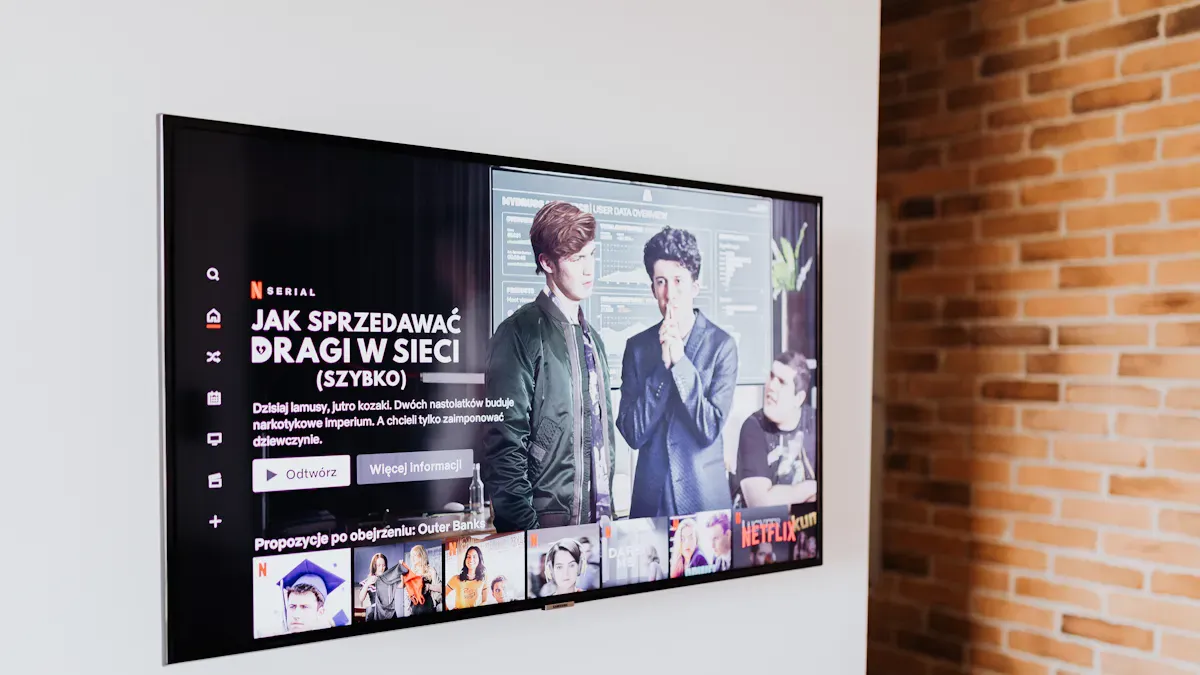
When you pick a TV, it’s important to know how sizes are measured. TV sizes are found by measuring from one corner of the screen to the opposite corner. This is done diagonally and shown in inches. For example, a 55-inch TV means the diagonal distance is 55 inches.
Common TV Sizes
Here are some common TV sizes you might think about:
32 inches: Best for small rooms or kitchens.
40 to 43 inches: Good for bedrooms or small living areas.
46 to 55 inches: This size is very popular in 2025. It works well in small to medium rooms, making your viewing better.
60 to 65 inches: Great for bigger living rooms, giving a fun experience.
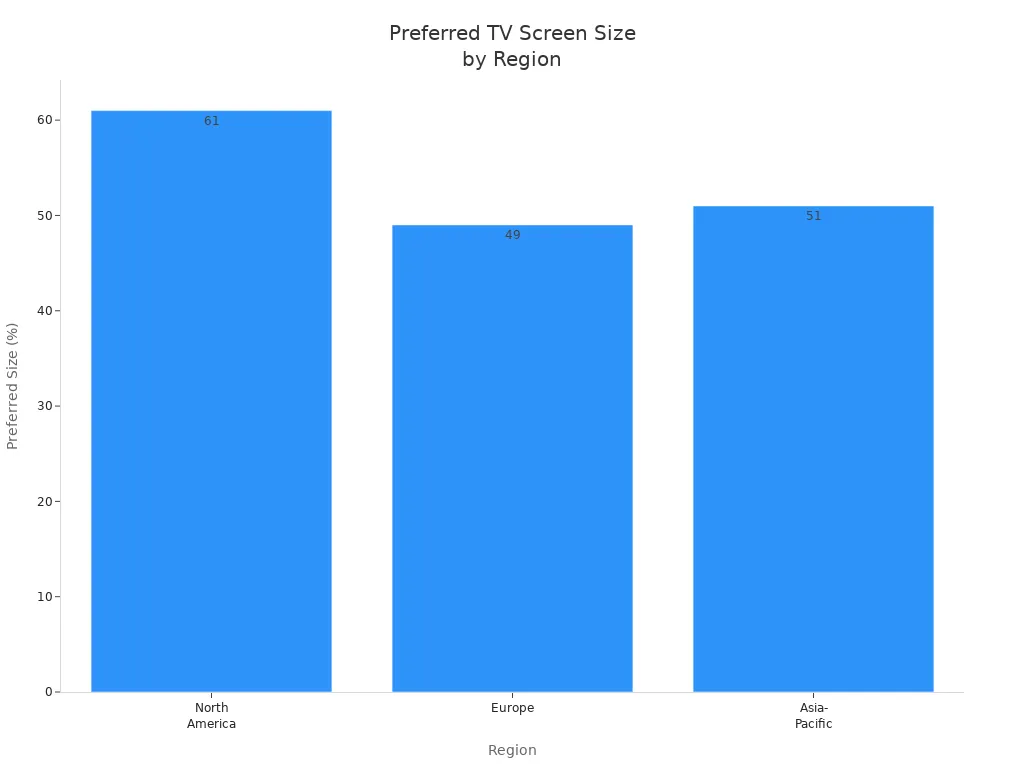
70 inches and above: These TVs are getting more popular. Over 52% of people choose screens bigger than 55 inches. They make a movie-like feel in large spaces.
Dimensions of Popular Models
To help you see better, here are the sizes of some popular TV models:
TV Size (inches) | Width (inches) | Height (inches) | Depth (inches) |
|---|---|---|---|
32 | 28.7 | 17.0 | 3.2 |
40 | 35.4 | 20.9 | 3.2 |
55 | 48.5 | 28.3 | 3.2 |
65 | 57.1 | 33.5 | 3.2 |
75 | 65.4 | 37.4 | 3.2 |
When you put your TV on a stand or mount it, think about these things:
Make sure it lines up with your eye level for clear viewing.
If it’s not placed right, it can cause discomfort and strain, ruining your fun.
The distance between your seating and the TV is important for the best viewing.
Knowing these measurements and sizes will help you choose a TV that fits your space and makes watching more enjoyable.
Recommended Viewing Distances
Choosing the right distance to watch your TV makes your experience better. How far you sit from your TV depends on its size. Here are some tips to help you find the best distance for small and large TVs.
Viewing Distance for Small TVs
For smaller TVs, like those 32 inches or less, sit closer to the screen. A good rule is to sit about 1.5 to 2 times the diagonal size of the TV. For a 32-inch TV, your best distance is 4 to 6 feet.
Tip: Sitting too close can hurt your eyes. Studies show that being too close can cause digital eye strain (DES). Here are some effects of sitting too close:
Evidence Description | Impact on Eye Strain |
|---|---|
Sitting too close and needing to focus more can worsen symptoms of digital eye strain (DES). | Higher chance of eye strain from bad viewing distance. |
Focusing and moving your eyes to see better adds stress on your eyes. | More likely to feel eye strain, especially if you need glasses. |
Bad distances and angles for TVs are different from reading, which makes it harder to see. | Extra strain on your eyes can cause discomfort and tiredness. |
Viewing Distance for Large TVs
For larger TVs, like those 55 inches and bigger, you can sit farther away. The best distance is about 2 to 2.5 times the diagonal size of the TV. For a 65-inch TV, your ideal distance should be 8.5 to 10.5 feet.
Many things affect how far you should sit:
Room Layout: How your furniture is arranged changes how far you sit from the TV. Make sure your seating lets you see comfortably without straining your neck.
Lighting Conditions: Reduce glare from windows and lamps. This helps you see better and lowers eye strain.
Seating Height: How high you sit matters. If you sit higher, you may need to place the TV higher to match your eye level.
Experts suggest specific angles for the best detail. Here’s a summary of their advice:
Organization | Recommendation |
|---|---|
THX | Distance for a 40° field of view |
SMPTE | 30° angle for the best detail |
CEDIA | Tips for mounting heights based on eye level |
By following these tips, you can make a comfy viewing space that improves your experience. Remember, the right distance not only makes watching more fun but also keeps your eyes safe.
TV Size Chart by Room Type
Choosing the right TV size for each room enhances your viewing experience. Here are some recommendations based on room types.
Living Room Recommendations
In the living room, the size of your TV should match the room’s dimensions. Here’s a quick guide:
Room Size | Recommended TV Size |
|---|---|
Small Living Room | 43-50 inch |
Medium Living Room | 55 inch |
Large Living Room | 65 inch or larger |
For most living rooms, a 55-inch TV serves as a great starting point. Smaller living rooms benefit from a 43-50 inch TV, while larger spaces can accommodate a 65 inch or larger TV.
To ensure comfort, consider the recommended viewing distances:
Screen Size | Recommended Viewing Distance |
|---|---|
26″ | 3.3′ – 6.5′ (1.0 m – 2.0 m) |
30″ | 3.8′ – 7.6′ (1.2 m – 2.3 m) |
42″ | 5.3′ – 10.5′ (1.6 m – 3.2 m) |
55″ | 6.8′ – 12.8′ (2.1 m – 3.9 m) |
65″ | 8.1′ – 16.3′ (2.5 m – 5.0 m) |
Bedroom Recommendations
In bedrooms, you want a cozy setup. Here are the best TV sizes based on room size:
TV Size Range | Recommended for Bedrooms | Optimal Viewing Distance |
|---|---|---|
32 to 43 inches | Small Bedrooms | 3.0 – 5.4 feet |
43 to 55 inches | Medium Bedrooms | 3.6 – 6.9 feet |
65 inches or larger | Large Bedrooms | 5.4 – 8.1 feet |
A 32 to 43 inch TV works well for small bedrooms. For medium bedrooms, consider a 43 to 55 inch TV. Larger bedrooms can accommodate a 65 inch TV or larger.
Kitchen Recommendations
Kitchens often have limited space. Here are suitable TV sizes:
Kitchen Size | Recommended TV Size | Minimum Viewing Distance |
|---|---|---|
Small (6–9 m²) | 19–20ʺ diagonal | N/A |
Medium (10–15 m²) | 22–24ʺ diagonal | N/A |
Large (18 m²+) | 32ʺ or larger | N/A |
Counter | Up to 22–24ʺ diagonal | N/A |
For optimal viewing, ensure the TV is positioned correctly. The arrangement of kitchen appliances and counter height influences your choice. A wall-mounted TV or one integrated into cabinetry can save space and enhance the look of your kitchen.
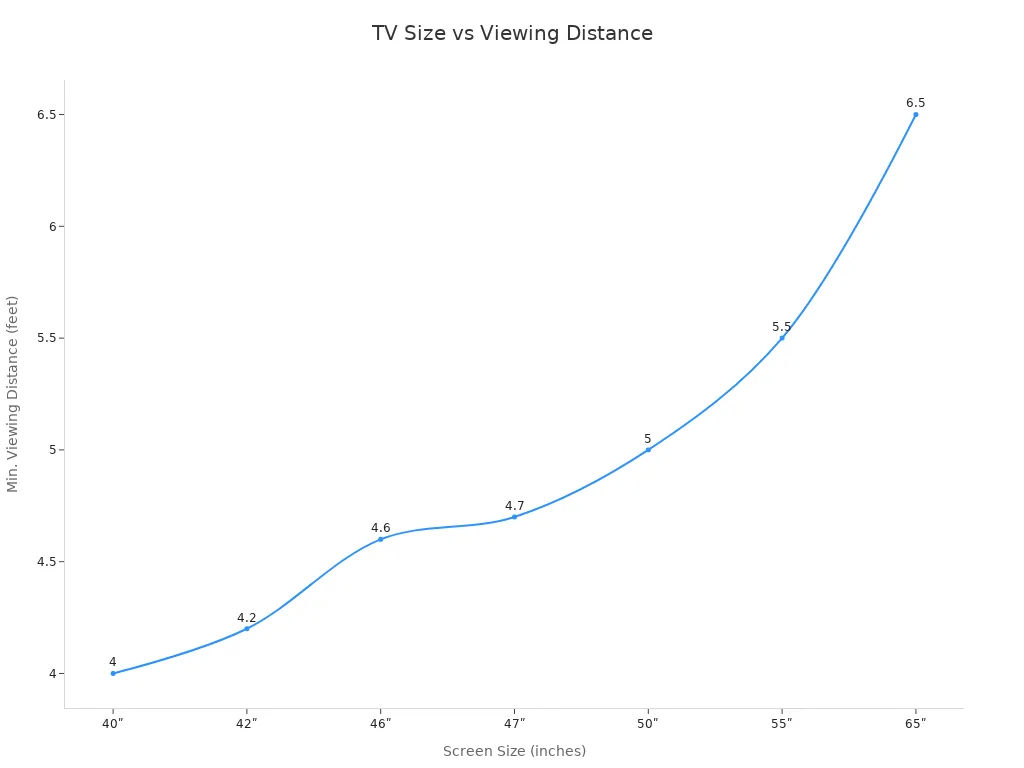
By following these guidelines, you can select the perfect TV size for your living room, bedroom, or kitchen, ensuring a great viewing experience.
Picking the right TV size is very important for watching. Think about how big your room is and how far you sit. Make sure the TV is at your eye level to prevent neck pain. Don’t put it too high, or it might be uncomfortable.
Tip: Use a cardboard cutout of the TV to see how it looks in different spots. This easy trick can help you find the best place for your space.
By following these tips, you can enjoy your favorite shows in comfort and safety.
FAQ
What size TV should I get for my room?
Choose a TV size based on your room dimensions and viewing distance. For small rooms, consider 32-43 inches. For medium spaces, 55 inches works well. Large rooms can accommodate 65 inches or larger.
How do I measure my TV size?
You measure TV size diagonally from one corner of the screen to the opposite corner. This measurement is in inches. For example, a 55-inch TV has a diagonal measurement of 55 inches.
What is the best viewing distance for a 55-inch TV?
For a 55-inch TV, sit about 6.8 to 12.8 feet away. This distance ensures a comfortable viewing experience without straining your eyes.
Can I mount my TV on the wall?
Yes, you can mount your TV on the wall. Ensure it is at eye level when seated. This placement enhances your viewing experience and saves space.
How do I reduce glare on my TV screen?
To reduce glare, adjust your room’s lighting. Use curtains or blinds to block sunlight. Position your TV away from direct light sources to improve visibility.