


Need a new phone for 2026? The Samsung Galaxy S25 FE delivers noticeably better low‑light photos and about two days of battery life without a price shock.
This guide lists seven top picks-from flagship Pixel performance to ultra‑affordable BLU basics-so you can match features, carrier compatibility, and update support to your needs. Read on for a practical shortlist tailored to different budgets and priorities.
| BLU C5L MAX 2024 Unlocked Phone (Black 32GB) |

| Ultra-Basic Pick | Display Size: 5.7″ | Internal Storage: 32 GB | Battery Capacity: 2,000 mAh | VIEW LATEST PRICE | Read Our Analysis |
| Samsung Galaxy S25 FE (2025) Unlocked 128GB Smartphone |

| Midrange Powerhouse | Display Size: 6.7″ | Internal Storage: 128 GB | Battery Capacity: 4,900 mAh | VIEW LATEST PRICE | Read Our Analysis |
| BLU C5L MAX (2024) Unlocked Smartphone 5.7″ Black |

| Entry-Level Option | Display Size: 5.7″ | Internal Storage: 16 GB | Battery Capacity: 2,000 mAh | VIEW LATEST PRICE | Read Our Analysis |
| Motorola Moto G (2026) Unlocked 4GB/128GB Pantone |
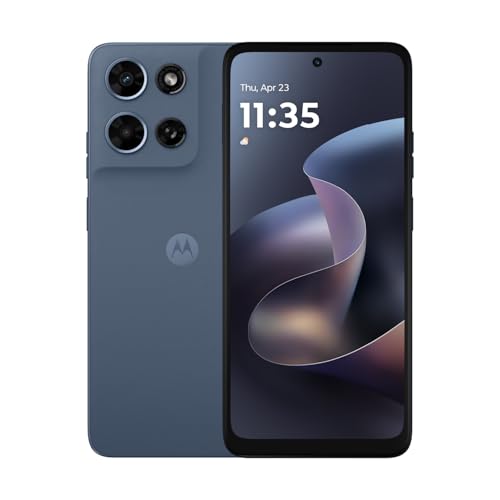
| Performance Value | Display Size: 6.7″ | Internal Storage: 128 GB | Battery Capacity: 5,200 mAh (typical) / 5,100 mAh (rated) | VIEW LATEST PRICE | Read Our Analysis |
| Samsung Galaxy A16 4G LTE (128GB Dual SIM) |

| Bright Display Pick | Display Size: 6.7″ | Internal Storage: 128 GB | Battery Capacity: 5,000 mAh | VIEW LATEST PRICE | Read Our Analysis |
| Google Pixel 10 Pro Unlocked Smartphone (128GB Moonstone) |

| Flagship AI | Display Size: 6.3″ | Internal Storage: 128 GB | Battery Capacity: 4,870 mAh | VIEW LATEST PRICE | Read Our Analysis |
| Samsung Galaxy A16 5G (Tracfone 128GB Black) |

| Carrier Deal Champion | Display Size: 6.5″ | Internal Storage: 128 GB | Battery Capacity: 5,000 mAh | VIEW LATEST PRICE | Read Our Analysis |
More Details on Our Top Picks
BLU C5L MAX 2024 Unlocked Phone (Black 32GB)
If you want an ultra-affordable, no-frills smartphone that keeps calls and basic apps running, the BLU C5L MAX 2024 is a solid pick - it’s compatible with many GSM carriers and offers a simple 5.7″ display, 32 GB of storage, and all-day battery life for light use. You’ll get GSM quad-band, 3G and 4G LTE on several bands, Bluetooth 4.2, and Wi‑Fi b/g/n with hotspot support. The 480×960 screen and 188 ppi suit basic viewing, while the 5 MP rear and 2 MP front cameras record 720p video. It’s carrier-unlocked but not compatible with AT&T/Cricket or CDMA carriers. SIM not included.
- Display Size:5.7″
- Internal Storage:32 GB
- Battery Capacity:2,000 mAh
- Camera (Main / Rear):5 MP rear
- Network Capability:4G LTE (unlocked GSM; not compatible with CDMA carriers)
- Biometric Security:Fingerprint recognition
- Additional Feature:Curved 5.7″ display
- Additional Feature:Bluetooth 4.2
- Additional Feature:Micro USB connector
Samsung Galaxy S25 FE (2025) Unlocked 128GB Smartphone
For users who want flagship features without the flagship price, the Samsung Galaxy S25 FE (2025) delivers a polished mix of performance and practicality: a 6.7″ smooth display for streaming and scrolling, a 4,900 mAh battery with Super Fast Charging 2.0, and a lightweight Armor Aluminum design with Gorilla Glass Victus+ for everyday durability. You’ll enjoy a premium chipset and improved cooling for sustained speeds, plus factory-unlocked Android and 128 GB storage. Shoot crisp selfies with the 12 MP front camera and ProVisual Engine, use Generative Edit to refine shots, or share live camera feeds with Google Gemini. Pair with Galaxy Buds3 FE.
- Display Size:6.7″
- Internal Storage:128 GB
- Battery Capacity:4,900 mAh
- Camera (Main / Rear):(unspecified exact main MP) multi-camera with high-end AI tools; main likely flagship-level (marketing focused) - listed camera features include advanced AI tools (spec: front 12 MP)
- Network Capability:5G-capable / unlocked (flagship 2025/2026 generation)
- Biometric Security:(implied modern flagship - biometric security supported; summary mentions unlocked Android but not explicit type) - likely fingerprint/biometric
- Additional Feature:Generative Edit AI
- Additional Feature:Gorilla Glass Victus+
- Additional Feature:Super Fast Charging 2.0
BLU C5L MAX (2024) Unlocked Smartphone 5.7″ Black
Looking for a basic, budget-friendly phone that’ll keep calls and texts reliable? You’ll appreciate the BLU C5L MAX (2024) - a compact 5.7″ LCD smartphone with a 540×960 display (max 1280×720) and 294 PPI. It’s an unlocked GSM 4G device for T-Mobile, MetroPCS, and similar carriers (not AT&T or CDMA networks). Android 13 Go runs on 2GB RAM and 16GB storage (microSD up to 16GB). You get a 5MP rear camera, 2MP selfie camera, fingerprint access, micro USB, and a 2000mAh battery claiming all-day use. Comes with case, charger, and one-year US warranty.
- Display Size:5.7″
- Internal Storage:16 GB
- Battery Capacity:2,000 mAh
- Camera (Main / Rear):5 MP rear
- Network Capability:4G LTE (unlocked GSM)
- Biometric Security:Fingerprint recognition
- Additional Feature:Android 13 Go edition
- Additional Feature:Fingerprint recognition
- Additional Feature:Includes silicone case
Motorola Moto G (2026) Unlocked 4GB/128GB Pantone
Choose the Moto G (2026) if you want long battery life and a big, bright 6.7-inch display that’s built for bingeing, gaming, and all-day productivity. You get a super-bright HD+ panel (1600 x 720) with a variable 60–120 Hz refresh rate, stereo Dolby Atmos speakers, and a 5200 mAh battery with 30W TurboPower charging. The MediaTek Dimensity 6300, 4 GB RAM (expandable virtually), and 128 GB storage keep apps and media smooth, while dual SIM, 5G, NFC, and GPS options cover connectivity. Camera AI, 50 MP rear and 32 MP front sensors, and water resistance round it out.
- Display Size:6.7″
- Internal Storage:128 GB
- Battery Capacity:5,200 mAh (typical) / 5,100 mAh (rated)
- Camera (Main / Rear):50 MP sensor (effective 12.5 MP after pixel binning)
- Network Capability:5G capable (Dual SIM; supports LTE/CDMA)
- Biometric Security:Fingerprint recognition
- Additional Feature:Variable 60–120 Hz
- Additional Feature:TurboPower 30W charging
- Additional Feature:3.5 mm headphone jack
Samsung Galaxy A16 4G LTE (128GB Dual SIM)
If you want long-lasting battery life and a bright Super AMOLED screen without overspending, the Samsung Galaxy A16 4G delivers-its 5,000 mAh cell and 90 Hz, 800-nit 6.7-inch display keep you going and watching all day. You get 128GB storage and 4GB RAM for smooth everyday use, plus dual SIM flexibility (SM-A165F/DS) and broad 4G band support-note U.S. compatibility is mainly T-Mobile and select MVNOs. The 50MP main camera handles daylight shots well, while a 2MP macro assists close-ups. It supports 25W charging, ships with a case (charger not included), and lacks eSIM.
- Display Size:6.7″
- Internal Storage:128 GB
- Battery Capacity:5,000 mAh
- Camera (Main / Rear):50 MP main + 2 MP secondary
- Network Capability:4G LTE (factory unlocked; wide LTE band support)
- Biometric Security:(not explicitly stated in summary) - typical for model; RAM/OS implies fingerprint recognition supported
- Additional Feature:Super AMOLED 6.7″
- Additional Feature:90 Hz / 800 nits
- Additional Feature:25W wired charging
Google Pixel 10 Pro Unlocked Smartphone (128GB Moonstone)
For power users who want top-tier AI features and pro-level photography, the Pixel 10 Pro delivers with Google’s Tensor G5 and Gemini assistant plus a 50 MP main camera and 100x Pro Res Zoom-so you’ll get on-device AI image processing and long‑lasting performance in a sleek, Moonstone finish. You’ll enjoy a 6.3″ Super Actua OLED at 120 Hz, 3,300 nits peak brightness, and Gorilla Glass Victus 2 over an aluminum frame. With 16 GB RAM, 128 GB storage, dual SIM/eSIM, 4,870 mAh battery, 8K video, 42 MP front camera, and robust connectivity, it’s built for demanding users.
- Display Size:6.3″
- Internal Storage:128 GB
- Battery Capacity:4,870 mAh
- Camera (Main / Rear):50 MP main (triple rear system)
- Network Capability:5G (unlocked for major carriers)
- Biometric Security:Fingerprint recognition
- Additional Feature:Google Tensor G5
- Additional Feature:3,300 nits peak brightness
- Additional Feature:8K video capture
Samsung Galaxy A16 5G (Tracfone 128GB Black)
Looking for a budget-friendly 5G phone that still delivers a bright, smooth display? You’ll get a 6.5″ FHD+ Super AMOLED Infinity-V screen at 90 Hz, 2340×1080 resolution, and edge-to-edge viewing for streaming and browsing. The Samsung Galaxy A16 5G (Tracfone) ships locked to Tracfone with a pre-installed SIM and requires activation via Tracfone. It runs Android 14 on an efficient octa-core chip, with 4 GB RAM, 128 GB storage (expandable to 1 TB), and a 5000 mAh battery with 25W fast charging. Cameras include a 50 MP front and a 50 MP main rear in a triple setup.
- Display Size:6.5″
- Internal Storage:128 GB
- Battery Capacity:5,000 mAh
- Camera (Main / Rear):50 MP main (triple-lens system)
- Network Capability:5G (Tracfone-locked; includes 5G/4G/3G support)
- Biometric Security:Fingerprint recognition
- Additional Feature:Locked to Tracfone
- Additional Feature:50 MP front camera
- Additional Feature:Expandable to 1 TB
Factors to Consider When Choosing a Smart Phone
When I’m choosing a phone, I first think about battery life expectations and how long it needs to last between charges. I also weigh camera performance, display size, processor speed, and whether the storage is enough or expandable. Tell me which of these matters most to you so I can recommend the best options.
Battery Life Expectations
Think about battery life as more than just a milliamp-hour number-I’m looking for how capacity, screen specs, processor efficiency, charging speed, and network conditions will combine to affect real use. I consider mAh a starting point: 4,000–5,200 mAh usually covers a full day under moderate use, while ~2,000 mAh will force a mid‑day recharge. I weigh display factors heavily-larger, higher‑resolution panels and 90–120 Hz refresh rates drain faster than smaller 60 Hz screens. I prioritize efficient chipsets and clean software that manage background tasks to squeeze extra hours. Fast charging (25–30W+) matters for minimal downtime, turning short plugs into substantial runtime. Finally, I account for network behavior: 5G and weak signals increase draw compared with stable LTE or Wi‑Fi.
Camera Performance Needs
How do I pick a phone camera that matches my shooting habits? I first match sensor resolution and pixel‑binning to my needs: I choose 50MP+ if I want detail and cropping, or rely on binning for low light. I focus more on aperture and sensor size-wider apertures and larger sensors beat raw megapixels for low‑light and depth‑of‑field. I check optical features: OIS to curb blur, true optical zoom range instead of digital, and real ultrawide/macro optics. For video I prioritize 4K options, higher frame rates like 60 fps, and good stabilization for smooth footage. Finally I evaluate secondary cameras and software-HDR, night mode, and AI processing-to make sure the phone handles my landscapes, portraits, and selfies.
Display Size Preference
Because I use my phone for everything from watching shows to quick one‑handed replies, I weigh screen size against comfort: bigger panels (6.5″+) make media and multitasking shine but can hinder pocketability and single‑hand use, while 5.5–6.0″ displays stay easy to grip and often feel lighter on longer days. I look for 1080p+ resolution and ~300+ ppi so text and images stay sharp regardless of size. I also prioritize refresh rate: 90–120 Hz delivers noticeably smoother scrolling and animations, especially on larger screens. Ergonomics matter-a tall aspect ratio, narrow bezels, balanced weight distribution, and good grip design can make a large display manageable. Ultimately I pick the size that fits my daily handling and carry habits.
Processor And Speed
I judge a phone largely by its processor and how snappy it feels in day‑to‑day use: CPU core count and clock speeds matter, but so do the chip’s fabrication node, GPU, and NPU because they shape battery life, graphics, and AI features. I check core configuration and GHz for single‑thread and multi‑thread workloads, but I weigh process node (4nm vs 7nm) heavily since smaller nodes usually mean better efficiency and lower heat. I evaluate GPU and NPU for gaming, camera processing, and on‑device AI tasks. I use benchmark scores plus real‑world tests - app launches, multitasking, and sustained workloads - to compare phones. Finally, I consider thermal design: good cooling prevents throttling and preserves peak performance.
Storage And Expandability
Any smartphone I pick has to have enough storage for how I actually use it, so I start by matching capacity to my habits-64GB might work for light users, but I lean toward 128GB or 256GB if I keep many apps, photos, or games. I factor in that the OS and apps eat 10–30% of advertised space, and I check RAM alongside storage since low RAM can force system caches and virtual memory to eat usable capacity. If I shoot lots of 4K/8K video, I either get the largest internal option or plan regular offloads because high‑res clips gobble gigabytes fast. Finally, I confirm microSD support and maximum card size and whether a hybrid SIM tray will force me to choose between dual SIM and expandable storage.
Network And Compatibility
Storage choices matter, but they won’t help much if the phone can’t actually connect where you need it, so next I check network and compatibility. I first verify supported cellular technologies and exact LTE/5G band lists against my carrier’s published bands and roaming policies to avoid surprises abroad. I confirm whether the device is factory‑unlocked or carrier‑locked, since locks limit which SIMs I can use. I also check SIM options-single, dual SIM, and eSIM support-and card sizes so my travel and work needs are covered. Finally, I look for carrier feature support like VoLTE, Wi‑Fi Calling, and carrier aggregation, because missing features can degrade call quality or data speeds even when bands theoretically match.
Durability And Build
Because phones travel with us everywhere, I check build and durability first to avoid surprise failures. I favor strengthened glass fronts and backs (Gorilla Glass variants) and metal or reinforced frames to resist drops and scratches. I verify official IP ratings like IP67/IP68 so I know how the device handles water and dust. Reinforced corners, gasketed or covered ports, and sturdy back covers matter for impact resistance and longevity. I look for advertised drop-test standards or MIL‑STD claims and read user reports on drop and flex performance to gauge real-world ruggedness. Finally, I evaluate ports and buttons-USB‑C, covered connectors, and tactile, well-mounted buttons-since those are common failure points over time.
Software And Updates
While hardware keeps a phone alive, I care just as much about software and updates because they determine security, features, and long‑term value. I check the OS version and the manufacturer’s update policy-ideally phones ship with a recent release and promise 2–4 years of major OS upgrades plus regular security patches. I confirm OTA delivery and patch cadence (monthly preferred, quarterly acceptable), and whether critical firmware like bootloaders and modems get updates without degrading performance or removing features. I prefer incremental OTA packages to save storage and data; full-image updates need planning. I look for transparency: published changelogs, beta programs for testing, and supported rollback or factory recovery options to fix bad updates and preserve my investment.
Frequently Asked Questions
How Do Software Updates Vary Across These Manufacturers?
Update policies differ in scope and timing. Google and Apple deliver the quickest major OS upgrades and security patches. Samsung provides rapid updates too and backs many models with extended multi-year support. OnePlus and brands closely aligned with Pixel prioritize frequent security fixes and timely feature updates. Lower-cost manufacturers often release updates more slowly and typically guarantee fewer years of support.
Which Phones Receive the Longest Security Support?
“I’d say Google Pixel and Apple iPhone receive the longest and most reliable security support, with Samsung close behind; I’ve seen Pixels and iPhones get consistent updates for many years.”
Are Any of These Models Repair-Friendly or Easy to Replace Parts?
Yes. I check teardown scores and manufacturer parts availability. I will highlight specific phones that allow straightforward screen battery and camera replacements and note official repair programs third party parts availability and any modular design features.
What Privacy Features Protect User Data on Each Device?
Each device protects data with specific measures: device storage is encrypted so files stay unreadable without your passcode; network connections use transport encryption like TLS to protect data in transit; biometric unlocking uses fingerprint or face recognition tied to hardware for authentication; app permission controls let you grant or revoke access to location, camera, microphone and contacts; dedicated security chips isolate cryptographic keys and perform secure operations; manufacturers issue regular OS and firmware updates to patch vulnerabilities; privacy dashboards show which apps access sensitive sensors and let you limit tracking and data sharing.
Which Phones Support Carrier eSIM Activation Globally?
Most recent flagship phones from Apple, Google, and Samsung include carrier eSIM support in many countries, but exact availability depends on each carrier and region. Check your intended carrier’s eSIM policies and remote activation procedures before buying to ensure full support.
Final Thoughts
I’ve walked you through seven standout phones, but the real choice hangs on one quiet question: what do you value most? Picture yourself holding each device-big, bright Pixel photos, the S25 FE’s slick speed, the Moto G’s dependable all‑day battery, a tiny BLU wallet‑friendly backup. Imagine your pocket, your photos, your months ahead. Decide which scene feels right, then reach for that phone-the one that fits your life, not just the specs.