

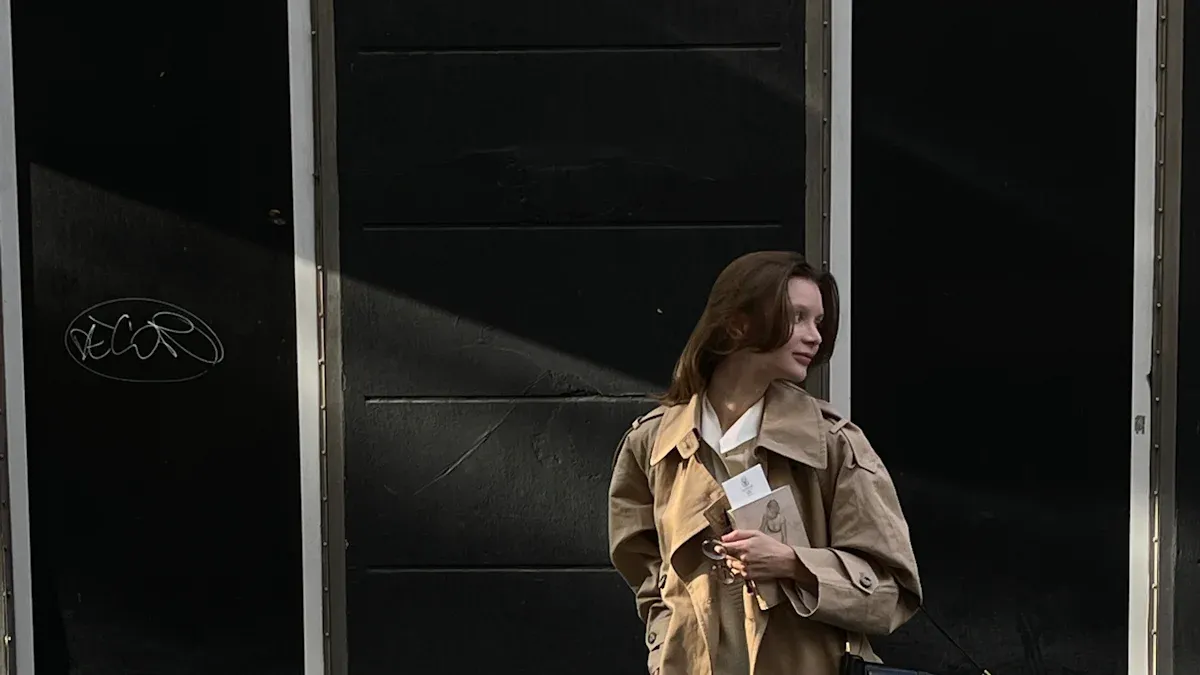
A storm flap on a trench coat is a piece of fabric that covers the buttons or zipper. You find this feature helps block wind-driven rain, keeping you drier than coats without it. Many trench coats use tightly woven, water-resistant fabrics, making the storm flap both practical and stylish.
Key Takeaways
A storm flap is a piece of fabric that covers the buttons or zipper of a trench coat. It helps keep you dry by blocking rain and wind.
Storm flaps originated during World War I to protect soldiers from harsh weather. They have evolved into a stylish feature in modern trench coats.
When shopping for a trench coat, look for a storm flap. It adds both protection from the elements and a touch of style.
Storm Flap Definition
What Is a Storm Flap?
A storm flap is an extra piece of fabric that covers the closure area of a trench coat. You usually see it over the buttons or zipper. This feature helps direct rainwater away from your body and keeps you dry.
On trench coats and jackets, the storm flap acts as a shield against wind and rain.
On some shirts and dresses, it can serve a decorative purpose.
The ‘gun’ flap is actually a protective flap to ensure water does not slip into the jacket as it runs down the shoulders.
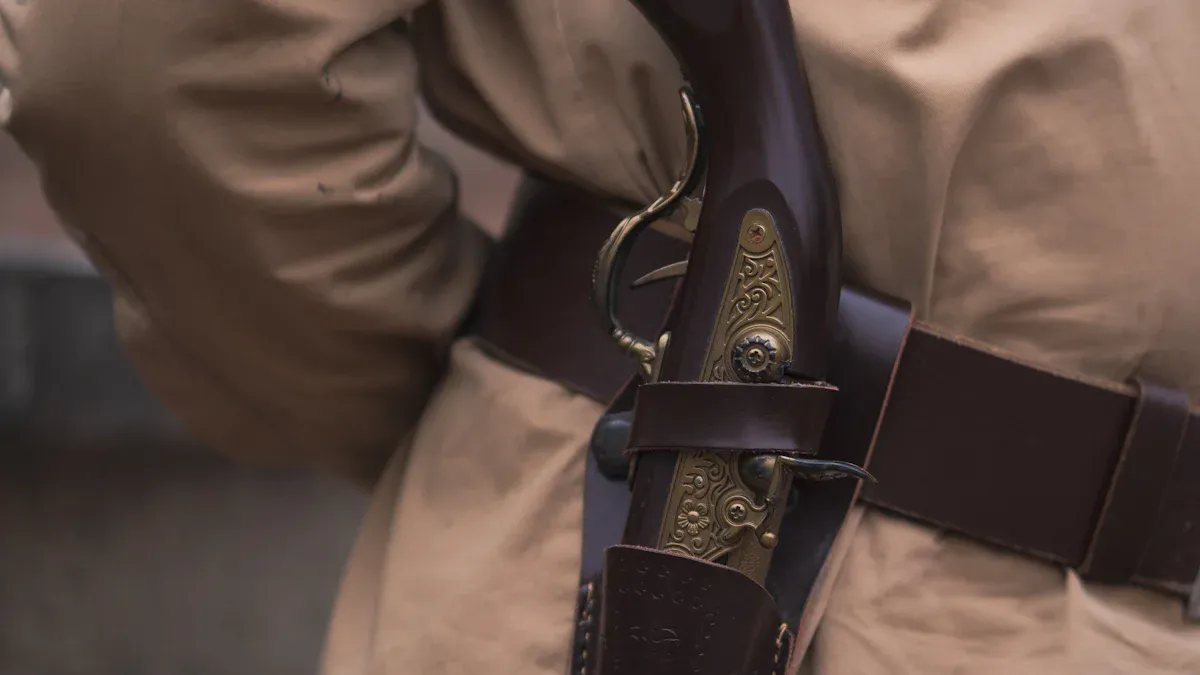
Many people confuse the storm flap with the gun flap. The gun flap often sits on one side of the chest and was designed for soldiers to keep water out when carrying firearms. The storm flap, however, covers the closure and protects you from rain entering through the front of the coat.
Placement and Design
You will find the storm flap in different places depending on the trench coat’s brand and style.
Most often, the storm flap sits on the upper back of the coat. This placement helps direct water off your shoulders.
Some designs place the flap over the front closure, covering the buttons or zipper.
Modern brands sometimes use storm flaps as a style detail, so they may not always serve a functional purpose.
The gun flap, which some people call a storm flap, can also appear on the breast pocket and may button down for extra water resistance.
The design of the storm flap can vary. Some coats have a single flap, while others have flaps on both the front and back. The flap may be sewn down or left loose to allow water to run off more easily.
Functionality
The storm flap gives you extra protection from wind and rain. When you wear a trench coat with a storm flap, you get a barrier that blocks water from entering through the closure.
The flap directs rainwater off your body, especially when you wear a hat or hood.
It keeps you dry in mild to moderate rain, though it may not stop heavy rain completely.
The storm flap also adds to the coat’s durability by preventing water and wind from reaching the inside.
Many brands highlight the storm flap as a feature that combines style and function. For example, Ann Taylor describes their trench coats as both elegant and practical, with storm flaps that help keep you dry and comfortable. While storm flaps do not always offer the same level of protection as fully sealed zippers, they still perform well in most weather conditions.
Besides its practical use, the storm flap has become a decorative element. As trench coats moved from military use to everyday fashion, designers began to use storm flaps to add visual interest. Today, you may see storm flaps that serve mainly as a style detail, even if they no longer provide full rain protection.
History and Style

Origins
You can trace the storm flap back to World War I. Soldiers needed coats that could protect them from harsh weather in the trenches. Designers created the trench coat to meet these needs.
The storm flap helped rain fall off the coat, keeping soldiers dry.
The trench coat started as military gear, adapting older designs for better protection.
Early trench coat makers played a big role in this history:
Burberry submitted a weatherproof officer coat design to the War Office in 1901, including the storm flap.
Aquascutum, a company founded in 1853, focused on waterproof outerwear and helped shape the trench coat.
Evolution
The storm flap began as a practical feature. Over time, it became a style detail. You now see it in both classic and modern trench coats.
Original Design Feature | Contemporary Adaptation |
|---|---|
Functional element to prevent rain | Stylish feature enhancing aesthetic |
Signature trait of trench coat | Adapted to contemporary fashion trends |
Fashion magazines often highlight how the storm flap brings together form and function.
The storm flap, another crucial aspect, fortifies the coat against harsh weather conditions, ensuring that both form and function are in perfect harmony.
Designers use storm flaps to shape the silhouette and fit of trench coats. This detail gives the coat a classic look and adds to its overall style.
Misconceptions
Many people confuse the storm flap with other features.
Some think it is padding for a rifle butt, but its real job is to stop water from entering the jacket.
The flap sits differently on men’s and women’s coats because of the way they button up.
Fashion historians make a clear distinction:
Flap Type | Description | Purpose |
|---|---|---|
Storm Flap | Diagonal panel across the chest area | Protects from rain and wind |
Gun Flap | Extra flap on the chest for soldiers’ guns | Keeps firearms dry in wet conditions |
You now know what a storm flap does for a trench coat.
It started as a practical feature for soldiers, keeping out rain and wind.
Today, it adds style and comfort to your coat.
Many users say the front storm flap keeps you warm and dry.
Factor | Description |
|---|---|
Protection | Blocks moisture and wind |
Insulation | Helps trap heat |
Material Types | Gore-Tex, nylon, polyester |
When you shop for a trench coat, look for a storm flap for extra protection and style.
FAQ
What does a storm flap do on a trench coat?
A storm flap keeps rain and wind from entering through the coat’s closure. You stay drier and more comfortable in wet weather.
What is the difference between a storm flap and a gun flap?
A storm flap covers the closure for rain protection. A gun flap sits on the chest and was designed for soldiers carrying firearms.
What materials are used for storm flaps?
You often find storm flaps made from water-resistant fabrics like cotton gabardine, polyester, or nylon. These materials help block moisture.