


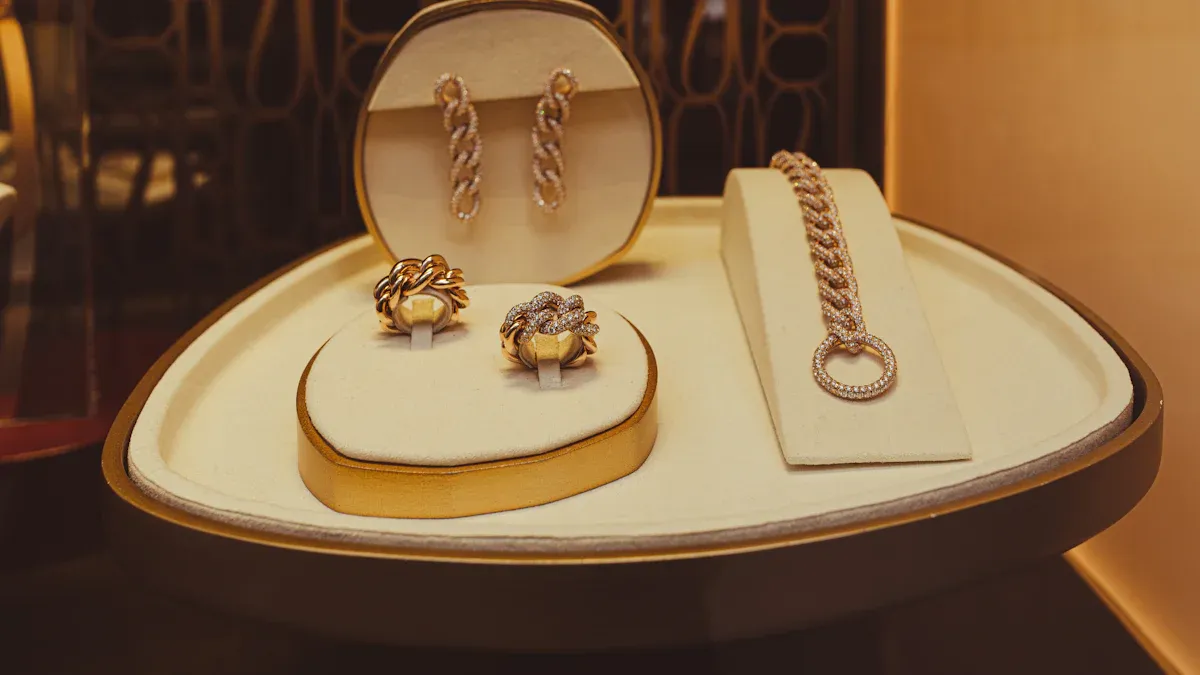
Luxury jewelry captivates many people. True luxury in fine jewelry transcends mere cost. It embodies unparalleled craftsmanship, rare materials, innovative design, and a rich heritage. The market for luxury jewelry brands reached USD 58.5 billion in 2023.
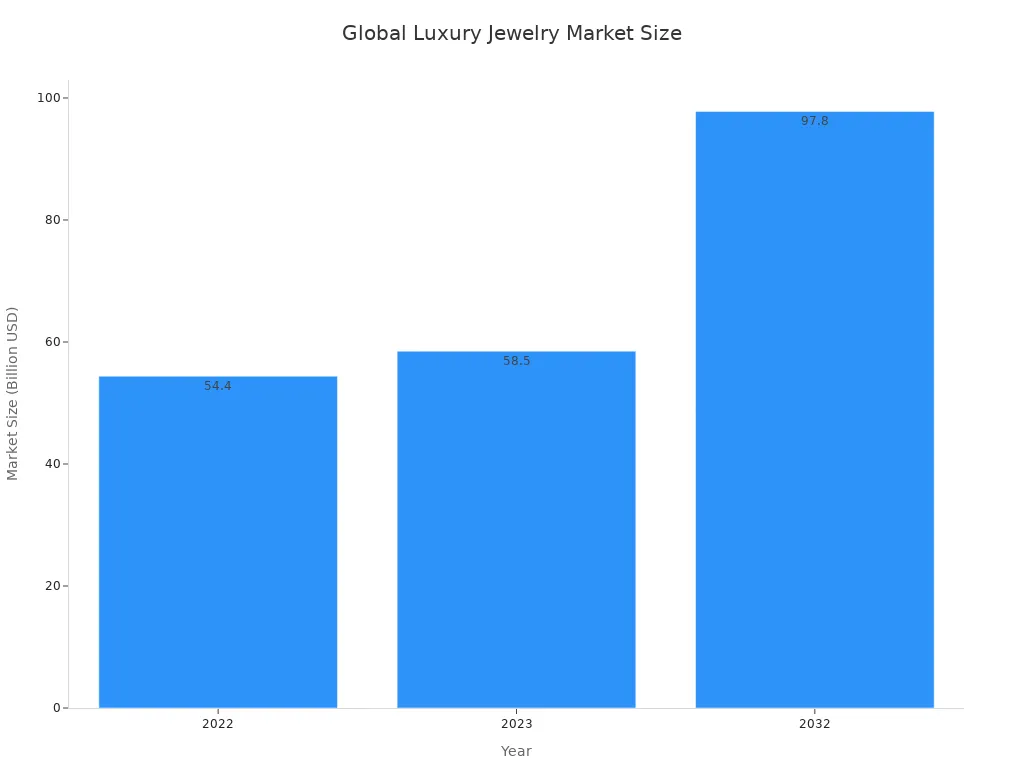
Rising disposable income and social media influence drive this growth. Jewelry also holds deep cultural significance, showcasing artistry. This guide presents 25 most luxurious designers. These best jewelry brands create pieces of lasting beauty. Their fine jewelry features timeless designs. This ensures enduring beauty. Their elegant design incorporates timeless designs.
Key Takeaways
Luxury jewelry is more than just expensive; it shows great skill, rare materials, and special designs.
Top jewelry brands like Cartier and Tiffany & Co. have a long history and unique styles that make them famous.
Many luxury brands now focus on using materials that are good for the environment, like ethical gold.
These brands create jewelry that is both beautiful and lasts a long time, making each piece special.
Owning luxury jewelry means you have something unique that shows off your personal style.
Exploring the Best Jewelry Brands: 25 Iconic Designers
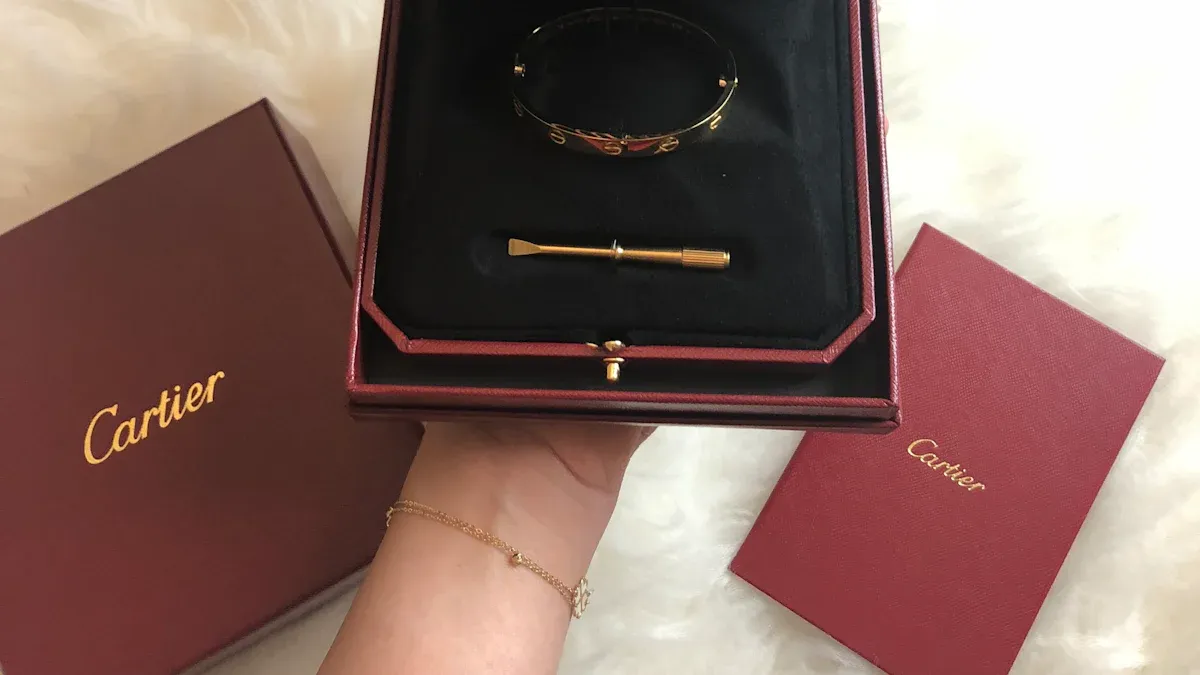
Cartier: Royal Legacy and Iconic Designs
Cartier stands as a titan among the best jewelry brands, known for its royal heritage and iconic creations. Louis-François Cartier founded the firm in Paris in 1847. Initially, the company faced financial struggles. By 1856, Princess Mathilde, Napoleon III’s second cousin, became a patron. Soon after, Empress Eugénie also offered patronage.
This imperial support brought financial rewards and prestige. It allowed Cartier to expand and serve a growing clientele of French royalty, bankers, and industrialists. King Edward VII of the United Kingdom famously called Cartier “the jeweller of kings and the king of jewellers.” He commissioned 27 tiaras for his 1902 coronation. This significantly elevated Cartier’s royal standing. Between 1904 and 1914, Cartier received royal warrants from seven different courts. These included Great Britain, Russia, Spain, and Siam (Thailand).
Cartier’s signature designs include the Tank watch, the Love collection, and the Panthère collection. The Tank watch, with its rectangular case, became a significant style statement. Andy Warhol once said, “I don’t wear a Tank watch to tell the time… I wear a Tank because it is the watch to wear!” This highlights its status as a symbol of understated elegance. The Panthère de Cartier collection features overt glamour and feline grace.
It blurs the line between jewelry and a timepiece. It has a small, square case with rounded edges and an ultra-flexible link bracelet. This mimics the fluid movement of a panther. The collection draws inspiration from Cartier’s long-standing panther emblem. This symbolizes fierce and fearless femininity.
Cartier’s fine jewelry pieces often feature meticulous craftsmanship. The Halo Tiara, commissioned by King George VI in 1936, was worn by Kate Middleton at her wedding. Queen Alexandra commissioned the Collier Résille, a diamond necklace, in 1904. These timeless designs showcase Cartier’s enduring beauty and craftsmanship.
Tiffany & Co.: American Diamond Heritage
Tiffany & Co. holds a prominent place among popular jewelry brands. It boasts a rich American diamond heritage.
Charles Lewis Tiffany, known as the “King of Diamonds,” acquired the 287.42-carat canary-yellow diamond in 1877. This became the 128.54-carat Tiffany Diamond. It symbolized the era’s extravagance and the jeweler’s pursuit of excellence. Tiffany’s exhibits at world’s fairs, such as the 1889 Paris fair, showcased its extraordinary diamond collections.
In 1887, Charles Lewis Tiffany purchased one-third of the French Crown Jewels. This further cemented his nickname.
The Tiffany® Setting, introduced in 1886, revolutionized engagement rings. It was the first design to lift the diamond off the band. This iconic silhouette features a six-prong setting that virtually disappears.
It allows the round brilliant diamond to be elevated into the light for maximum brilliance. This inventive solitaire ring typically features a triple excellent cut diamond. This is the highest grade in the industry.
This design shifted focus from heavily embellished settings to showcasing the diamond itself. It set a new standard for engagement rings. The Tiffany style setting is inherently simple. This contributes to its broad appeal. Tiffany also introduced previously unknown colored gemstones. These include kunzite (1902), morganite (1910), tanzanite (1967), and tsavorite (1974). This showcased its expertise in sourcing spectacular fine gemstones. These timeless designs continue to define romance and beauty.
Harry Winston: The King of Diamonds
Harry Winston earned the title “The King of Diamonds.” The brand is synonymous with exceptional diamonds. Harry Winston acquired and showcased the iconic Hope Diamond. He subsequently donated it to the Smithsonian in 1958.
This renowned blue diamond has since become one of the most recognized gemstones globally. It attracts millions of visitors to the museum. The brand’s focus remains on sourcing and crafting the world’s most extraordinary fine diamonds. Each piece of fine jewelry reflects a commitment to unparalleled quality and beauty. Harry Winston’s high jewelry pieces are truly legendary.
Van Cleef & Arpels: Poetic Artistry
Van Cleef & Arpels is celebrated for its poetic artistry and enchanting design. The brand’s heritage includes the iconic Alhambra collection.
It features clover-shaped motifs. Van Cleef & Arpels is also renowned for its ‘Mystery Set’ technique. This became an emblem for the Maison. This innovative setting method, first patented in 1933, allows gemstones to be set without any visible metal claws. It creates a continuous surface of color.
The technique involves precise cutting of each stone to fit into a hidden rail system. This process requires exceptional skill from both jewelers and lapidaries. The ‘key’ system, developed in 1936, enabled the creation of three-dimensional, curved Mystery Set pieces. This moved beyond initial flat surfaces.
Also, this technique significantly contributed to the Maison’s distinctive style and reputation for excellence in fine jewelry. These timeless designs embody grace and sophistication.
Bulgari: Roman Boldness and Glamour
Bulgari embodies Roman boldness and glamour. Its design draws heavily from ancient Roman architectural and artistic influences. The Serpenti Collection takes inspiration from ancient Roman snake armlets from the 1st century.
It utilizes pioneering Tubogas technology. The B.zero1 Collection, launched in 1999, features a bold, circular design. This is inspired by the grandeur and power of the Roman Colosseum. The Diva Collection, introduced in 2013, draws inspiration from the intricate mosaics of Rome’s Caracalla Baths. It features bold, geometric designs.
In the 1960s, Bulgari began incorporating ancient Roman coins into fine jewelry. It preserved their original state with custom-made settings. The Parentesi Collection, a modular jewelry collection, is inspired by the travertine stone patterns used to connect blocks in the streets of Rome. Bulgari’s fine pieces are known for their vibrant colors and distinctive forms. They capture the essence of Roman beauty.
Graff: Master of Exceptional Diamonds
Graff stands as a master of exceptional diamonds. The brand focuses on sourcing and crafting the rarest and most exquisite stones. Graff evaluates every diamond using the 4Cs-cut, color, clarity, and carat weight.
This is prescribed by the Gemological Institute of America (GIA). This ensures perfection. Graff diamonds are exceptionally pure. Many are Flawless or display minute inclusions invisible to the naked eye. Graff emphasizes a perfectly balanced cut with symmetrical, mirror-like facets.
This optimizes brilliance and luster. Expert artisans craft these silhouettes for optimum radiance. Graff diamonds are primarily graded between D and G on the color scale. These are considered the rarest and most sought-after. They indicate near-colorless to colorless diamonds. The GIA independently verifies the origins of many of Graff’s diamonds and gemstones. This ensures quality, integrity, and transparent sourcing. Graff’s commitment to fine quality makes it a leader among luxury jewelry brands.
Chopard: Ethical Luxury and Craftsmanship
Chopard champions ethical luxury and craftsmanship. In 2018, Chopard became the first watch and jewelry maison to commit to using 100% ethical gold for all its products. Chopard defines ‘ethical gold’ as gold from responsible sources.
These sources are verified to meet international best practice environmental and social standards. Since July 2018, Chopard’s gold comes from two traceable routes. These include artisanal freshly mined gold from small-scale mines and RJC Chain of Custody gold. Chopard supports artisanal gold mining cooperatives in Latin America to achieve Fairmined Certification.
This requires strict standards for working conditions, social development, and environmental protection. Chopard also uses Lucent Steel™, made from 70% recycled steel. It aims for all steel watches to include 90% recycled steel by 2025. Chopard has been a certified member of the Responsible Jewellery Council (RJC) for over 10 years. This reinforces its commitment to industry engagement. Chopard’s dedication to responsible sourcing sets a high standard for fine jewelry production.
Piaget: Watchmaking and Jewelry Fusion
Piaget masterfully integrates watchmaking expertise into its high jewelry collections. This approach has been central to the brand since its inception in 1874. It results in intricate pieces that harmoniously blend both disciplines. The Aura collection, introduced in 1989, embodies Piaget’s philosophy of integration. The case and bracelet form a seamless masterpiece of light and form.
It merges mechanical precision with artistic brilliance. This occurs through extensive diamond and gemstone adornment. A refined mechanical movement beats beneath the dazzling aesthetics. Piaget also creates audacious cuff watches and swinging sautoirs. These blur the line between sculpture and timepiece.
These pieces showcase generations of goldsmithing expertise alongside horological function. The Piaget Protocole Exceptional Reference 83541 exemplifies this integration. It features an opulent array of diamonds and sapphires with meticulous gem-setting craftsmanship. Its geometrically inspired case shapes combine with ultra-thin movements. This showcases elegance without compromising mechanical excellence. Piaget’s fine creations are true works of art.
Boucheron: Parisian Innovation
Boucheron represents Parisian innovation in fine jewelry. Frédéric Boucheron pioneered the use of rock crystal with diamonds. This expanded possibilities for future jewelers. The brand integrates futuristic technology and 3D printing.
The Nuage en Apesanteur necklace used 3D printing to create a practically weightless, voluminous cloud design. It featured over 10,000 threads of titanium and 4,000 diamonds. Boucheron also achieved a dynamic prismatic effect in rock crystal. This occurred in the Carte Blanche Holographique collection.
It incorporated futuristic aerospace technology. This used micro-particles of molten titanium and silver oxide to project rainbow colors with natural light. The Question Mark necklace, created in 1879, was a claspless necklace. It allowed women to accessorize independently. This was a significant departure from restrictive jewelry of the era.
Boucheron challenges traditional notions of ‘precious’ by using unconventional materials. These include aerogel and Cofalit. This opens new discussions on modern luxury jewelry design.
Mikimoto: The Pearl Pioneer
Mikimoto is renowned as the pearl pioneer. After three years of dedicated research, Mikimoto achieved the world’s first successful production of a cultured pearl in 1893. His continued research led to the establishment of pearl culturing technology.
This flourished after patents opened in 1928. Mikimoto’s key scientific advancement was his success in culturing blister pearls. This achievement was foundational for the pearl farming industry. It initiated the full-scale industrialization of pearl culturing. Mikimoto’s fine jewelry celebrates the natural beauty of pearls. The brand offers timeless designs that highlight the luster and perfection of these organic gems.
David Yurman: Sculptural American Luxury
David Yurman defines sculptural American luxury. He initially used a direct-weld sculpting technique. This allowed him to realize his artistic capabilities. It set the groundwork for the Cable jewelry. He was drawn to the beauty of lines in various forms.
These included helical strands of DNA, hanging vines, twisting columns, nautical ropes, and suspension cables. These constantly appeared in his sketches and direct-weld sculpting. The original Cable bracelet, which debuted in 1983, was created by hand-twisting 50 feet of wire into the now-famous helix pattern.
The ‘Sculpted Cable’ collection incorporates inspiration from architecture and bas-relief sculpture. It creates new shapes and proportions. This collection emphasizes the elegant proportions of the S-curve. It features intricate fluting that references ancient Greek and Roman architecture. It transforms the original helix into a flattened, carved relief. David Yurman’s fine pieces are instantly recognizable for their distinctive texture and design.
Buccellati: Italian Renaissance Textures
Buccellati is celebrated for its Italian Renaissance textures. The brand’s intricate metalwork techniques are inspired by historical artistry. The Rigato technique involves cutting parallel lines onto the surface of the metal. This achieves a sheen effect. It often gives the illusion of sparkling diamonds.
The Ornato technique uses decorations based on natural forms. These include animals, leaves, and flowers. The Tulle technique, exclusive to Buccellati, creates lacework perforations and damascening. Each ‘fabric’ cell is pierced and finished by hand. This is followed by hand engraving for stone mountings. The Telato technique creates texture through fine cross-hatched lines. The Segrinato method involves engraving small, overlapping lines in multiple directions. This results in a velvet-like texture. Buccellati’s fine jewelry showcases unparalleled craftsmanship and beauty.
Chaumet: Imperial Elegance
Chaumet embodies imperial elegance. Its founder, Marie-Etienne Nitot, became the official jeweler to Napoleon I in 1804. He created jewelry for Napoleon’s weddings to Joséphine de Beauharnais and Archduchess Marie Louise.
This included the Napoleon Diamond Necklace and the Marie Louise Diadem. Nitot also designed the hilt of Napoleon’s coronation sword. Marie-Etienne Nitot established a reputation as the ‘jeweler of the tiara’. He created Napoleon’s coronation crown and Empress Josephine’s coronation tiara. Later, Jean-Valentin Morel became jeweler to Queen Victoria. Joseph Chaumet, who took over in 1885, created jewels for nearly every court in Europe, Russia, India, and the Near East.
During the Belle Époque, Chaumet gained popularity in the Russian Empire. It opened branded stores in St. Petersburg, Moscow, and Kiev. The House of Chaumet created stunning tiaras, necklaces, and belts for Grand Duchess Maria Pavlovna. Chaumet’s fine jewelry reflects a rich history of serving royalty.
Fabergé: Russian Opulence Reimagined
Fabergé is synonymous with Russian opulence reimagined. The brand is famous for its iconic Imperial Eggs. Fabergé has created new ‘Imperial-style’ eggs for modern collections. The ‘Fabergé Pearl egg’ in 2015 was the first of its kind in 100 years. This piece features a mother-of-pearl exterior, 39 white pearls, 3,305 diamonds, and yellow gold details. It opens to reveal a unique 12.17-carat grey pearl.
Fabergé’s fine jewelry continues to blend historical grandeur with contemporary aesthetics. These timeless designs maintain their allure.
Boodles: British Contemporary Jewels
Boodles offers British contemporary jewels. The brand is known for its elegant and timeless designs. The Boodles Knot Collection is celebrated for its knot motif. It includes necklaces, bracelets, and earrings. The Boodles Roulette Collection features vibrant colored gemstones, particularly sapphires.
It uses playful and innovative designs. This infuses modernity while maintaining high jewelry craftsmanship. Boodles uses top-quality materials. These include high-grade diamonds, colored gemstones, and precious metals. It employs meticulous craftsmanship and attention to detail.
The new Sophie collection features an abstract heart-shaped design. It has a single, brilliant-cut diamond suspended within a circle. This collection embodies “dress-down” diamonds. They are effortless to wear yet make one feel special. Boodles stands out among popular jewelry brands for its distinctive British flair.
De Beers Jewellers: Diamond Expertise
De Beers Jewellers is synonymous with diamond expertise. De Beers created the industry’s first diamond grading system, the 4Cs (carat, color, clarity, cut). The GIA adopted this in 1939. De Beers gemmologists use specially developed, proprietary instruments and technology. They impartially assess diamonds based on the 4Cs.
The grading and assessment occur in laboratories in London and Surat. This combines over 130 years of experience with advanced technology. The Diamond Integrity Process includes checks like DiamondSure and DiamondView. These identify natural diamonds and distinguish them from synthetics.
De Beers is the only jewelry House to select all diamonds by eye. It upholds the highest industry standard for cut quality. Diamantaires assess Fire, Life, and Brilliance, along with the silhouette, using the 4Cs. They accept only top cut grades. This requires perfect alignment of facets and angles for ultimate sparkle. De Beers always cuts for maximum beauty, not for weight. This ensures spectacular diamonds. Each Forevermark diamond is engraved with a unique identification number. This signifies its exceptional quality.
Messika: Modern Diamond Creations
Messika creates modern diamond creations. Valérie Messika aims to give diamonds new means of expression. Teams in the design studio work to pair diamonds with future trends. This creative process can take over a year. It ensures each piece conveys grace and enchantment.
Messika’s modern design philosophy combines the timelessness of diamonds with a contemporary touch. It creates jewelry suitable for everyday wear. Valérie Messika’s inspiration draws from art, street style, fashion, and classical jewelry themes. She reinterprets these with a fresh vision. A core technique involves creating a sense of volume, movement, and sensual fluidity. It prioritizes ergonomic comfort.
This ensures jewelry stays in place and allows for natural movement. The brand also emphasizes the purity of the diamond through clean designs. It seeks to minimize metal usage. This enhances sensory contact between the diamond and the body. It celebrates feminine grace through fluid forms and curves. Messika’s fine jewelry offers a fresh perspective on diamond beauty.
Pomellato: Italian Color and Form
Pomellato is celebrated for its Italian color and form. The brand is known for its bold, unconventional designs and innovative use of colored gemstones. It establishes a distinct aesthetic characterized by vibrant hues, organic shapes, and a playful spirit. The Nudo Collection features ‘naked’ and prong-less gemstone settings. This allows the full brilliance and color of stones like amethyst, blue topaz, and prasiolite to shine. Its customizable nature enables unique color combinations.
The M’ama non M’ama Collection uses colorful gemstones. These include garnets, amethysts, and topaz. Each color symbolizes a different sentiment. The Sabbia Collection captures the essence of sand with pavé diamonds in various shapes and colors. These include brown, black, and white. They are meticulously set in rose gold. Pomellato’s fine jewelry pieces evoke emotion and self-expression.
Graff Diamonds: Bespoke High Jewelry
Graff Diamonds, a name synonymous with exceptional gems, also excels in bespoke high jewelry. Bespoke jewelry offers exclusivity and individuality. Each piece is a unique design. It ensures no one else has the same item.
It is crafted to reflect the wearer’s personality and style. This allows for complete customization from the basic design to the smallest details. Clients have a direct hand in shaping every detail. They work closely with designers from sketch to completion. This includes selecting materials with personal significance. These might be birthstones or meaningful symbols. Skilled artisans meticulously focus on every detail. They guarantee excellent craftsmanship.
Higher quality materials are typically used. This contributes to the durability and beauty of the piece. It results in long-lasting elegance and a perfect finish. Bespoke jewelry bridges art and craftsmanship. It captures a deeper essence of individuality and intent. It is considered an investment in a personal piece of art.
Jacob & Co.: Extravagant Designs
Jacob & Co. is known for its extravagant designs and audacious creations. The brand pushes boundaries in both watchmaking and fine jewelry. Its pieces often feature large, rare gemstones and intricate, complex mechanisms. Jacob & Co. appeals to those who seek bold statements and unparalleled luxury.
The brand’s creations are often conversation starters. They combine traditional craftsmanship with a modern, daring aesthetic. This makes them highly sought after by collectors and celebrities alike.
Lorenz Bäumer: Avant-Garde Parisian Jewels
Lorenz Bäumer creates avant-garde Parisian jewels. This designer is known for his innovative approach to fine jewelry. He often incorporates unexpected materials and unconventional forms.
His creations blend artistic vision with technical mastery. Bäumer’s pieces are characterized by their unique sculptural qualities and intricate details. He pushes the boundaries of traditional jewelry making. This results in truly distinctive and artistic high jewelry. His work reflects a modern storytelling approach to luxury.
Glenn Spiro: Rare Gemstone Art
Glenn Spiro specializes in rare gemstone art. He is known for his exceptional eye for unique and extraordinary stones. Spiro famously uses rare gemstones in his artistic jewelry pieces. These include 62-carat Colombian emeralds, rare, old-mine Colombian emeralds, and antique diamonds.
Some antique diamonds have soft yellow tints or caramel hues. He also incorporates Paraiba tourmalines, sapphires, vivid pink diamonds, and opulent opals. Each piece highlights the natural beauty and rarity of the central gem. Spiro’s creations are often one-of-a-kind. They showcase his ability to transform exceptional stones into wearable art. His fine jewelry is highly coveted by connoisseurs.
Hemmerle: Artistic Material Combinations
Hemmerle is celebrated for its artistic material combinations. The brand’s distinctive style uses not only precious metals but also unusual materials. These include copper, aluminum, stainless steel, and even concrete.
This broad range of materials contributes to the liveliness and avant-garde nature of their pieces. For instance, their ‘Egyptian History’ collection features micro-mosaic, copper, gold, and sapphires. The 2016 AL project explores the unique properties of aluminum in its collection of earrings and brooches.
Hemmerle’s jewelry is distinguished by striking material combinations. Rare stones and unorthodox metals often serve as the starting point for creativity. They incorporate unusual rare woods, treasure-hunted artifacts, and develop their own patinas. They utilize a variety of metals without a strict hierarchy of materials. This redefined traditional craftsmanship.
Wallace Chan: Innovative Sculptural Jewels
Wallace Chan creates innovative sculptural jewels. He employs groundbreaking techniques and materials. Chan developed the patented Jadeite Refining and Brightening Technique in 2002. This enhances jadeite’s luminosity. It causes light to race and pulsate along its surface. It magnifies and sharpens its deep green hues.
He also created the Inner Mortise and Tenon Setting Method. This is a gem-setting technique inspired by Ming Dynasty furniture. Gemstones are held in place without traditional metal claws. The Diamond Claw Setting Method uses diamonds or other gemstones as ‘claws’ to secure other gems.
The Wallace Chan Porcelain is a material perfected over decades. It is five times stronger than steel. After eight years of research, Chan mastered working with titanium. This naturally hard, ductile, and light metal transforms into ‘wearable sculptural art’. The Wallace Cut is a three-dimensional carving technique. It creates multiple reflections. Wallace Chan’s fine jewelry pushes the boundaries of art and design.
JAR (Joel Arthur Rosenthal): Exclusive Artistic Vision
JAR, or Joel Arthur Rosenthal, is known for his exclusive artistic vision and limited production. His jewels are often described as fantastical. Catharine Becket, Global Head of High Jewelry at Sotheby’s, said, “Some of his jewels are so fantastical, I liken them to visions from a fever dream.” Rosenthal has stated his ideas are instinctive. “Imagination for me is instantaneous flashes.
There’s nothing I have to think about,” he told the Times. “The entire process is somewhere between 10 and 60 seconds. I see the thing. I write it down, in a sketch or words.” JAR masters the pavé setting technique. This creates a ‘continuous surface’ of jewels. He uses antique setting styles, such as single-cut diamonds. This gives a certain softness to the jewelry. It distinguishes his work from most contemporary jewelers. JAR’s high jewelry pieces are highly sought after by collectors. They represent unique beauty and artistry.
Defining Luxury: Hallmarks of Top Jewelry Brands
Unparalleled Craftsmanship
Top jewelry brands achieve their status through exceptional craftsmanship. Skilled artisans dedicate countless hours to each piece. They use traditional techniques passed down through generations. Precision and attention to detail define their work. Every facet, every setting, and every polish contributes to the overall beauty. This meticulous process ensures every item of fine jewelry meets the highest standards.
Exquisite Materials and Gemstones
Luxury jewelry relies on the finest materials. Brands source rare and exceptional gemstones. These include flawless diamonds, vibrant emeralds, and deep sapphires. They also use precious metals like platinum and high-karat gold. The quality of these fine materials elevates each creation. Expert gemologists carefully select each stone. This guarantees brilliance and rarity.
Distinctive Design and Innovation
A hallmark of luxury is distinctive design and constant innovation. These brands create unique aesthetics. They often blend classic elegance with modern trends. Designers push boundaries with new techniques and materials. This results in groundbreaking pieces. Their timeless designs become iconic. This commitment to artistry and innovation sets them apart.
Rich Heritage and Brand Story
Each luxury brand possesses a rich heritage. This history adds significant value. Brands often have compelling origin stories. They tell tales of royal commissions or pioneering discoveries. This storytelling creates an emotional connection with customers. A strong heritage reinforces the brand’s authenticity and enduring appeal in fine jewelry.
Exclusivity and Prestige
Exclusivity and prestige define luxury jewelry brands. These brands produce limited quantities. This makes their pieces highly sought after. Owning an item from these best jewelry brands signifies status and discerning taste. This exclusivity ensures each piece of fine jewelry remains special. It represents a valuable investment and a symbol of personal achievement.
These 25 luxury jewelry brands show profound impact and enduring appeal. They represent the peak of artistry, innovation, and prestige in the jewelry world. Owning a piece means investing in a legacy of beauty, craftsmanship, and timeless elegance. It is more than just an object. These brands define personal style and celebrate life’s precious moments. They offer lasting beauty and timelessness.