



Choosing a place to live is a significant decision for your family. It impacts every aspect of your family life, from your children’s education to your overall well-being. You want the best environment for your family to thrive. Many families move for specific reasons, highlighting the importance of this choice.
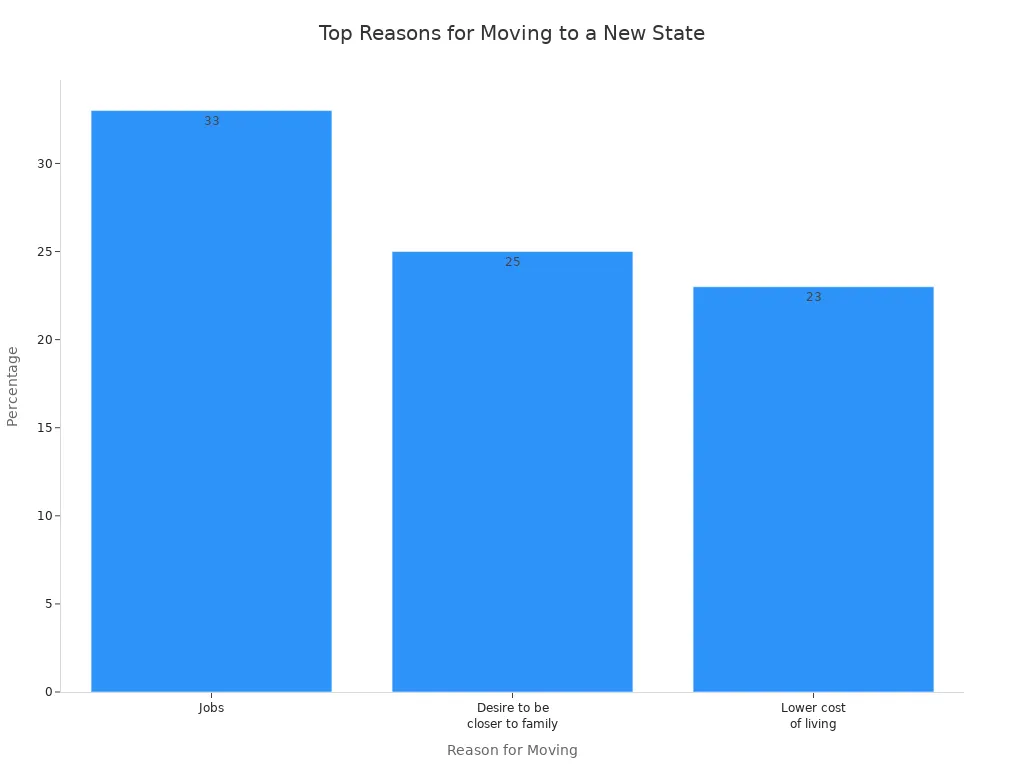
Rank | Reason for Moving | Percentage |
|---|---|---|
1 | Jobs | 33% |
2 | Desire to be closer to family | 25% |
3 | Lower cost of living | 23% |
This guide helps you discover the best states to live for families in the US. We focus on states excelling in a family-friendly environment. We consider key criteria such as safety, education, cost of living, and amenities for a better family life.
Key Takeaways
Choose a state based on safety, good schools, and affordable living costs.
Consider factors like crime rates, education quality, and housing prices.
Research local communities for specific details on schools, services, and activities.
Match a state’s benefits with your family’s unique needs and priorities.
What Makes a State Family-Friendly

Key Factors for Families: Safety, Education, Cost, and Recreation
When you choose a home for your family, many things matter. You want a place where your children can grow and thrive. Several key factors define a family-friendly state. These include the presence of children, fertility rates, and the overall quality of life. You also consider public safety and low crime rates. These factors ensure your family feels secure.
Presence of children: States with many minors under 18 often have more family-focused resources.
Fertility rates: These show where families are growing and moving.
Quality of education: This includes state test scores and learning rates.
Housing affordability: Cheaper housing often means more families can settle there.
Public safety and low crime rates: Safe spaces are crucial for families, especially in busy areas.
Our Evaluation Method: A Comprehensive Approach
We use a comprehensive approach to evaluate states. We look at 16 criteria across four main categories. These categories are health and safety, education and childcare, affordability, and socioeconomic factors. This method helps you understand what makes a state a good fit for your family.
For safety, we consider crime rates. For example, states like Maine and Vermont have very low violent and property crime rates. This ensures child safety.
State | Violent Crime Rate (per 100,000 residents) | Property Crime Rate (per 100,000 residents) | Overall Crime Rate (per 100,000 people) |
|---|---|---|---|
Maine | 112 | 1,358 | 108.58 |
New Hampshire | Third-lowest | Lowest | Second-lowest (2000 incidents) |
Vermont | Second-lowest | Third-lowest | 173.4 |
Kentucky | 212 | N/A | N/A |
Minnesota | 220 | N/A | N/A |
For education, we examine several metrics. These include K-12 academic performance, graduation rates, and college readiness. We also look at school funding and resources. The quality of public schools is very important.
K-12 Academic Performance: This looks at test scores in reading, math, and science.
Graduation Rates: This is the percentage of students finishing high school on time.
College Readiness: This includes AP participation and SAT/ACT scores.
School Funding and Resources: This covers money spent per student and teacher salaries.
Affordability is another key factor. We consider the cost of living, including housing affordability. States with high family satisfaction often have a manageable cost of living.
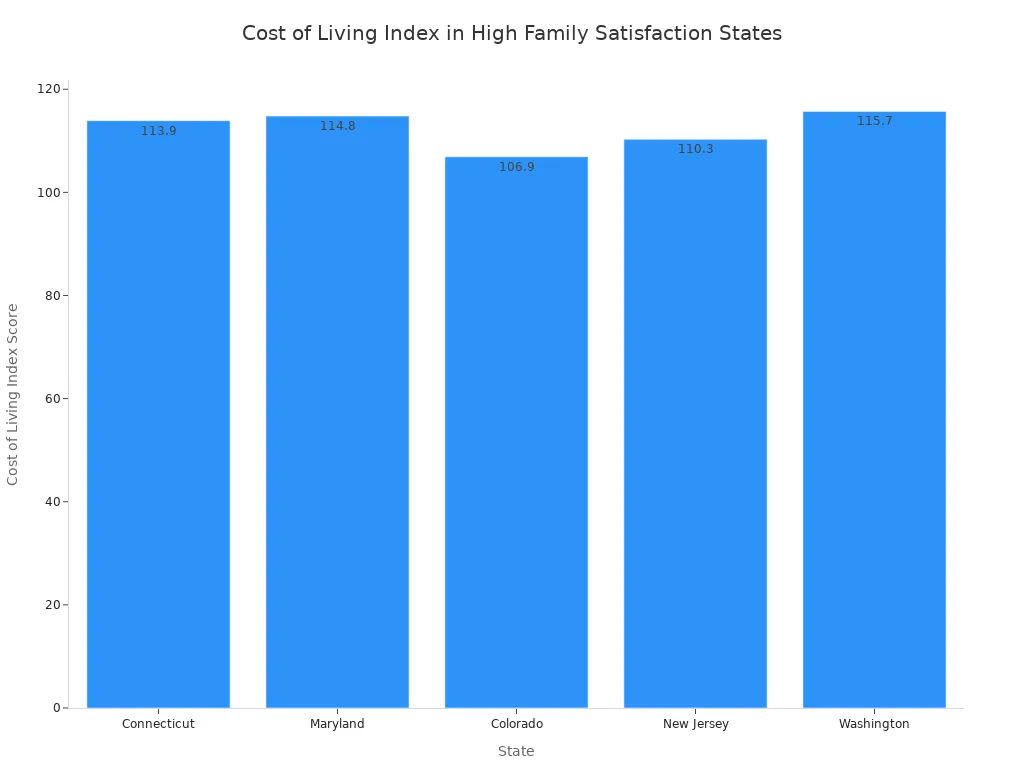
The cost of living index helps you compare states. For example, Connecticut has an index of 113.9, and Maryland is 114.8. These numbers show how expensive daily life is. We also consider socioeconomic factors like income levels and access to childcare. This comprehensive look helps you find the best place for your family’s life.
Discovering the Best States to Raise Children

You are looking for the best states to raise a family. This section presents a curated list of the top 15 overall states. Each state offers unique benefits for your family. You will find a place that matches your priorities.
State 1: New Hampshire – Top for Family Well-being
New Hampshire consistently ranks high for family well-being. This state offers a strong environment for your family. However, you should know some specific details.
Economic Well-being: New Hampshire ranked 2nd. Yet, 20,000 children lived in poverty in 2023. Also, 49,000 children had parents without secure employment.
Education: New Hampshire ranked 4th. Still, 64% of fourth-graders were not proficient in reading in 2024. Also, 68% of eighth-graders were not proficient in math.
Health: New Hampshire ranked 1st. But 25% of children received health insurance through Medicaid in 2023.
Family and Community: New Hampshire ranked 1st. Over 42,000 children experienced two or more adverse childhood experiences (ACEs) in 2022–23. In 2021-22, over one in three children experienced one or more ACEs.
Chronic Absenteeism: 33% of school-age children were chronically absent in 2021-22.
These facts show a mixed picture. New Hampshire provides many strengths. You also see areas needing attention for your family.
State 2: Minnesota – High Income and Low Poverty
Minnesota stands out for its strong economy and low poverty rates. This state offers high median family income. The median family income is $93,584. Minnesota has the second-lowest share of families in poverty. It also has the fifth-lowest separation rate. This creates a stable environment for your family.
You can see the poverty rates for families in Minnesota:
Family Type | Poverty Rate |
|---|---|
All families | 5.4% |
Families with children | 8.5% |
Single-parent families with related children have a 22% poverty rate. This state provides good economic opportunities for many families.
State 3: Vermont – Quality of Life and Safety
Vermont offers a high quality of life and a very safe environment. You will find a peaceful setting for your family here. The violent crime rate in Vermont is 2.10 per 1,000 residents. This is lower than the national median of 4 per 1,000 residents. Your chance of becoming a victim of a violent crime in Vermont is 1 in 475.
Vermont’s quality of life includes:
Low crime rate
Clean air due to low traffic congestion and polluting industry
Healthy lifestyles with easy access to the outdoors, low health disparities, and a thriving local food scene
Inclusive political atmosphere, including a Declaration of Inclusion and enshrined reproductive rights
Strong community participation in politics through town meetings and early voting
This state prioritizes safety and a healthy life for its residents.
State 4: Colorado – Outdoor Lifestyle and Opportunity
Colorado provides an excellent outdoor lifestyle and many opportunities. You can enjoy the mountains and natural beauty. Recent statistics show 92% of Colorado residents participate in outdoor recreation annually. According to 2023 data, 96% of Coloradans engage in outdoor recreational activities. Of these, 72% participate at least once per week. This means your family will have many chances for family fun and adventure. The state also offers strong economic opportunities.
State 5: Connecticut – Safety and Family Focus
Connecticut consistently ranks among the top five safest states. This state has a significant family population. You will find a strong focus on family values here. The emphasis on safety provides peace of mind for your family. This state provides a secure environment for children to grow.
State 6: Iowa – Strong Community and Affordability
Iowa offers a strong sense of community and high affordability. This makes it one of the best states to live for families seeking value. The cost of living in Iowa is lower than the national average.
Location | Cost of Living Index | Compared to National Average |
|---|---|---|
Iowa | 93.6 | 6% less |
The cost of living in Des Moines, Iowa, is 15% lower than the national average. This affordability helps your family’s budget. You will find a welcoming community here.
State 7: Maine – Natural Beauty and Safe Environment
Maine provides natural beauty and a very safe environment. This state is perfect for families who love the outdoors. You will find many opportunities for family fun.
Maine’s natural attractions include:
Coastal Maine Botanical Gardens: Features a children’s garden with a maze, treehouse, and themed gardens. Kids can visit the Learning Apiary and Native Bee Exhibit. They can also build structures in Fairy House Village and discover giant trolls.
Maine Wildlife Park in Gray: Offers a chance to see Maine’s native animals like moose, bears, and eagles up close.
Mount Desert Island and Bar Harbor: Gateway to Acadia National Park. You can go whale watching, visit the Oceanarium, and explore downtown.
Desert of Maine in Freeport: A unique geological site with sandy dunes. It offers a playground, gem mining, and a train ride.
Mother’s Beach in Kennebunk: Known for gentle waves and tide pools, ideal for younger children.
Portland’s Eastern Promenade Trail: A 2-mile trail with views of Casco Bay. It offers space for picnics and sports.
Acadia National Park’s Junior Ranger Program: A free program where children learn about nature and earn a badge.
Beaches along the coast for hiking and sandcastle building.
Mountains for excellent skiing in winter.
Over 500,000 acres of preserved land for hiking adventures.
Kennebec River Rail Trail, a family-friendly biking trail.
Whale watching, camping, paddling, and water parks for family fun.
This state offers a high quality of life with its natural wonders and safety.
State 8: Maryland – Education and Economic Stability
Maryland offers strong education and economic stability. This state provides excellent schools for your children. The average household income in Maryland is $133,800. This figure is 21% higher than the national average. This higher income supports your family’s financial well-being. You will find good job opportunities and a stable economy here.
State 9: North Dakota – Economic Growth and Community
North Dakota shows strong economic growth and a close-knit community. This state offers a growing economy. In the second quarter of 2025, North Dakota experienced a 7.3 percent increase in real GDP. This was the highest state-level increase nationally. This growth creates many job opportunities. You will find a supportive community for your family.
State 10: Hawaii – Unique Environment and Family Values
Hawaii offers a unique environment and strong family values. This state provides a beautiful setting for your family. However, you should consider the cost of childcare. The average annual cost of childcare in Hawaii ranges from $13,000 to $14,500.
Here are typical monthly childcare costs:
Childcare Type | Monthly Cost Range |
|---|---|
Infant daycare (0–2 years) | $1,200 to $1,600 |
Preschool-age daycare (3–5 years) | $850 to $1,300 |
Full-time nanny | $18–$25/hour |
Part-time babysitters | $20/hour and up |
Despite the costs, Hawaii offers a high quality of life and a strong sense of community for your family.
State 11: Massachusetts – Education and Innovation
Massachusetts is a leader in education and innovation. This state provides excellent educational opportunities for your children. The average student-teacher ratio in Massachusetts public schools for the 2025-26 academic year is 12:1. This low ratio means more individual attention for your children. You will find a strong focus on academic excellence and innovation here.
State 12: Utah – Family Growth and Outdoor Access
Utah is known for its family growth and extensive outdoor access. This state has a young population and a strong emphasis on family. You will find many opportunities for outdoor activities. This includes hiking, skiing, and exploring national parks. This state offers a high quality of life for active families.
State 13: Virginia – Diverse Opportunities and History
Virginia offers diverse opportunities and a rich history. This state provides a wide range of job opportunities and cultural experiences. You will find a stable economy here.
Key industries contributing to Virginia’s economic stability include:
Northern Virginia: Hosts software, communications, consulting, defense contracting, and government sectors.
Hampton Roads to Richmond and Lee County: Includes military installations, cattle, tobacco, and peanut farming.
Virginia’s economy is diverse:
Industry | Contribution to Virginia’s Economy |
|---|---|
Service Sector | Largest contributor, over 66.67% of the state’s GDP. |
Technology | Highest number of technology workers in the country. |
Manufacturing | Less than 10% of the state’s GDP. |
Tourism | Generated about $21.2 billion and supported 210,000 jobs in 2012. |
Mining | Coal is Virginia’s leading commercial mineral. |
Agriculture | Occupied 32% of Virginia’s land, provided 357,000 jobs in 2007. |
Forestry | Primary products are hardwood boards and pine pulpwood. |
Fisheries | Leading producer of seafood on the Atlantic Coast. |
This state offers a blend of history, economic opportunities, and a good environment for your family.
State 14: Washington – Nature and Tech Hub
Washington state combines stunning natural beauty with a thriving tech industry. This state offers a high quality of life and excellent job opportunities. The average salary for STEM jobs in Washington state is $123,954.
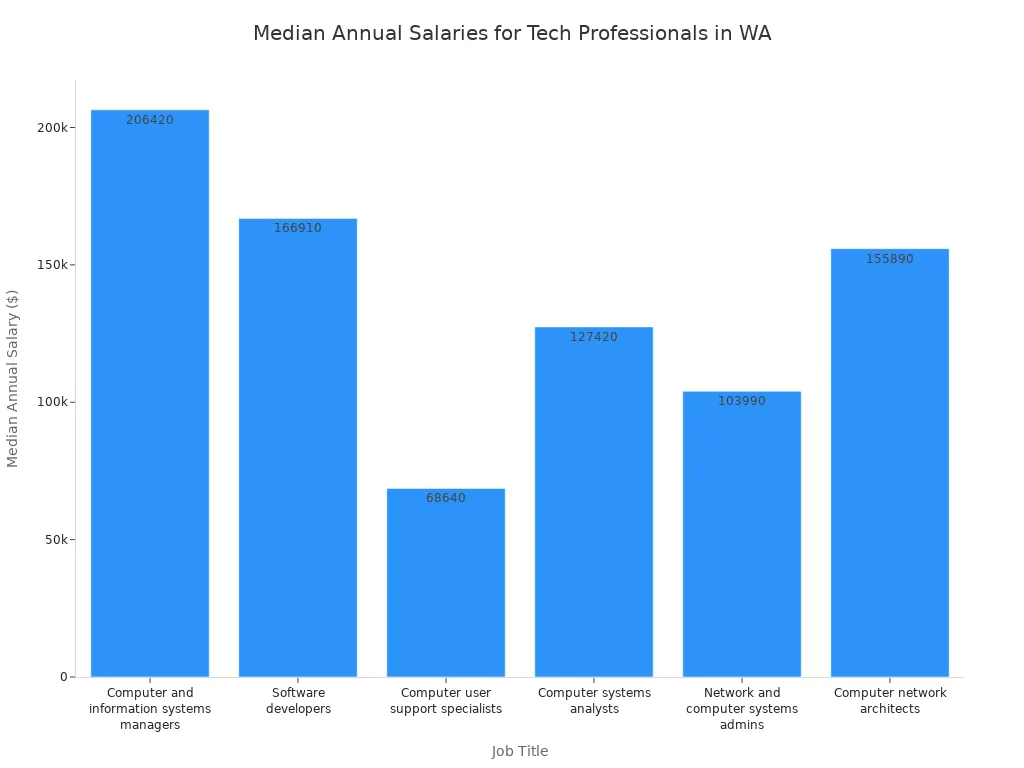
You can see median annual salaries for tech professionals:
Job Title | WA Median Annual Salary |
|---|---|
Computer and information systems managers | $206,420 |
Software developers | $166,910 |
Computer user support specialists | $68,640 |
Computer systems analysts | $127,420 |
Network and computer systems admins | $103,990 |
Computer network architects | $155,890 |
This state provides a great environment for families seeking both nature and career growth.
State 15: Wisconsin – Affordability and Family Activities
Wisconsin offers affordability and many family activities. This state provides a good balance for your family’s budget and leisure. The median home price in Wisconsin is $303,100. In October 2025, the median home price was $337,800.
You will find many options for family fun:
Wisconsin Dells: Offers boat tours, duck boat tours, Deer Park, and waterpark hotels.
Green Bay: Features Lambeau Field tours, Bay Beach Amusement Park, and the Bay Beach Wildlife Sanctuary.
Madison: Has the Henry Vilas Zoo, Capitol Building tours, and Olbrich Botanical Gardens.
Devil’s Lake State Park: Provides hiking, camping, and water activities.
Milwaukee: Offers the Milwaukee County Zoo, Discovery World, and Bradford Beach.
Door County: Known for Cave Point County Park, apple/cherry picking, and scenic drives.
Eau Claire: Has a Sculpture Tour downtown and the Children’s Museum.
Sheboygan: Offers Bookworm Gardens and Kohler-Andrae State Park.
Marinette County: Known for fall color tours and waterfalls.
Elkhart Lake: Features the Osthoff Resort and village shops.
Wausau: Has Rib Mountain State Park and Granite Peak Ski area.
Lake Geneva: Offers the Geneva Lake Shore Path and boat tours.
La Crosse: Features Grandad Bluff and Riverside Park.
Washington Island: Has Schoolhouse Beach and lavender farms.
This state provides a great environment for family life with its affordability and diverse activities.
Choosing Your Family’s Ideal Home: Beyond the Best States to Live
Personal Priorities: Matching State Benefits to Family Needs
You have seen many great states. Now, you need to think about your family’s specific needs. Your personal priorities guide your choice. Consider the costs of living. This includes rent, groceries, and bills. You want to ensure affordability for your family. Look at school options. Check academic performance and care types. Parents often prioritize good schools. Think about getting around. Good roads and public transport matter for your family. Safety is also key. Research crime rates to keep your family safe.
Healthcare is another important factor. Check local hospitals and prescription costs. Understand the state’s tax structure. This includes income and property taxes. Your family’s budget depends on this. Consider the culture and lifestyle. Does it match your family’s values? Look for arts, food, and outdoor fun. Community matters for your family. Find organizations, places of worship, and childcare options. Cultural fit is important.
It aligns your family with the state’s traditions and social dynamics. Education and healthcare quality are vital for your family. This includes school funding and medical services. Also, check water quality. You want clean water for your family. This helps you find the best states to live for your family.
Local Community Research: Finding the Perfect Town
After choosing a state, you need to find the right town. Research local communities. Use GreatSchools to check academic performance. It shows extracurriculars and student-teacher ratios. Google Maps helps you explore parks and services. You can see reviews and ratings. City or county websites provide details on public services. This includes hospitals and police stations.
Think about dining, shopping, and entertainment. You want good restaurants and stores. Look for local events and venues. Schools and educational resources are key. Check academic reputation and programs. Many parents want good facilities and libraries. Healthcare and wellness services are also important.
Find hospitals, doctors, and pharmacies. Look for gyms and mental health services. Community involvement matters. Find neighborhood groups and volunteer chances. Check for local events. Safety and security are vital. Look at crime statistics and neighborhood watch programs. Concerned parents want safe streets. Consider natural features like beaches or hiking trails. Think about the political environment. Do you prefer a liberal or purple area? This detailed research helps parents find the perfect home.
Choosing a home for your family requires careful thought. The 15 states presented offer diverse benefits for every family. Use this guide as a starting point for your research. Align state advantages with your unique family priorities. Delve deeper into specific local communities. You will find the best states to live for your family to thrive.
FAQ
What are the most important factors for choosing a family-friendly state?
You should prioritize safety, education quality, and affordability. Consider health and safety, good schools, and the cost of living. Also, look at socioeconomic factors and available recreational activities for your family.
How does the cost of living impact my family’s decision?
The cost of living directly affects your family’s budget. High housing costs or daily expenses can strain finances. You want a state where your income supports a comfortable lifestyle for your family.
Which states offer the best education for children?
States like Massachusetts and New Hampshire consistently rank high for education. They provide strong K-12 academic performance, good graduation rates, and college readiness programs for your children.
What role does community play in a family-friendly state?
A strong community offers support and belonging for your family. You find local events, organizations, and childcare options. This helps your family integrate and thrive in a new environment.