


You can start painting a t-shirt with fabric paint by following a few simple steps. Painting a t-shirt gives you a chance to explore your creativity and turn plain clothing into something special. You don’t need art experience to begin a fabric painting project. Many people choose painting on clothing because it lets them express themselves and break free from strict rules.
You can work outside and keep your space clean.
Enjoy the outdoors while you create.
Painting a t-shirt is flexible, fun, and easy. You just need to prep your t-shirt, apply the paint, set the colors, and care for your new design.
Key Takeaways
Choose a t-shirt made of cotton or cotton-polyester blends for the best results. These materials absorb paint well and resist fading.
Prepare your t-shirt by washing, drying, and ironing it. This ensures a clean surface for painting and helps the paint stick better.
Plan your design before painting. Use stencils or sketches to avoid mistakes and achieve clean lines.
Apply paint in thin layers and let each layer dry before adding more. This prevents cracking and keeps your design flexible.
Heat set your painted t-shirt to lock in the colors. This step is crucial for making your design last through washes.
Choose T-Shirt and Fabric Paint
Choose T-Shirt
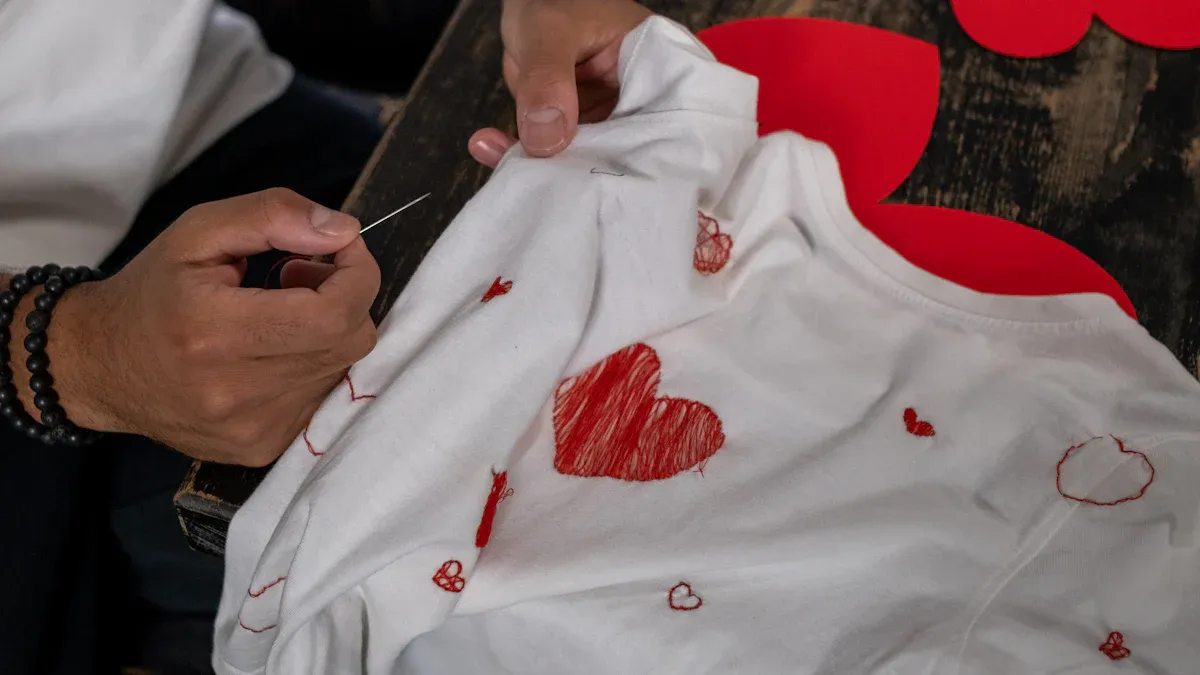
Picking the right type of t-shirt makes a big difference in your painting project. You want a t-shirt material that works well with fabric paint and keeps your design looking fresh. Most people choose cotton because it absorbs paint easily and feels soft. Cotton-polyester blends also work well. These blends offer more durability and resist fading, so your painted t-shirt stays bright after many washes.
Here’s a quick look at how different materials match up with fabric paint:
Material Type | Compatibility with Fabric Paint |
|---|---|
Natural Fibers | Best compatibility with acrylic fabric paints |
Synthetic Fabrics | At least 50% natural fibers needed for best results |
You can use t-shirts made from:
Cotton
Linen
Leather
Wool
Silk
Polyester
Cotton-polyester blends give you extra benefits:
They hold color longer.
They resist wrinkles.
They keep their shape after washing.
They are easy to care for.
They work well for active wear and casual looks.
If you want a t-shirt that feels comfortable and lasts, blends are a smart choice. You should also think about shrinkage and the environment. Polyester blends shrink less, but making polyester can harm the planet.
Choose Fabric Paint
Choosing the right fabric paint helps your design stand out. You’ll find several types of fabric paint, each with its own features. Some paints are transparent and work best on light colors. Opaque paints cover dark fabrics and come in metallic or pearl finishes. Dyes bond with the fabric and last a long time. Spray fabric paint lets you cover large areas quickly. Fabric markers make it easy to add details.
Type of Fabric Paint | Properties |
|---|---|
Transparent Fabric Paint | Subtle effects on light colors; can bleed; thin or thick options |
Opaque Fabric Paint | Covers dark fabrics; good for stamping; includes metallic and pearl options |
Dyes | Chemically bond with fabric; last longer; change texture less |
Spray Fabric Paint | Even application; great for stencils |
Fabric Markers | Easy to use; available in many colors, including metallic |
Popular brands for t-shirt projects include:
Jacquard Textile Color Fabric Paint (vibrant and durable)
Arteza Fabric Paint (many colors, machine washable)
Pebeo Setacolor Opaque Fabric Paint (easy to use, great coverage)
Tulip Soft Fabric Paint (soft finish, wearable)
Fabrico Dual-tip Fabric Markers (brush and bullet tips for details)
Jacquard Lumiere Fabric Paint (metallic and iridescent effects)
Tip: Always check the label to make sure your paint works with the t-shirt material you choose.
How to Use Fabric Paint

Prep Shirt
You want your t-shirt ready for painting fabric. Here’s what you need to do:
Wash the t-shirt with a mild detergent. This removes any chemicals or sizing that might block the paint from sticking.
Dry the t-shirt completely. A dry surface helps the paint bond better.
Iron the t-shirt if it looks wrinkled. A smooth surface makes painting a t-shirt easier and keeps your design neat.
Place a piece of cardboard or plastic inside the t-shirt. This stops the paint from bleeding through to the back and gives you a firm surface for painting fabric.
Step | Explanation |
|---|---|
Remove Chemicals and Sizing | Washing gets rid of anything that could stop paint from sticking. |
How to Wash | Use mild detergent in warm water. Skip fabric softeners. |
Smooth Painting Surface | Ironing after washing gives you a flat area for painting a t-shirt. |
Tip: Always let your t-shirt dry fully before you start painting fabric. Damp fabric can make the paint run or fade.
Plan Design
Planning your design makes painting a t-shirt more fun and less stressful. You can sketch your idea with a fabric pencil or chalk. If you want help, you can use stencils, stamps, or templates. Many people use online tools to create designs before painting fabric.
Printify Product Creator: Lets you play with patterns and graphics.
Canva: Offers free templates and easy editing.
Kittl: Has a big library of t-shirt designs.
GIMP and Inkscape: Good for drawing your own images.
Photopea: Works for both simple and complex designs.
You can draw your design freehand or use a stencil. Stencils help you get sharp edges and repeat patterns. If you want to try something new, stamps make painting a t-shirt quick and easy.
Note: Drawing your design first helps you avoid mistakes and keeps your lines clean.
Protect Surfaces
Painting fabric can get messy. You want to keep your workspace clean and your t-shirt safe.
Use plastic sheets to cover your table or floor. Plastic stops paint from soaking through and staining.
Place cardboard inside the t-shirt. This keeps paint from bleeding onto the back and gives you a solid surface.
Avoid using paper. Paper can stick to wet paint and ruin your design.
Tape the edges of your t-shirt if you want to keep the borders clean.
Callout: Cardboard or plastic inserts create a barrier and keep your t-shirt looking sharp.
Apply Paint
You have many ways to start painting a t-shirt. Here are the most popular techniques:
Freehand Painting: Use a brush or sponge to paint directly on the t-shirt. This lets you create unique designs and add details.
Stenciling: Place a stencil on the t-shirt and secure it with tape. Use a foam brush or sponge to dab paint over the open areas. Remove the stencil while the paint is still wet for crisp lines.
Stamping: Dip a stamp in fabric paint and press it onto the t-shirt. Stamps work well for patterns and repeating shapes.
When painting fabric, you want to use thin, even layers. Thick paint can crack and feel stiff. Let each layer dry before adding more. Fine brushes help with details, while sponges cover large areas.
Apply several thin coats instead of one thick layer.
Let each coat dry fully before you add the next.
Mix fabric paint with fabric medium if you want a softer finish.
Tip: Thin layers keep your t-shirt comfortable and help your design last longer.
Heat Set Paint and Dry
Drying
After you finish painting your t-shirt, you need to let it dry. Drying times can change based on a few things. The color of your t-shirt matters. Lighter colors like red or yellow absorb more energy from light. This can make the fabric warmer and help the paint dry faster. Darker colors might take a little longer because they reflect less light.
The type of fabric paint you use also affects drying. Some paints dry quickly and only need air. Others need extra steps, like heat setting or rinsing. Always check the label on your paint so you know what to expect.
You can lay your t-shirt flat in a warm, dry place. Make sure air can move around it. If you want to speed things up, use a fan. Avoid direct sunlight because it can fade your design. Most t-shirts need at least 24 hours to dry before you move to the next step.
Tip: If your t-shirt feels cool or sticky, give it more time to dry. Rushing can ruin your design.
Heat Set Paint
Heat setting locks the paint into the fibers of your t-shirt. This step helps your design last through many washes. You need an iron and a clean cloth or parchment paper.
Here’s what you do:
Set your iron to a medium-hot setting. Check the tag on your t-shirt for the safest temperature.
Place a cloth or parchment paper over the painted area. This protects your design.
Iron the back side of your t-shirt for at least 2 minutes. For best results, keep the iron moving and avoid steam.
If your t-shirt is thick or has a large design, iron each section for 15-25 seconds per square foot.
Some people iron for up to 5 minutes on the hottest safe setting. Always keep the iron moving to prevent burns.
Iron Setting | Time Needed | Extra Tips |
|---|---|---|
Medium-hot | 2-5 minutes | No steam, keep iron moving |
Hottest safe | 5 minutes | Iron from the back side |
Callout: Heat setting makes your t-shirt design permanent. Don’t skip this step if you want your art to last!
Tips for Painting on Fabric
Prevent Bleed-Through
You want your t-shirt design to look sharp on the front, not messy on the back. What works best for stopping paint from bleeding through? You can slide a piece of cardboard or a shirt board inside your t-shirt before you start. This barrier keeps paint from seeping through the layers. You should pick a t-shirt with a smooth texture. Rough fabric lets paint spread more. When you use a fabric marker, try not to pause too long in one spot. Quick strokes help you avoid bleeding.
Tip: Always check for stains or discolorations on your t-shirt before painting. These can cause paint to bleed or change color.
Clean Lines
What helps you get crisp edges and neat shapes on your t-shirt? You can use stamps or stencils for detailed designs. Press the stamp straight down with light pressure, then lift it straight up. This stops smudging and blurring. If you stamp in rows, start at the top and work left to right. Let each print dry before you move to the next. Pre-wash your t-shirt to remove oils and residues. Make sure the fabric is dry and smooth before you paint.
Note: Smooth fabric and careful stamping give you the best way to paint on clothes with clean lines.
Vibrant Colors
What makes your t-shirt colors pop and stay bright? You can mix acrylic paint with a textile medium. This keeps the paint soft and flexible. Try adding glycerine and water to your paint for better flow and vibrancy. Some artists spray a UV blocking clear paint over the finished design to protect colors from fading. Heat-setting your t-shirt after painting helps the colors last longer. If you want your colors to stay bold, avoid mixing too many hues at once. Only mix two colors at a time. Adding too much white paint can make colors look dull.
Problem | What to Do |
|---|---|
Muddy shading | Mix only two colors at a time |
Dull colors | Skip extra white paint |
Overblending | Use less water, let layers dry |
Tips for painting on a t-shirt: Use thin layers, let each coat dry, and protect your design with a clear spray.
Caring for Painted Clothing
Wash Instructions
You want your painted t-shirt to look fresh every time you wear it. What works best for keeping your design bright and the fabric soft? Start by turning your t-shirt inside out before you wash it. This simple step protects the painted design from rubbing against other clothes. Choose a gentle or delicate cycle on your washing machine. Cold water helps keep the colors from fading and stops the fabric paint from bleeding. Use a mild, color-safe detergent. Strong soaps can make the paint fade or crack. Avoid overloading the washer. Too many clothes in one load can cause friction and damage your t-shirt.
Here’s a quick list to help you remember:
Turn your t-shirt inside out before washing.
Use cold water and a gentle cycle.
Pick a mild, color-safe detergent.
Hang your t-shirt to air dry. Avoid the dryer to prevent shrinking and cracking.
Use a rounded hanger to keep the shape.
Tip: Wait at least one week before washing your t-shirt for the first time. This gives the design time to cure and stay strong.
Preserve Design
You want your t-shirt design to last as long as possible. What steps help you keep it looking new? Always wash your t-shirt inside out and use cold water. Hang it to dry instead of using a dryer. Heat can make the paint crack or fade. Store your t-shirt in a cool, dry place away from sunlight. Ultraviolet rays from the sun cause fading. Fold your t-shirt inside out or use padded hangers to avoid creases and friction.
What to Do | Why It Helps |
|---|---|
Wash inside out | Protects the painted design |
Use cold water | Keeps colors bright |
Air dry | Prevents cracking and fading |
Store away from sunlight | Stops fading from UV rays |
Fold or hang gently | Avoids creases and friction |
Note: Never iron directly on the painted design. Place a cloth over it if you need to iron your t-shirt.
You now know what painting a t-shirt involves. Here are the main steps for painting a t-shirt with fabric paint:
Choose the right t-shirt and fabric paint.
Prepare your t-shirt by washing, drying, and ironing.
Plan your design and set up your workspace.
Apply paint using freehand, stencils, or stamps.
Let your t-shirt dry and heat set the paint.
Try different techniques when painting on clothing. Mix colors, practice on scraps, and load your brush well. You can create something unique every time you paint a t-shirt. Remember to care for your t-shirt so your design stays bright and fresh!
FAQ
What should you do if fabric paint feels stiff on your t-shirt?
If your painted area feels stiff, you can wash the shirt inside out after the paint sets. This helps soften the fabric. You can also use fabric medium when painting to keep the design flexible.
Tip: Thin layers of paint dry softer than thick ones.
What happens if you skip heat setting the paint?
Your design may wash out or fade quickly. Heat setting locks the paint into the fabric. Always follow the paint label instructions for best results.
What tools work best for painting details on a t-shirt?
You can use fine-tip brushes, fabric markers, or even toothpicks for small details. These tools help you create sharp lines and tiny shapes.
Fine-tip brush: for lines
Fabric marker: for writing
Toothpick: for dots
What can you do if you make a mistake while painting?
Act fast! Dab the mistake with a damp cloth before the paint dries. For dried paint, you can paint over it with a darker color or add a new design.
What is the best way to store a painted t-shirt?
Fold your t-shirt inside out and keep it in a cool, dry place. Avoid sunlight. This keeps your design bright and prevents fading.
Note: Hanging your shirt on a padded hanger helps keep its shape.