

Knowing your waist size is very important. It helps you find clothes that fit and feel good. Many people have trouble with sizes. This can cause problems with how clothes fit and look. In fact, 27% of people wear a size that is not right for them. Also, 77% do not fit into just one letter size. This shows why a waist size chart is useful. Knowing the size differences for men, women, and kids can help you choose better clothes.
Understanding Waist Size
Definition of Waist Size
Waist size is the measurement around your natural waist. This area is between your rib cage and hip bone. Knowing your waist size is very important for finding clothes that fit well. A good fit makes you feel comfortable and confident. When your clothes fit your waist right, you feel relaxed and can move easily.
Measurement Methods
Measuring your waist size correctly is very important. Follow these steps for the best results:
Find your natural waistline: This is the area between your rib cage and hip bone.
Stand up straight: Take the measurement after you breathe out normally.
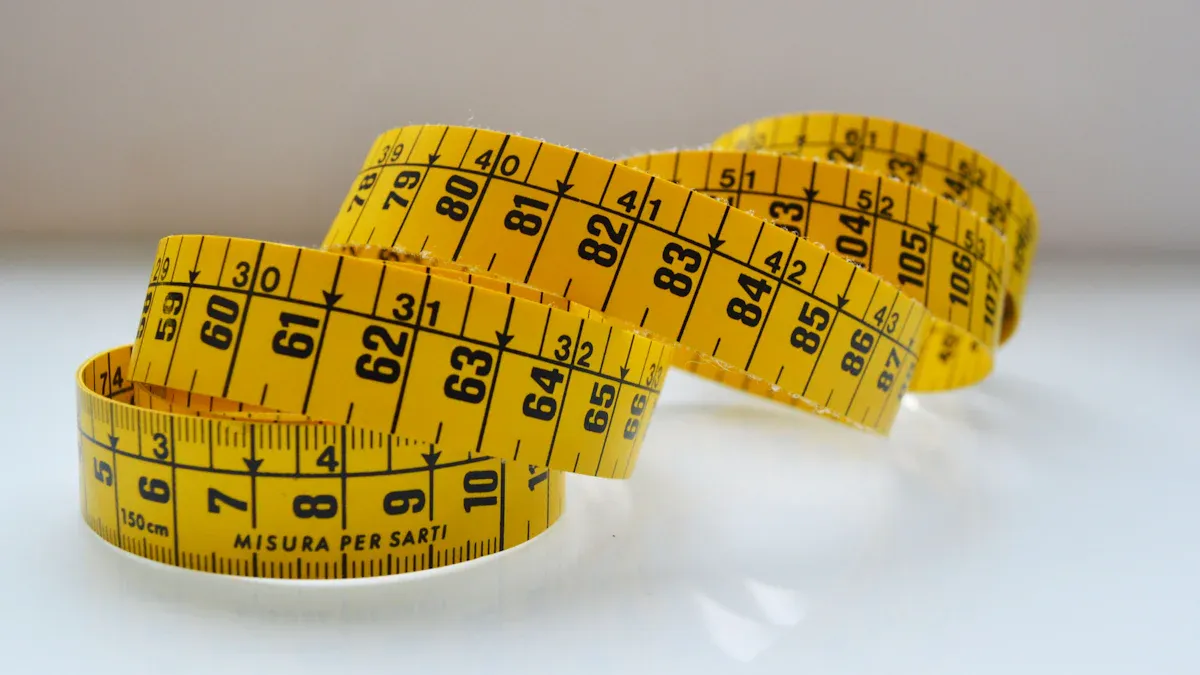
Use the tape measure snugly: Wrap it around your waist, keeping it level with the floor.
Write down the measurement: Measure twice to make sure it is accurate.
Using these methods helps you get a correct waist measurement. This accuracy is key when using a Waist Size Chart. It helps you pick clothes that fit your body shape and size well. Remember, wearing clothes that fit can change how you feel all day.
By knowing your waist size and how to measure it, you can make smart choices when shopping for clothes. This knowledge helps you choose styles that improve your look and comfort.
Men’s Waist Size Chart
Size Ranges and Categories
Knowing the size ranges for men’s waist sizes helps you find the right fit. Below is a table that shows common waist size categories for men’s clothes in the United States and Europe:
US Pant Size Men | EU Pant Size Men | Waist Circumference (inches) | International Size |
|---|---|---|---|
28 | 42 | 29.5 | S |
29 | 44 | 30.5 | S |
30 | 46 | 31.5 | S |
31 | 46 | 32.5 | M |
32 | 48 | 33.5 | M |
33 | 48 | 34.5 | M |
34 | 50 | 35.5 | M |
36 | 52 | 37.5 | L |
38 | 54 | 39.5 | L |
40 | 56 | 41.5 | XL |
42 | 58 | 43.5 | XL |
44 | 60 | 45.5 | XXL |
46 | 62 | 47.5 | XXL |
48 | 64 | 49.5 | XXXL |
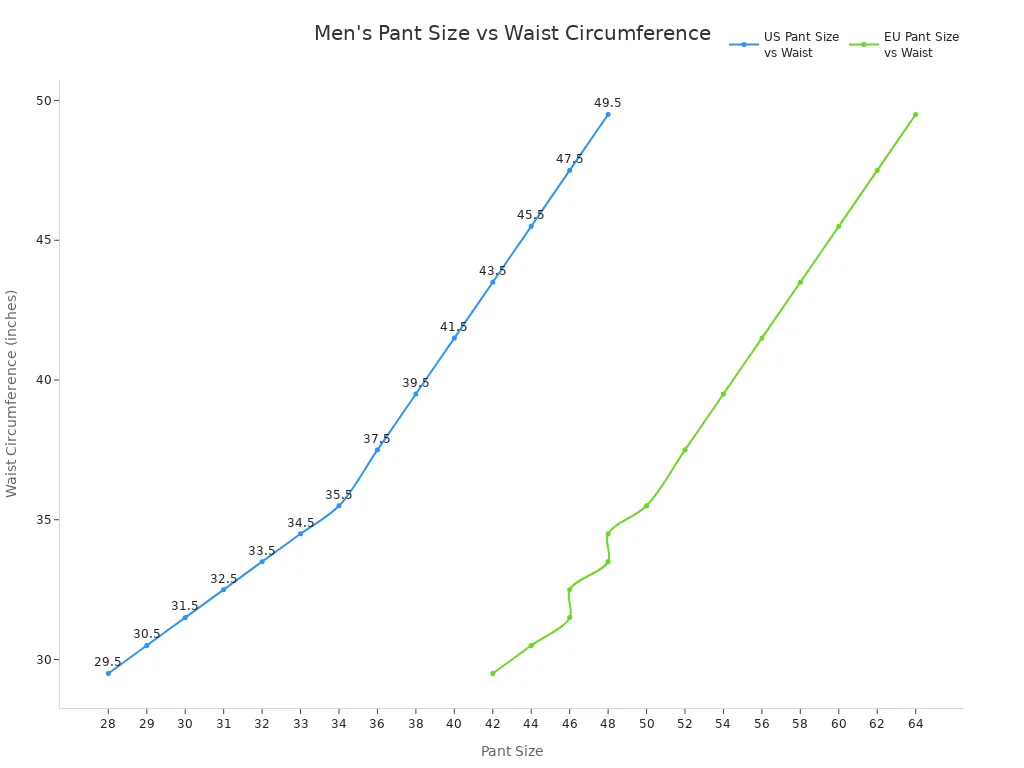
These sizes can change between brands. You might see that different stores have different size charts. This can make shopping frustrating.
Measurement Tips
To get the best waist measurement, follow these tips:
Use a flexible measuring tape: This helps you get a correct measurement around your waist.
Measure over your undergarments: This shows how clothes will really fit.
Stand straight and relaxed: Don’t suck in your stomach. This gives a true measurement.
Double-check your measurement: Measure twice to make sure it is right. If you can, have someone help you for the best results.
By using these tips, you can avoid mistakes and choose the right size from the waist size chart. Remember, a good fit makes you feel comfortable and confident.
Common Size Chart Discrepancies
Size chart differences are common in fast fashion.
Different brands and even collections in the same brand often have different size charts.
This can cause frustration for shoppers and lead to more returns.
Using a waist size chart can help you deal with these issues and make smart choices when buying men’s clothes.
Women’s Waist Size Chart
Size Variations by Body Type
Women’s waist sizes can change a lot based on body type. Knowing these differences helps you find the right fit. Here are some common body types and their usual waist size ranges:
Pear Shape: This body type usually has a smaller waist than hips. Sizes may go from 24 to 36 inches.
Apple Shape: Women with this shape often have a wider waist. Sizes can go from 28 to 40 inches.
Hourglass Shape: This body type has a clear waist. Sizes usually range from 24 to 34 inches.
Rectangle Shape: Women with this shape have a straight waistline. Sizes can go from 26 to 38 inches.
Remember, these ranges can be different between brands. For example, a US size 10 can vary a lot. Some brands like Mango show waist sizes from 23.2 to 49.6 inches. This shows why it is important to check the specific waist size chart for each brand.
Measurement Guidelines
Getting accurate measurements is very important for picking the right size. Follow these steps to measure your waist correctly:
Use a soft measuring tape: This helps you wrap it around your waist easily.
Find your natural waistline: This is usually above your belly button and below your rib cage.
Stand straight: Make sure you are relaxed and not holding your breath while measuring.
Write down the measurement: Measure twice to be sure. If you can, have someone help you.
Tip: Many women find it hard to measure themselves. Confusion in size definitions and differences between brands can cause problems. Always check the specific waist size chart for the brand you want.
By following these steps, you can confidently pick the right size from the waist size chart. Remember, wearing clothes that fit well makes you feel comfortable and stylish.
Kids’ Waist Size Chart
Size Ranges for Different Ages
Finding the right waist size for kids can be tricky. Children grow quickly, so their sizes change often. Here’s a general guide to waist sizes based on age:
Age Group | Waist Size Range (inches) |
|---|---|
2-3 years | 20-22 |
4-5 years | 22-24 |
6-7 years | 24-26 |
8-9 years | 26-28 |
10-12 years | 28-30 |
13-15 years | 30-32 |
These sizes can vary by brand. Always check the specific waist size chart for the clothing you choose.
Growth Considerations
When selecting clothes for kids, consider their growth patterns. Here are some key points to keep in mind:
Prioritize height and weight over age for accurate sizing.
Consider variations like slim, average, and husky, which affect fit.
Measure key body parts: chest, waist, hips, and height. Accurate measurements help you find the right fit.
Tip: Measure your child’s waist every 3-6 months. Also, measure whenever clothes start to feel snug. This practice ensures that you keep up with their growth and maintain comfort.
Taking accurate measurements can save time and reduce guesswork. Ensuring proper fit is akin to tailoring, enhancing comfort and style. Remember, kids’ clothing should allow for movement and play.
By using a waist size chart, you can make informed choices that support your child’s comfort and confidence as they grow.
How to Measure Waist Size
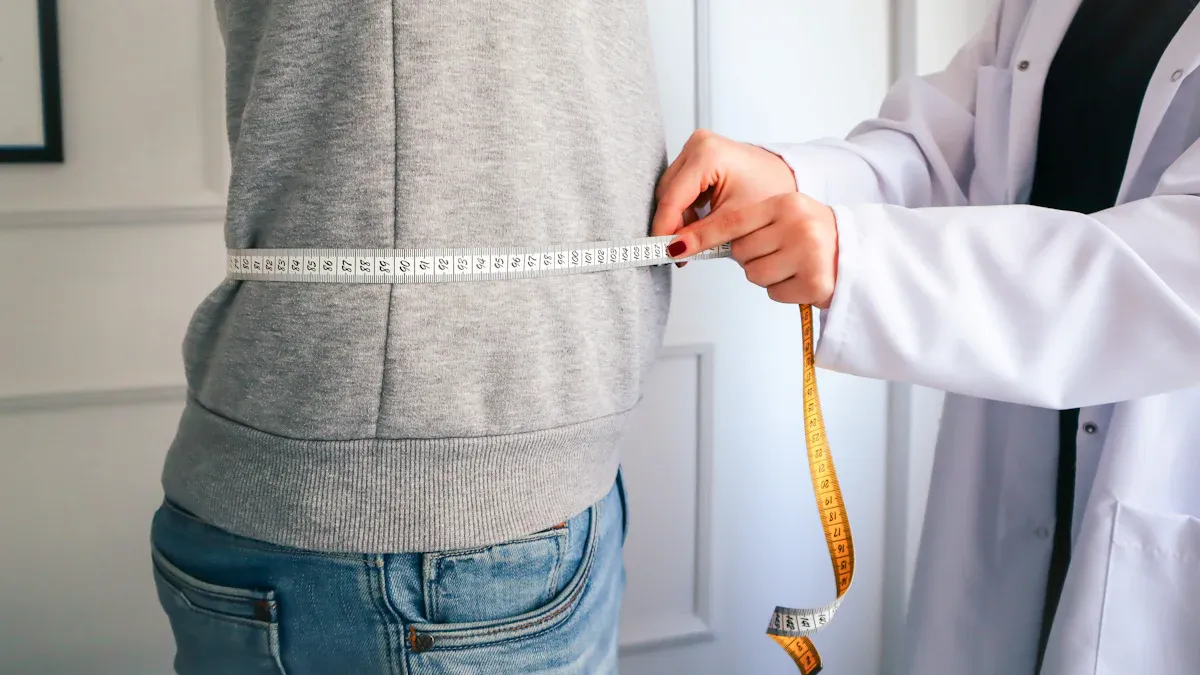
Step-by-Step Guide
Measuring your waist size correctly is very important for finding clothes that fit well. Follow these steps to get the right measurement:
Gather Your Tools: Use a flexible measuring tape. This tool helps you wrap it around your waist easily.
Locate Your Natural Waistline: This is the area between your rib cage and hip bone. It is usually the narrowest part of your body.
Stand Up Straight: Keep a relaxed posture. Do not hold your breath or suck in your stomach while measuring.
Wrap the Measuring Tape: Place the tape around your waist. Make sure it is level and snug but not tight.
Take the Measurement: Breathe out normally before taking the measurement. Write down the number where the tape overlaps.
Double-Check: Measure again to make sure it is right. If you can, ask someone to help you for the best results.
Using tools like the Perfect Waist & Body Tape can make measuring easier. This tool has a retractable handle for easy self-measurement. One side measures circumference, while the other shows standard measurements. It helps standardize the force used for tightening, which reduces mistakes. For more details, check out the full tutorial on usage.
Common Mistakes
When measuring your waist, avoid these common mistakes to get an accurate size:
Confusing the Natural Waist with the Clothing Waistline: This can lead to wrong sizing. Always measure at your natural waistline.
Not Standing Straight: Slouching can change your measurement. Stand tall and relaxed for the best results.
Using the Wrong Measuring Tool: A stiff tape measure can give wrong results. Always use a flexible measuring tape.
Ignoring Variations in Body Measurements: Fit models used by brands often do not match the average body type. This can lead to clothes that do not fit well for most people.
Falling for Vanity Sizing: Many people think they wear a smaller size than they really do. This can lead to poor clothing fit and frustration when shopping.
By following these tips and avoiding common mistakes, you can measure your waist size with confidence. Accurate measurements lead to better-fitting clothes, improving your comfort and style.
Knowing your waist size is very important for buying clothes. Getting the right measurements helps you find clothes that fit better and feel good. Here are some reasons to think about:
Waist size charts give clear rules based on your measurements. This helps you find the best fit.
They cut down on guessing sizes, making your clothing experience more comfortable.
Understanding your waist-to-hip ratio helps you pick styles that look good on your body shape.
By using the waist size charts given, you can make smarter choices when shopping. This will help you feel more comfortable and confident.
FAQ
What is the best way to measure my waist size?
To measure your waist size, use a flexible measuring tape. Wrap it around your natural waistline, which is above your belly button. Ensure the tape is snug but not tight, and breathe out normally before taking the measurement.
How often should I measure my waist size?
You should measure your waist size every 3-6 months or whenever your clothes feel tight. Regular measurements help you keep track of changes in your body and ensure a proper fit for your clothing.
Why do waist sizes vary between brands?
Waist sizes can vary due to different sizing standards used by brands. Each brand may have its own fit model, leading to discrepancies in measurements. Always check the specific waist size chart for the brand you choose.
Can I use my pant size to determine my waist size?
While pant sizes can give you a rough idea, they may not accurately reflect your waist size. It’s best to measure your waist directly for the most accurate fit, as sizes can differ significantly between brands.
What should I do if my waist size falls between two sizes?
If your waist size falls between two sizes, consider choosing the larger size for comfort. You can also try on both sizes to see which fits better. Adjustments can be made later if needed.